

At Scan N More, we’ve seen firsthand how document management and scanning solutions revolutionize business operations.
In today’s digital age, efficient handling of information is key to staying competitive and compliant.
This blog post explores the importance of digital document management, various scanning technologies, and strategies for implementation.
Why Digital Document Management Matters
Efficiency and Productivity Boost
Digital document management transforms business operations. Organizations spend significant amounts on document handling, including filing, finding misfiled documents, and reproducing lost documents. Digital systems slash these costs and free up time for valuable tasks. No more rifling through filing cabinets or endless paper stacks – document retrieval becomes quick and effortless.
Enhanced Data Security and Compliance
Paper documents fall prey to theft, loss, and damage. Digital systems offer robust security measures (encryption, access controls, audit trails). This proves essential for industries with strict regulatory requirements. Healthcare organizations, for example, must comply with HIPAA regulations for secure patient information handling. Digital systems simplify compliance achievement and demonstration.
Seamless Collaboration Enablement
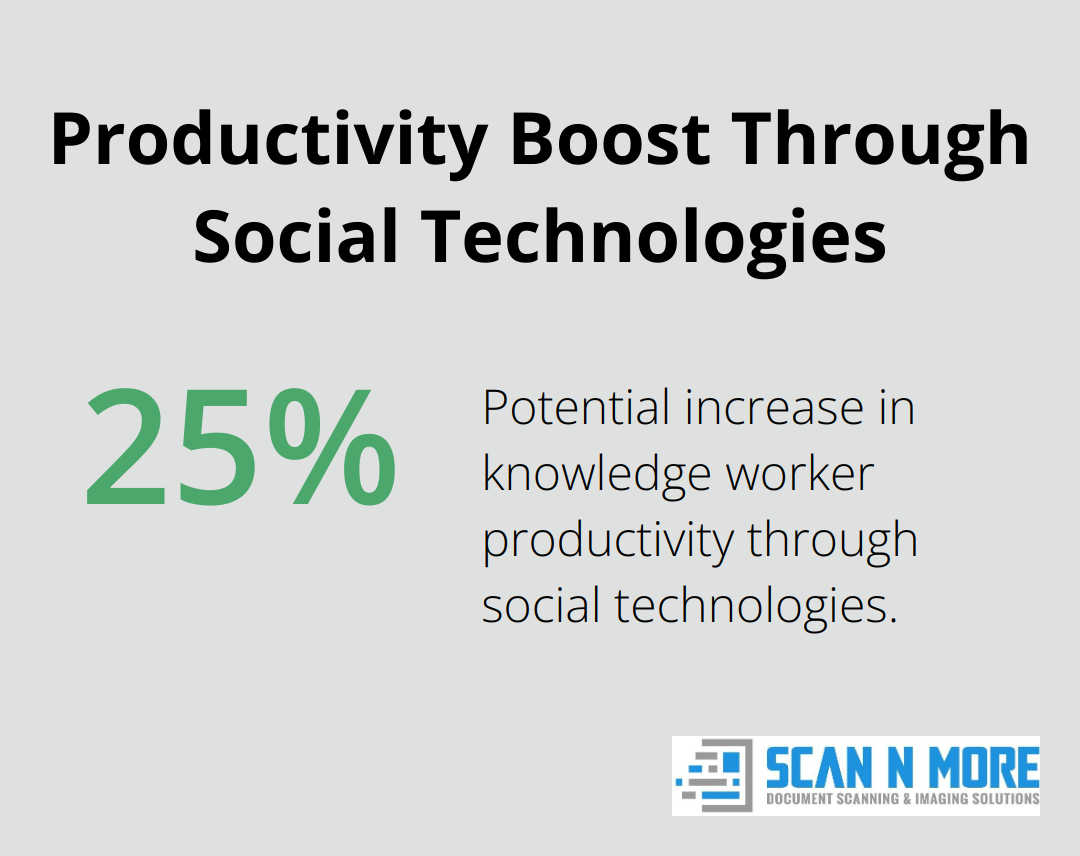
The ability to share and collaborate on documents instantly is invaluable in our connected world. Digital document management allows team members to access, edit, and share documents from anywhere, anytime. This benefits remote teams and organizations with multiple locations immensely. A McKinsey report suggests improved communication and collaboration through social technologies could increase knowledge worker productivity by 20 to 25 percent.
Cost Reduction and Environmental Impact
The average office worker uses 10,000 sheets of paper per year. The shift to digital saves money and trees. It significantly reduces paper, printing, and storage costs. Moreover, it contributes to environmental conservation. Reducing paper consumption can have positive environmental impacts, but it’s important to consider potential negative effects of alternatives like plastic or digital solutions.
Implementation Considerations
While the benefits of digital document management are clear, implementation requires careful planning. Organizations must assess their specific needs, choose appropriate scanning solutions, and train employees on new processes. Integration with existing workflows is key to maximizing the benefits of digital transformation.
As we move forward, let’s explore the various document scanning solutions and technologies that make this digital revolution possible.
Scanning Solutions for Every Business Need
At Scan N More, we’ve witnessed the evolution of document scanning technologies over the years. Each solution addresses different business requirements, from high-volume operations to mobile professionals. Let’s explore the landscape of scanning solutions that transform how businesses handle their documents.
High-Volume Production Scanners
Large organizations dealing with massive amounts of paperwork benefit from high-volume production scanners. These powerhouses process thousands of pages per hour, making quick work of backfile conversion projects. The Kodak i5850 Scanner, for example, handles up to 210 pages per minute. While the initial investment is substantial, the long-term savings in time and labor costs prove significant for document-heavy industries like healthcare and legal services.
Desktop and Portable Scanners
Small to medium-sized businesses often find desktop scanners to be the perfect balance of functionality and affordability. These devices (such as the Fujitsu fi-8170) offer impressive speeds of up to 70 pages per minute while taking up minimal office space. For professionals who need scanning capabilities on the go, portable scanners like the Epson WorkForce ES-60W provide a compact solution. At just 14 ounces, it’s an ideal tool for capturing receipts, business cards, and documents during client visits or business trips.
Mobile Scanning Apps
The ubiquity of smartphones has created a new category of scanning solutions: mobile scanning apps. Apps like Adobe Scan and Microsoft Office Lens transform your phone’s camera into a portable scanner. While these apps may not match the quality of dedicated hardware for large-scale operations, they prove invaluable for quick captures and immediate sharing.
OCR Technology
Optical Character Recognition (OCR) technology forms the backbone of modern document management systems. OCR accuracy refers to the ability of optical character recognition software to produce machine-readable text content from scanned images or PDF files. This technology proves particularly valuable for industries dealing with large volumes of forms or contracts, as it enables automated data entry and reduces manual processing errors.
Cloud-Based Scanning Solutions
The shift towards remote work has accelerated the adoption of cloud-based scanning solutions. These platforms allow businesses to digitize and access their documents from anywhere in the world. Cloud solutions offer enhanced accessibility, security, collaboration, efficiency, and cost-effectiveness. According to a 2024 Gartner report, 85% of organizations will embrace a cloud-first strategy by 2026, making cloud-based scanning an essential component of future-proof document management strategies.

The selection of the right scanning solution depends on your organization’s specific needs, volume of documents, and workflow requirements. As we move forward, let’s explore how to implement an effective document scanning strategy that aligns with your business goals and maximizes the benefits of these technologies.
How to Implement an Effective Document Scanning Strategy
Conduct a Thorough Needs Assessment
Start with an evaluation of your current document management practices. Identify pain points, bottlenecks, and areas where digital solutions could improve efficiency. Quantify the volume of documents you handle daily and categorize them by type and importance. This assessment will form the foundation of your strategy.
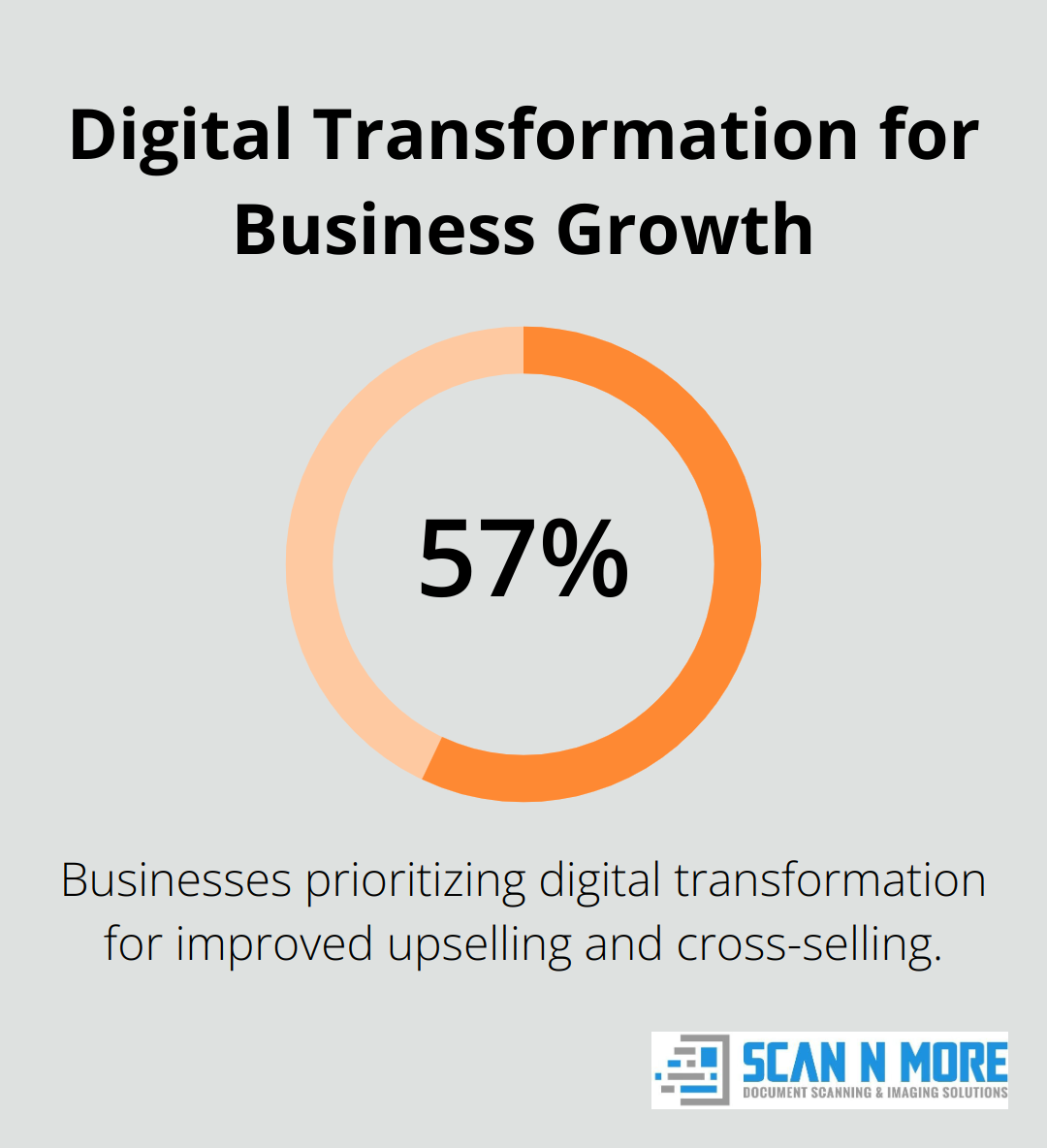
A 2023 KPMG survey revealed that 57% of businesses prioritize digital transformation to improve upselling and cross-selling opportunities. This underscores the need for a well-planned implementation strategy.
Select the Optimal Scanning Solution
Choose a scanning solution that aligns with your requirements based on your needs assessment. Consider factors such as document volume, required scan quality, and integration capabilities with your existing systems. For high-volume needs, a production scanner might be necessary. For distributed teams, a combination of desktop scanners and mobile apps could be more suitable.
Develop a Robust Classification System
A well-structured document classification system is essential for efficient retrieval and management of scanned documents. Develop a taxonomy that reflects your organization’s structure and workflow. Use metadata tags to categorize documents based on department, document type, date, and other relevant criteria.
Provide Comprehensive Employee Training
The success of your document scanning strategy depends on user adoption. Develop a comprehensive training program that covers the technical aspects of using new scanning equipment and the benefits of the new system. Address concerns about job security and emphasize how digital processes will make their work more efficient and valuable.
Integrate Seamlessly with Existing Workflows
Your new document scanning process should enhance, not disrupt, existing workflows. Work closely with department heads to understand how scanned documents will be used and ensure the new system integrates smoothly with current processes. Try to use workflow automation tools to streamline document routing and approval processes.
A well-integrated document scanning strategy can enhance workflow efficiency and productivity by allowing for systematic management of digitized paper documents.
Final Thoughts
The digital revolution in document management and scanning has transformed how businesses handle information. Organizations can now boost efficiency, enhance security, and drive collaboration through these technologies. Document scanning serves as the bridge between physical and digital realms, enabling businesses to unlock the full potential of their data.
We anticipate exciting developments in document management technology, including AI enhancements and blockchain integration for improved security. Cloud adoption will continue to grow, leading to more robust and integrated cloud-based document management solutions. The benefits of digital document management are clear: increased productivity, improved compliance, and significant cost savings.
Don’t let your business get left behind in the paper age. Take the first step towards a more efficient, secure, and sustainable future by exploring how document management and scanning solutions can benefit your organization. The digital future is here – are you ready to embrace it?