

Physical mail poses significant security risks for businesses, from data breaches to compliance violations. Traditional mail handling exposes sensitive documents to theft, loss, and unauthorized access.
The best mail scanning services transform paper correspondence into secure digital workflows. We at Scan N More understand that choosing the right solution requires evaluating security standards, integration capabilities, and processing speeds.
What Security Features Matter Most in Mail Scanning
Bank-Grade Encryption Standards
Mail scanning providers must offer AES-256 encryption for data at rest and TLS 1.3 for data in transit. SOC 2 Type II compliance indicates rigorous security audits, while HIPAA certification becomes mandatory for healthcare organizations that handle patient information. Role-based access controls prevent unauthorized document access, and two-factor authentication adds another security layer. Advanced spam filtering solutions identify and catch spam and unsafe emails using multiple security mechanisms, which demonstrates how advanced filtering protects against malicious content before it reaches your digital mailbox.
Real-Time Processing Capabilities
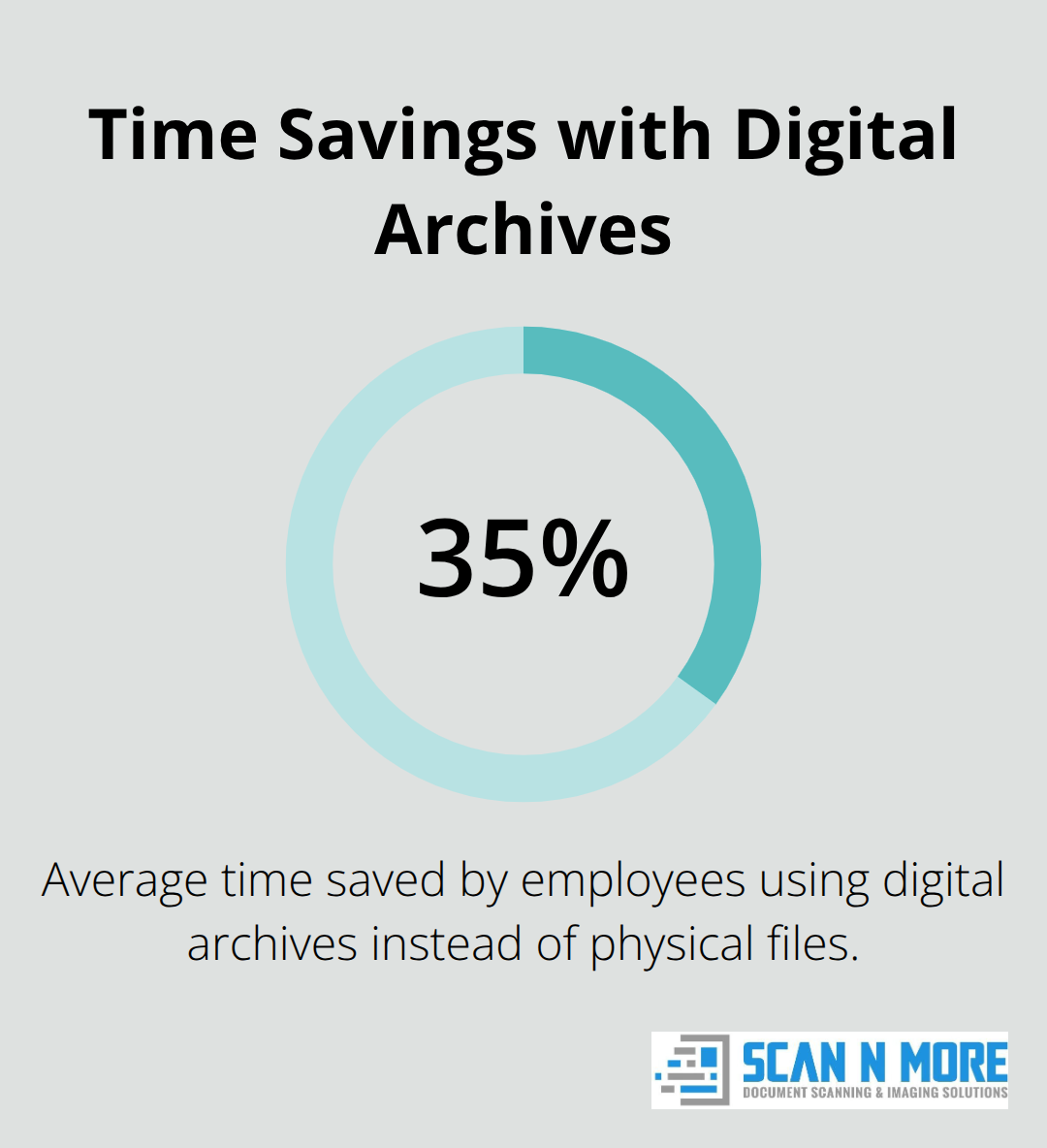
Processing speed directly impacts business operations. Top-tier services scan and upload documents within 2-4 hours of receipt, with some providers offering same-day processing for urgent items. Companies report 30-40% time savings when employees can instantly search digital archives instead of hunting through physical files. Volume capacity matters too – enterprise solutions handle thousands of pieces monthly without performance degradation, while smaller businesses need scalable plans that grow with mail volume increases.
API Integration and Automation
API connections with Microsoft 365, Google Workspace, and CRM systems eliminate manual data entry tasks. Optical Character Recognition technology makes scanned documents searchable and editable, while automated sorting routes different document types to designated folders. These integrations streamline workflows and reduce human error (particularly important for compliance-heavy industries). Advanced encryption and audit trails protect sensitive information, while platforms process over 100 billion data points daily to maintain threat visibility and document accuracy.
The next consideration involves evaluating specific providers that excel in these security areas while offering competitive pricing structures.
Which Mail Scanning Providers Lead the Market
Enterprise Solutions That Handle Volume
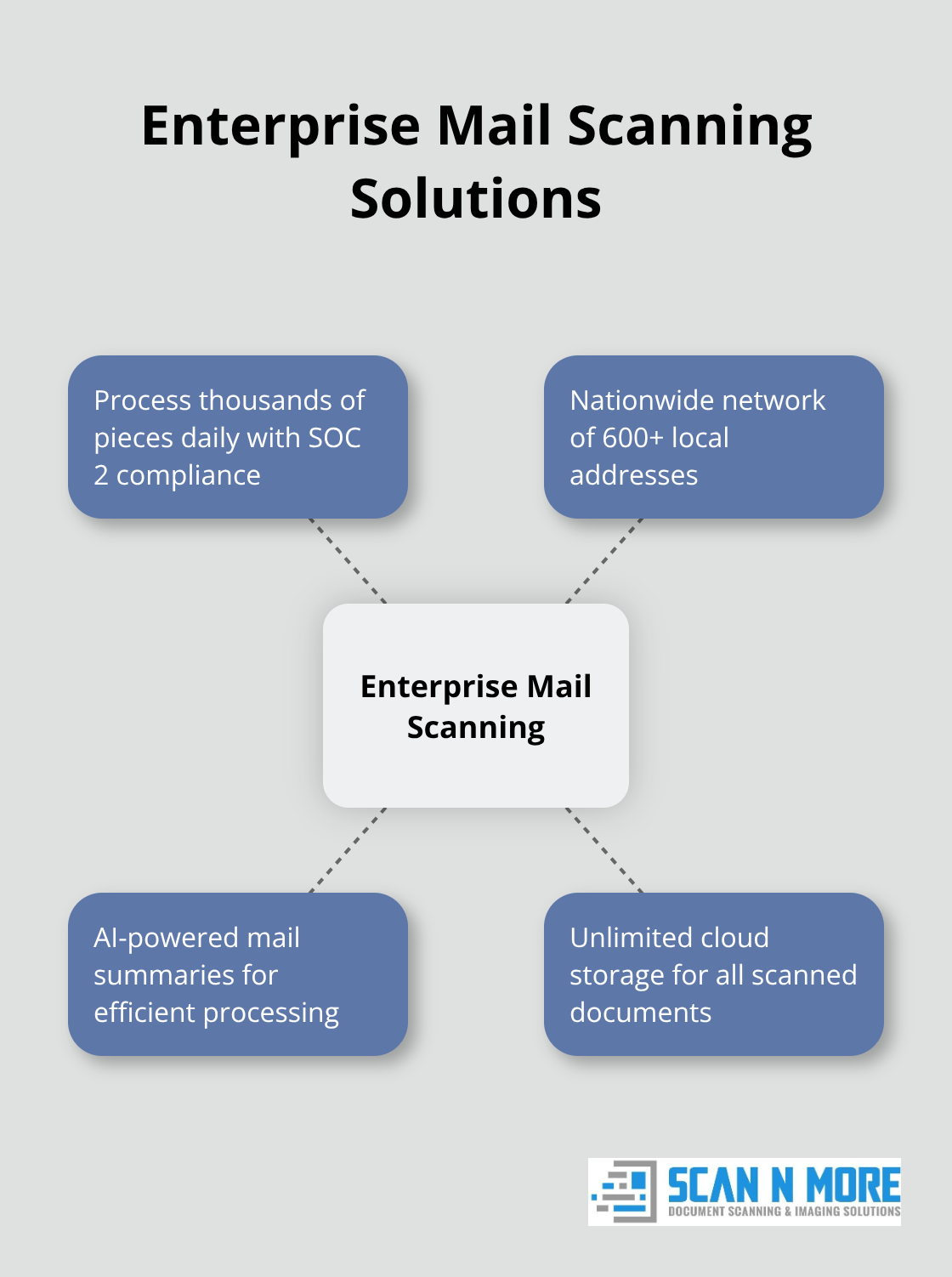
Postal dominates the enterprise mail scanning market with AI-powered mail summaries and compliance-grade security starting at $49 monthly. Their platform processes thousands of pieces daily while it maintains SOC 2 compliance standards that enterprises demand. Stable delivers exceptional results with clients who report significant reductions in mail processing time and maintains a Net Promoter Score above 70.
PostScanMail operates over 600 local addresses nationwide, which gives large organizations strategic location choices for mail receipt. These enterprise providers offer unlimited cloud storage, bulk scanning capabilities, and dedicated account management teams that smaller competitors cannot match.
SMB Options With Flexible Pricing
Small and medium businesses need cost-effective solutions without they sacrifice security features. Physical Address starts at $7.98 monthly and provides real street addresses plus registered agent services that enhance business credibility. iPostal1 offers access to over 4,000 addresses globally with flexible plans that start at $9.99 monthly and includes a 30-day money-back guarantee.
Anytime Mailbox operates over 2,500 locations with unlimited storage for scanned mail at $5.99 monthly, though service quality varies by location since they outsource operations. LegalZoom provides trusted virtual mailbox services at $29 monthly but limits mail items and charges extra fees that quickly increase costs.
Hidden Costs That Impact Your Budget
Most providers advertise attractive base prices but add significant charges for essential features. Additional user access fees often cost $5-15 per user monthly (which doubles costs for small teams). Package handling charges range from $2-8 per item, while forwarding services add $3-12 per shipment depending on destination and speed.
Storage limits create another expense trap – providers charge $0.50-2.00 per gigabyte once you exceed free storage allowances. Premium features like OCR technology, API access, and priority processing typically cost extra despite their importance for business operations.
These pricing complexities make accurate cost comparisons difficult, but understanding the total expense helps businesses select providers that match their actual needs and budget constraints rather than advertised rates.
How Do You Launch Mail Scanning Successfully
Configure Forwarding With Maximum Security
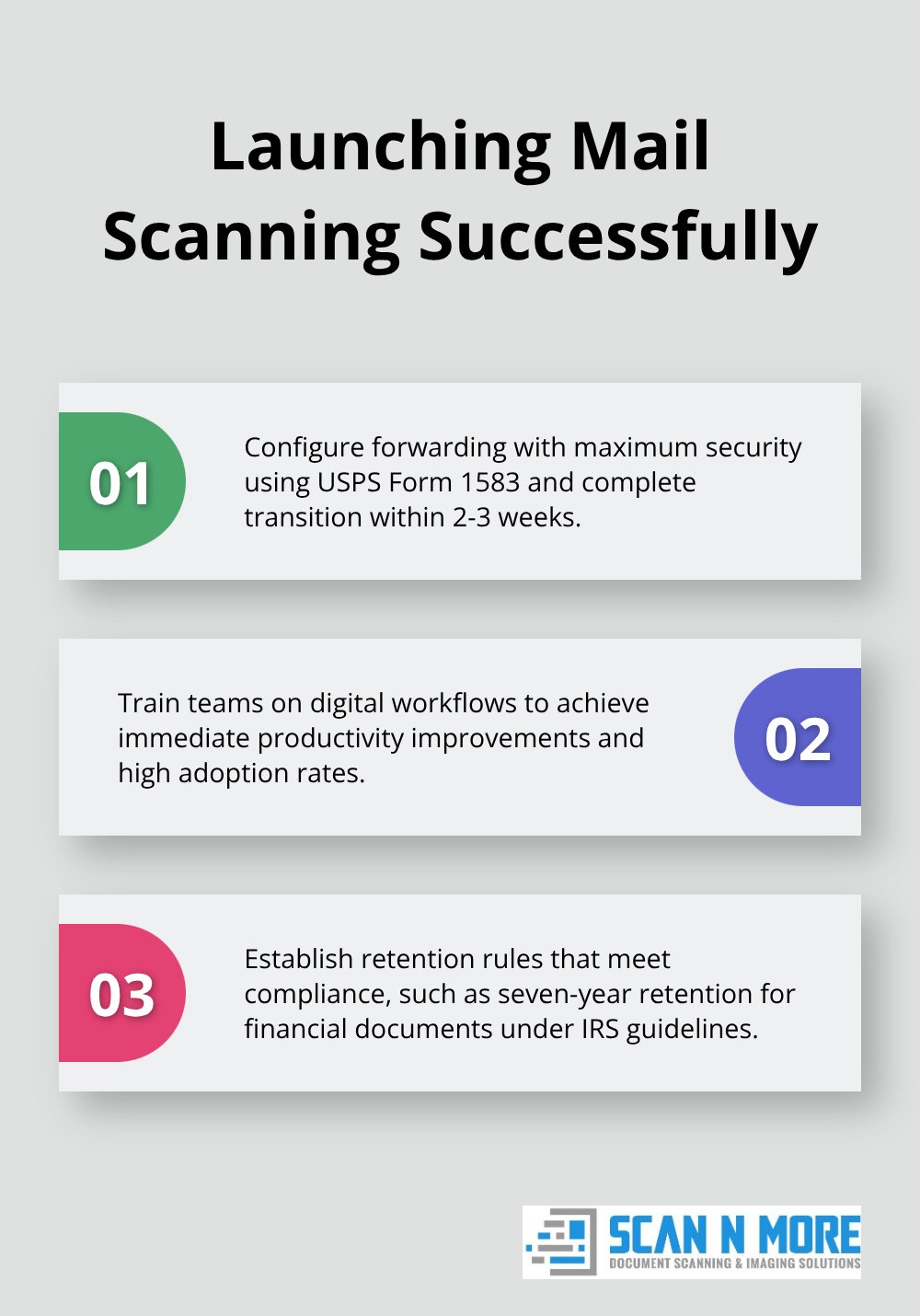
Mail forwarding setup demands precise configuration to maintain security standards. Start by establishing a dedicated forwarding address with your chosen provider and notify all stakeholders about the transition timeline. Configure mail redirection through USPS Form 1583 for business accounts, which requires notarization and two types of identification to prevent unauthorized access.
Set up automatic notifications when new mail arrives to maintain response times, and establish priority handling for urgent correspondence types. Most businesses complete this transition within 2-3 weeks when they follow systematic protocols rather than attempt rushed implementations.
Train Teams on Digital Workflows
Staff training determines whether mail scanning delivers promised efficiency gains. Create standardized procedures for accessing, organizing, and sharing digital mail through your chosen platform. Designate mail administrators who handle sensitive documents and establish clear protocols for different document types.
Route invoices to accounting, send contracts to legal teams, and direct general correspondence to appropriate departments. Train employees on search functions and folder structures to eliminate time wasted on administrative tasks. Companies that invest in comprehensive training see immediate productivity improvements while those that skip training struggle with adoption rates below 40%.
Establish Retention Rules That Meet Compliance
Document retention policies must align with industry regulations and business needs. Financial documents require seven-year retention under IRS guidelines, while employment records need preservation for varying periods depending on state laws. Healthcare organizations must maintain patient correspondence for minimum periods specified by HIPAA requirements.
Set up automated deletion schedules for non-essential mail and create secure backup systems for critical documents. Configure access logs that track who views specific documents and when, which becomes essential during audits or compliance reviews. These policies prevent storage costs from escalating while maintaining legal protection.
Final Thoughts
The best mail scanning services deliver bank-grade encryption, SOC 2 compliance, and real-time processing that transforms physical mail into secure digital workflows. Security features like AES-256 encryption and role-based access controls protect sensitive documents. API integrations with Microsoft 365 and Google Workspace eliminate manual data entry tasks.
Enterprise organizations benefit from providers like Postal and Stable that handle high volumes with dedicated support teams. Small businesses find value in flexible options like Physical Address and iPostal1 that offer competitive rates without sacrificing essential security features. Hidden costs for additional users, package handling, and storage overages require careful evaluation during provider selection (particularly for growing teams).
Successful implementation depends on proper mail forwarding configuration, comprehensive staff training, and compliant document retention policies. Companies that follow systematic protocols see immediate productivity improvements and reduced administrative burdens. We at Scan N More provide professional document scanning services that transform paper-based processes into secure digital solutions for modern businesses.