

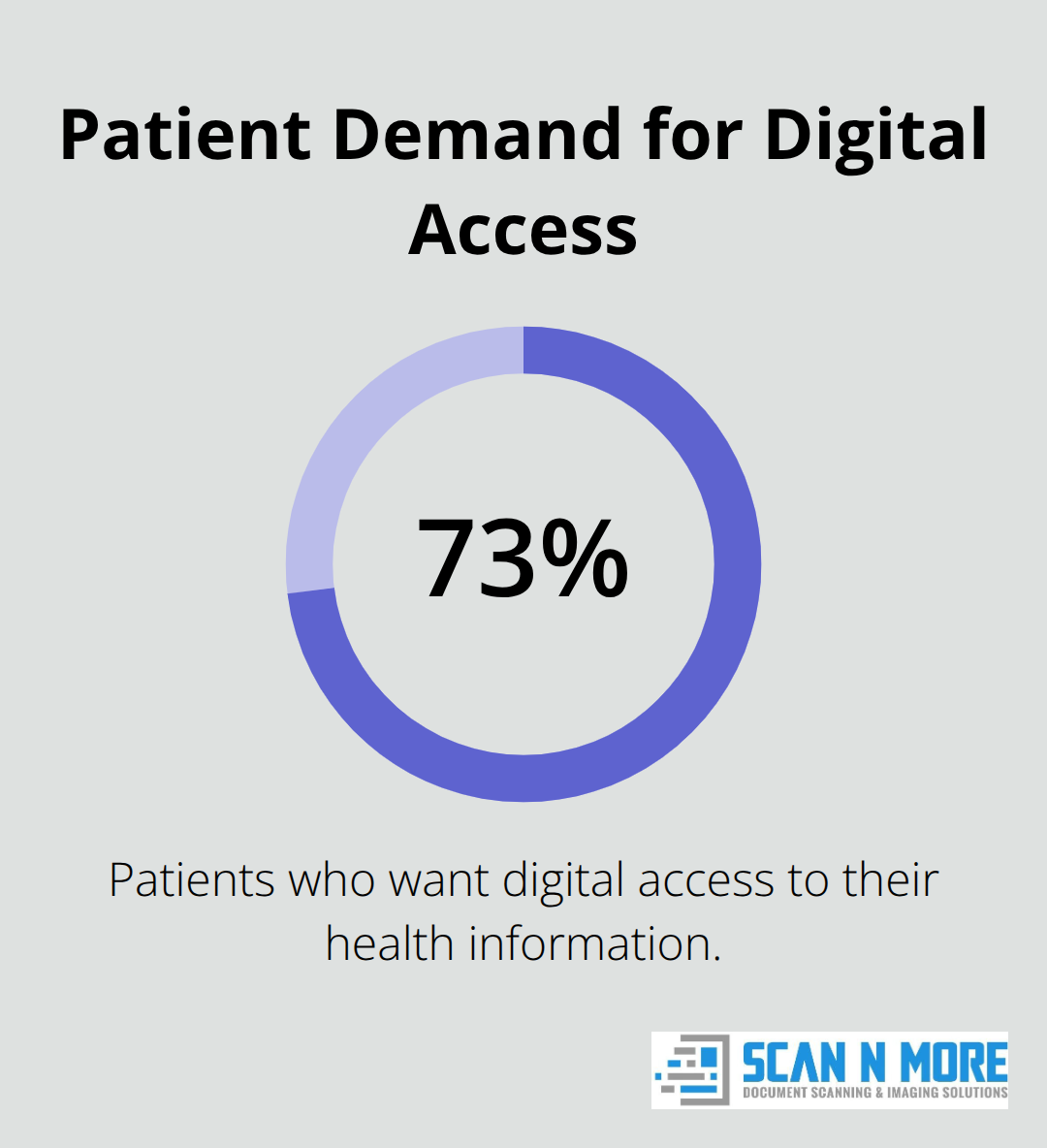
Paper files still fill filing cabinets in thousands of medical practices across the country. Yet patient expectations have shifted dramatically, with 73% of patients now wanting digital access to their health information.
At Scan N More, we’ve seen firsthand how medical records digitalization transforms both patient care and practice operations. This guide walks through the real barriers healthcare teams face and the concrete steps needed to move forward.
Why Digital Records Matter for Patient Safety and Operations
Eliminating Critical Information Gaps
Digitizing medical records directly reduces errors that cost healthcare practices thousands annually. When records exist only on paper, clinicians miss critical information during patient visits, leading to duplicate tests, medication errors, and delayed diagnoses. The CDC reports that approximately 88.2% of office-based physicians now use any EMR/EHR system, yet many practices still maintain hybrid workflows where paper coexists with digital systems. This creates dangerous gaps.
A clinician reviewing a patient’s history might miss a recent lab result filed in the wrong drawer or overlook a drug interaction documented in handwritten notes. Digital records eliminate these gaps entirely. When information lives in a single system, every authorized team member accesses the same current data instantly. Hospitals transitioning to fully digital systems like those in the UK NHS have seen consolidated notes, lab results, and appointment histories accessible in real time to both clinicians and patients. This transparency prevents the miscommunications and oversights that lead to adverse events.
Speed That Saves Lives
Speed transforms daily operations in ways paper systems cannot match. Paper-based retrieval takes minutes or hours when records sit in storage. Digital systems return results in seconds. This matters enormously during emergencies when every minute affects patient outcomes. Staff spends far less time hunting for information and more time delivering care.
Real-world data shows the impact clearly. When clinicians access complete patient information instantly, they make faster, more informed decisions. They avoid repeating tests already completed. They catch medication interactions before they harm patients. They coordinate with specialists without waiting for records to arrive by mail or courier.
Reclaiming Staff Hours and Reducing Overhead
Administrative costs represent the largest hidden expense in paper-based practices. Filing, retrieving, storing, and managing paper records consumes significant staff hours each week. A single misfiled record triggers time-consuming searches that pull multiple people from productive work. Practices maintaining paper systems also pay continuously for physical storage space, filing supplies, and the labor to maintain organized systems.
Digital records eliminate these recurring costs almost entirely. Once scanned and organized into a searchable database, records require minimal ongoing maintenance. Staff no longer spends hours on filing and retrieval tasks. This frees them for patient-facing work that generates revenue and improves satisfaction. Practices report reclaiming staff time weekly after full digitalization, which translates to meaningful cost reduction and the ability to serve more patients with existing staff.
The transition itself requires investment in scanning equipment or professional services (such as those offered by Scan N More, which provides high-quality scanning for medical documents with full compliance and security). However, the operational savings accumulate quickly. Within months, most practices recover their initial investment through reduced labor costs and improved staff productivity.
Moving Forward With Implementation
These benefits-safer care, faster access, lower costs-create a compelling case for action. Yet moving from paper to digital systems requires more than simply purchasing scanning equipment. Healthcare teams must establish clear workflows, organize data logically, and train staff thoroughly. The next section walks through the specific steps that transform digitalization from a theoretical goal into operational reality.
Where Healthcare Stands Today
The Hybrid Workflow Trap
The reality on the ground differs sharply from national statistics. While 88.2% of office-based physicians use some form of EMR/EHR system, this masks a critical problem: many practices operate in hybrid mode, mixing paper and digital workflows simultaneously. A physician pulls up lab results on screen while simultaneously searching filing cabinets for handwritten consultation notes. This fragmentation creates the worst of both worlds, combining digital system costs with paper system inefficiencies.
The gap between any EMR adoption (88.2%) and certified EMR adoption (77.8%) reveals that many practices have digitized incompletely, lacking the standardized infrastructure needed for genuine interoperability. Practices stuck in this middle ground waste resources maintaining both systems while gaining the benefits of neither. The problem intensifies in smaller practices and rural settings where budget constraints force slower transitions and continued reliance on paper for certain document types.
Compliance Pressure and Patient Expectations Collide
Compliance and patient demand push the issue forward, though unevenly. HIPAA regulations require secure storage and access controls that paper systems struggle to provide, forcing practices toward digitalization whether they feel ready or not. Simultaneously, patient expectations have shifted dramatically. Patients expect to access their records online, schedule appointments digitally, and receive test results through secure portals. When practices cannot deliver this experience, patients switch providers.
Yet many healthcare organizations underestimate what full digitalization demands. The UK NHS experienced this firsthand during its Epic EHR rollout, where staff reported insufficient training for the transition. Staff adaptation takes time measured in months, not weeks, and without proper preparation, practices face temporary productivity drops and staff frustration that can damage morale for years.
What Full Transition Actually Requires
Organizations moving forward must understand that digitalization is not a one-time project but a sustained commitment. Adequate training budgets, hardware investment, and realistic timelines for staff adjustment separate successful transitions from failed ones. The infrastructure shift demands more than purchasing scanning equipment or EHR software.
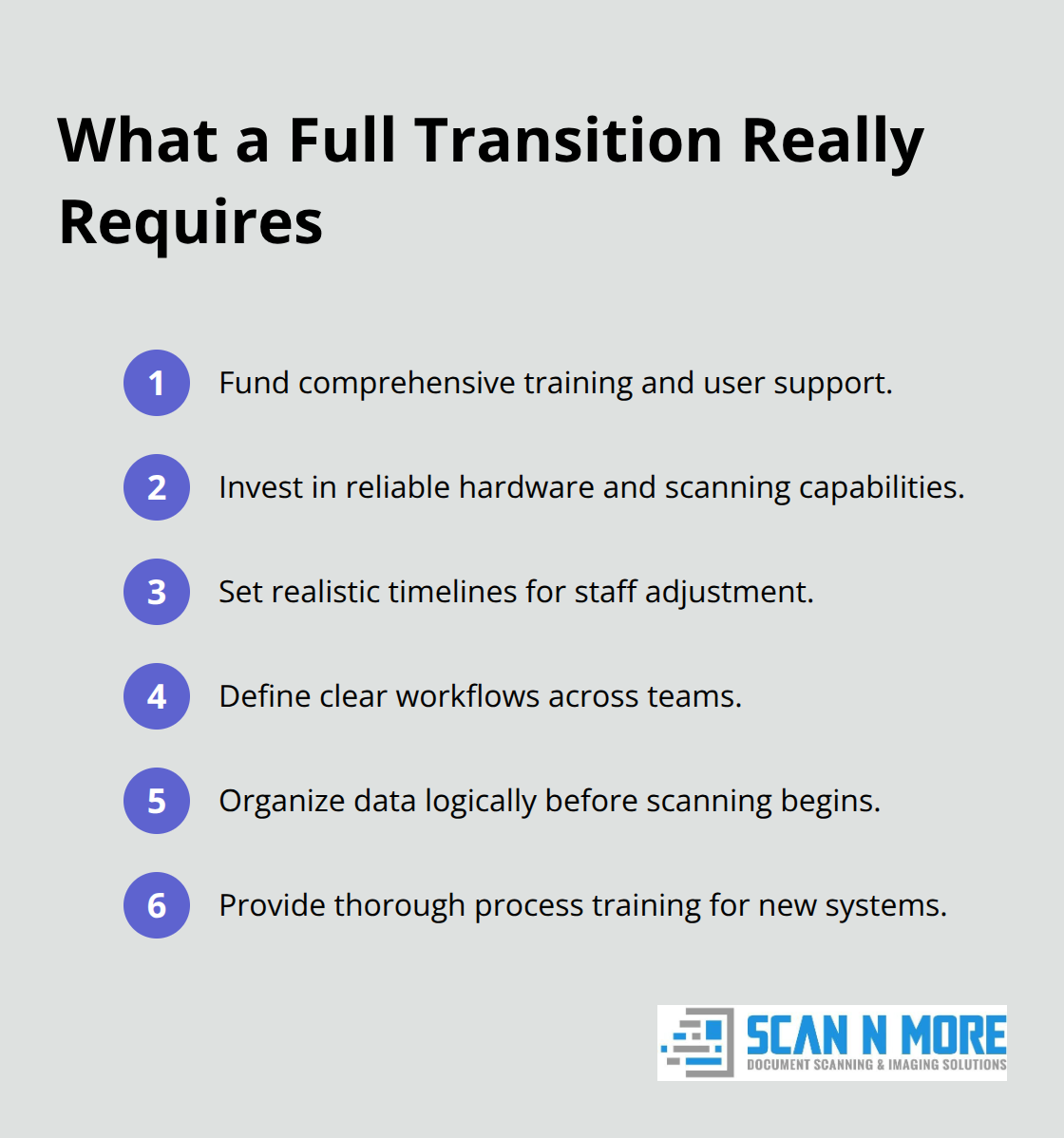
Healthcare teams must establish clear workflows, organize data logically, and train staff thoroughly on new processes. This sustained effort transforms digitalization from a theoretical goal into operational reality, positioning practices to meet both regulatory requirements and patient demands while building a foundation for long-term competitive advantage.
How to Build a Digitalization Strategy That Actually Works
Establish Security and Compliance From the Start
Security and compliance form the foundation of any successful medical records digitalization project, yet many practices rush this step and create expensive problems later. HIPAA compliance is non-negotiable, meaning your scanning solution must provide end-to-end encryption, secure data destruction protocols, and audit trails that document every access to patient information. When selecting a scanning vendor, verify their data handling practices explicitly. Ask whether they maintain SOC 2 Type II certification, whether they destroy original documents securely after scanning, and whether they provide written compliance documentation. This verification step takes hours but prevents data breaches that cost far more in remediation, legal fees, and reputation damage.
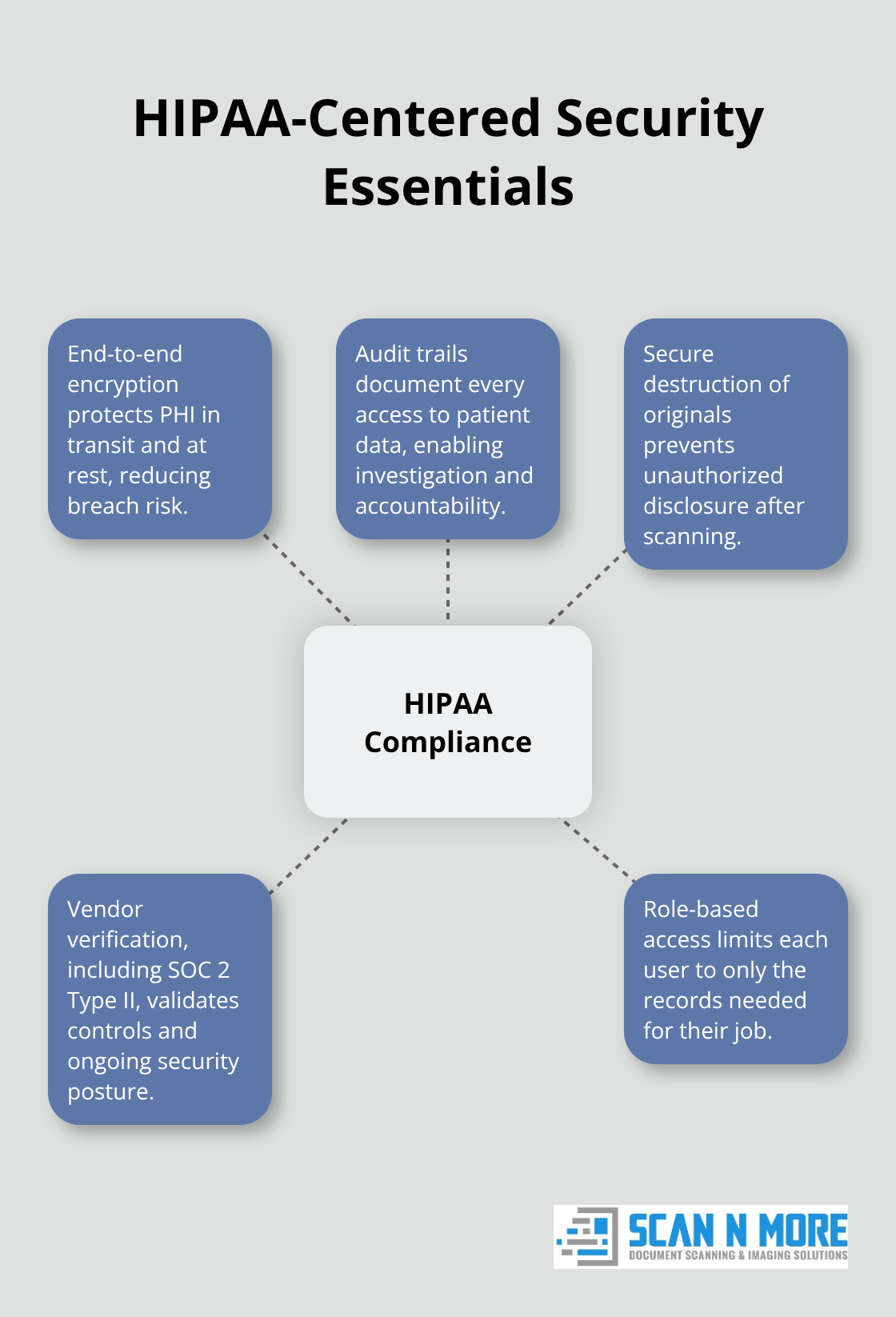
Professional scanning services like Scan N More handle both on-site and off-site scanning for medical documents while maintaining data security and proper destruction of originals. Beyond the vendor relationship, establish internal protocols for who accesses what information and when. Role-based access controls should limit staff to patient records relevant to their specific job function. A billing clerk does not need access to detailed clinical notes, and front-desk staff should not view medication lists. This principle of least privilege prevents accidental exposure and reduces insider risk substantially.
Create a Logical Filing Structure Before Scanning Begins
Organization determines whether your digital records become a searchable asset or an unsearchable archive. The most common digitalization failure occurs when practices scan documents without establishing a logical filing structure first. Folders organized by patient ID, then by document type and date, make retrieval straightforward. Practices should standardize naming conventions across all scanned documents so searches return consistent results. When staff encounter ambiguous document types during scanning, establish a clear decision protocol rather than making inconsistent choices. This upfront planning prevents the chaos that emerges when thousands of documents sit in digital storage without proper organization.
Invest in Comprehensive Training Before Go-Live
Staff training on data organization happens before scanning begins, not after. Your approach should prioritize comprehensive training sessions covering both the technical mechanics of the new system and the workflow changes staff will experience. Explain why the new organization system matters for patient safety and care coordination, not just compliance. This context motivates staff to adopt new habits rather than resisting them.
Schedule training sessions well before go-live, offer hands-on practice with real patient scenarios, and assign super-users who can answer questions during the critical first weeks. Expect that staff productivity will dip temporarily after implementation, typically for two to four weeks, as muscle memory shifts from paper-based processes to digital ones. Plan staffing accordingly to maintain patient care quality during this adjustment period.
Gather Feedback and Adjust Workflows Continuously
Post-launch, gather feedback monthly on what workflows are breaking and what’s working, then make targeted adjustments based on actual staff experience rather than assumptions about how the system should work. Staff will identify inefficiencies and opportunities that planning meetings never surface. This iterative approach transforms digitalization from a rigid project into a living system that improves over time. The willingness to adapt based on real-world experience separates practices that thrive after digitalization from those that struggle with resistance and workarounds.
Final Thoughts
Medical records digitalization transforms how healthcare practices operate, but only when implementation follows a deliberate strategy grounded in security, staff readiness, and realistic timelines. The practices that succeed treat digitalization as a sustained commitment rather than a one-time project, invest in proper training, establish clear workflows before scanning begins, and adjust processes based on actual staff feedback. This approach prevents the frustration and resistance that derail many transitions and positions your practice to meet both regulatory requirements and patient demands.
The competitive advantage belongs to practices that move forward now. Patients increasingly expect digital access to their health information and the ability to coordinate care across providers seamlessly, while regulatory pressure around data security and interoperability continues to intensify. Waiting for perfect conditions means falling further behind competitors who already have transformed their operations. The barriers to digitalization are real but surmountable-security concerns disappear when you partner with vendors who prioritize compliance, staff resistance softens with comprehensive training, and budget constraints ease when you recognize that operational savings accumulate quickly after implementation.
The practices thriving today acted on medical records digitalization two or three years ago, and the practices that will thrive in 2027 are those that commit to the transition now. Your patients stand ready for digital access, your staff can adapt with proper support, and your operations will improve measurably. Contact Scan N More to discuss how professional scanning services can accelerate your digitalization journey and position your practice for long-term success.