

Every business handles mail, but most do it inefficiently. A mail station is the backbone of organized mail management, turning scattered paperwork into a streamlined process.
At Scan N More, we’ve seen firsthand how the right mail station setup cuts processing time and reduces errors. This guide walks you through everything you need to know about implementing one that actually works for your operation.
What a Mail Station Actually Does
A mail station is a physical or digital hub where incoming and outgoing mail gets sorted, tracked, and distributed within your organization. Unlike a pile of envelopes on a desk, a proper mail station centralizes everything in one location with clear compartments for incoming mail, outgoing correspondence, recycling, and document storage. The core function is simple: eliminate chaos and create a repeatable process.
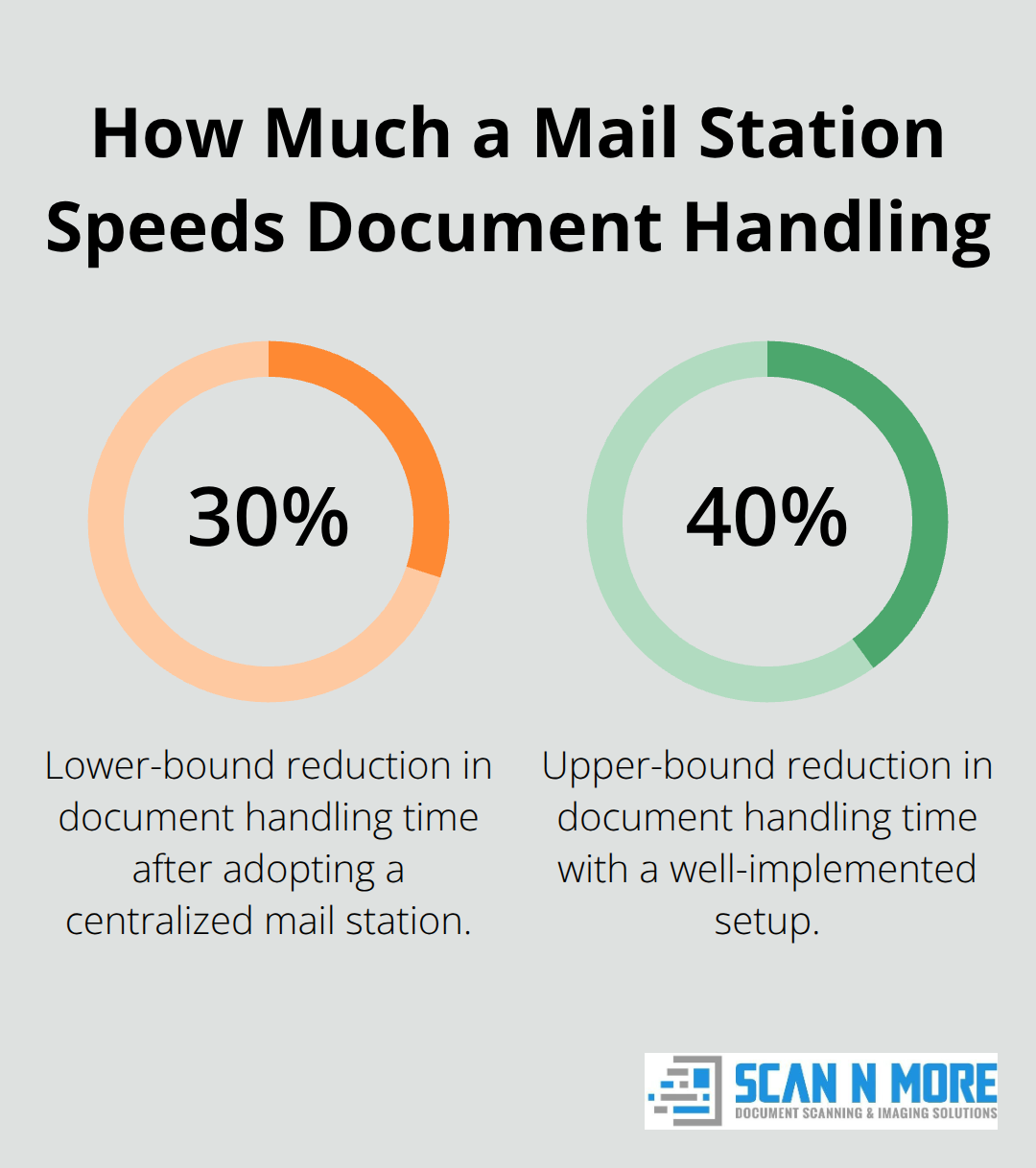
Businesses that implement mail stations watch their document handling time drop by 30 to 40 percent. A well-designed station includes an inbox for received mail, a designated outgoing tray, a recycling or discard area for junk mail, and a filing zone for documents that need retention. The materials vary depending on your space and budget-wire baskets, wooden trays, wall-mounted shelving, and corkboards all work-but the principle stays the same: separate what arrives from what leaves, and process both on a schedule rather than randomly throughout the day.
Where Mail Stations Fit in Real Operations
Mail stations work best when positioned at a natural entry point in your office flow. Back doors, mudrooms, home offices, and near entryways are common spots because staff encounter mail there anyway. The location matters because it reduces the distance people travel to process mail and makes it harder to ignore. For businesses handling higher volumes, a centralized station near the main reception area works better than scattered departmental inboxes. Most organizations that adopt a mail station set a fixed cadence-daily or weekly sorting-rather than handling mail as it piles up. This routine approach prevents critical documents from getting buried and keeps recycling consistent. For small offices with limited space, wall-mounted units or compact organizers that mount near the door deliver the same benefit without consuming floor space. The key is choosing a system aligned with your office’s actual traffic patterns so mail gets processed consistently.
Mail Stations and the Shift to Digital
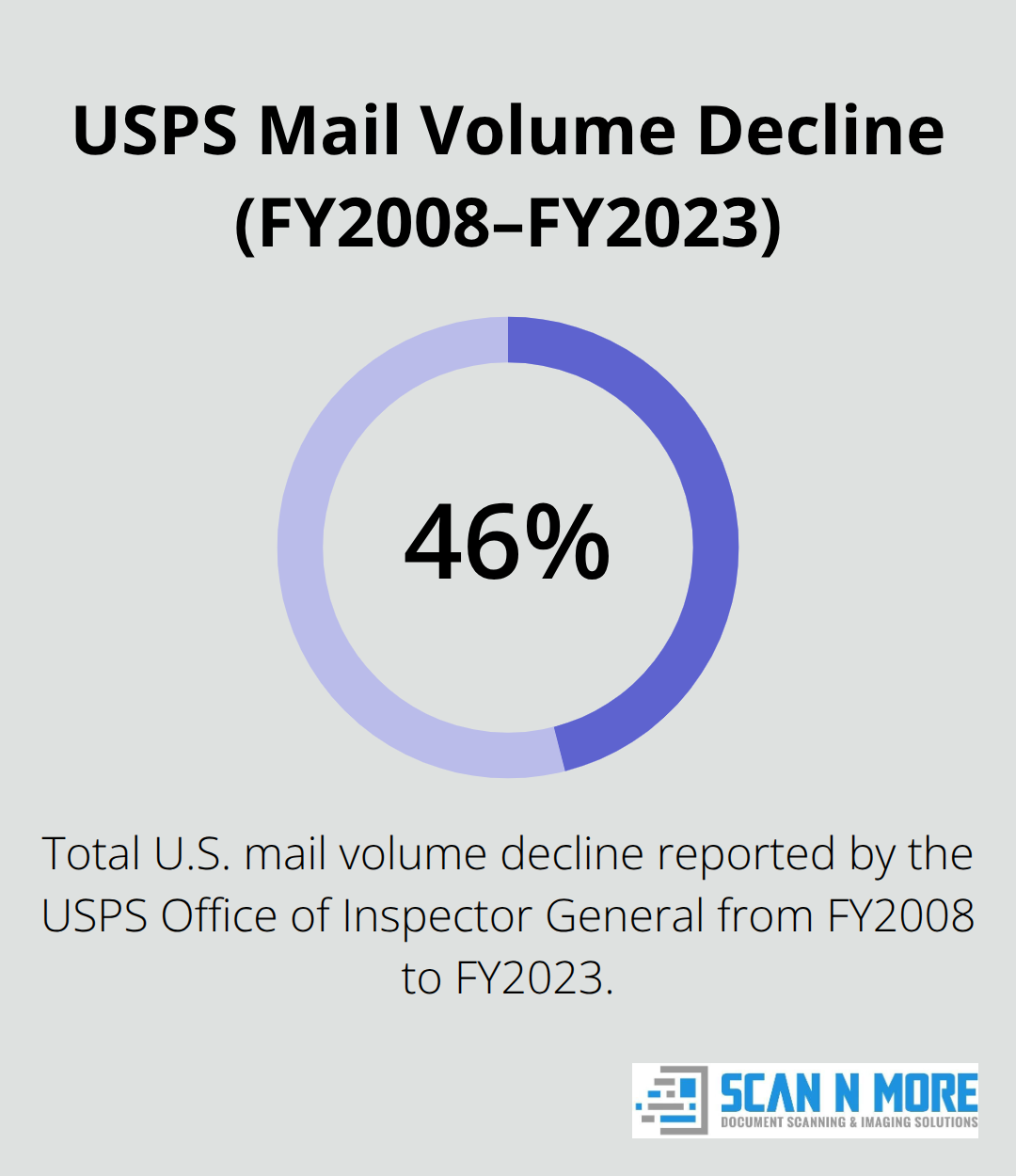
The reality is that mail volume continues to decline. The USPS Office of Inspector General reported that total mail volume dropped 46 percent between fiscal 2008 and 2023. This decline matters because it changes how businesses should think about mail handling. A mail station still serves a purpose for the mail that does arrive, but its role increasingly includes acting as a gateway to digitization.
Many of the documents that land in your mail station-invoices, contracts, statements-need scanning and storage anyway. Coupling a mail station with document scanning transforms it from a holding area into a processing point that feeds your digital workflow. This approach eliminates the need to store physical documents long-term while keeping mail organized during the transition to digital. The next section covers the specific benefits that a mail station brings to your business operations and how to measure them.
Why a Mail Station Cuts Your Real Costs
A mail station doesn’t just organize paper-it directly reduces the money your business spends on mail handling. When staff members spend time searching for documents, re-opening mail that got misplaced, or duplicating work because incoming correspondence never reached the right person, those minutes add up fast. A centralized station eliminates this waste by creating a single point where all incoming mail lands and gets sorted immediately.
How Centralization Stops Hidden Expenses
This setup prevents the scenario where an invoice sits on someone’s desk for three weeks before accounting sees it, which delays payment processing and damages vendor relationships. Businesses that implement a structured mail station report that their administrative staff recover 3 to 5 hours per week previously lost to mail-related searching and sorting. That time translates directly to lower payroll costs for the same output.
The investment in a mail station-whether a simple wall-mounted unit costing under 200 dollars or a more elaborate built-in system-pays for itself within weeks when you factor in recovered staff time. Beyond labor savings, a proper station reduces the physical storage space needed for mail that piles up unsorted. Many organizations lease expensive office real estate by the square foot, so eliminating a corner designated as a mail dumping ground frees up space that could serve a more productive function.
Tracking and Compliance Get Easier
When mail enters your system through a single point, tracking becomes straightforward. You can note receipt dates, flag documents requiring signatures, and ensure nothing gets lost between arrival and final destination. This becomes critical for regulated industries where document retention and proof of receipt matter legally.
A mail station creates an audit trail that demonstrates you handled incoming documents responsibly. Organizations in healthcare, finance, or legal services cannot afford to have critical correspondence disappear, and a mail station with consistent processing prevents exactly that problem. For businesses handling contracts or time-sensitive documents, this traceability also protects against disputes about whether a document actually arrived and when.
Building Your Filing System
The station becomes your evidence that mail was received, processed, and routed appropriately. Adding a filing zone adjacent to your mail station means important documents stay organized and accessible rather than scattered across multiple desks. This reduces the time spent searching for a specific invoice or contract when you need it, which is especially valuable during audits or when responding to customer inquiries about previous correspondence.
Once mail reaches your station and gets sorted, the next logical step involves deciding what stays physical and what moves to digital storage. This decision shapes how your mail station integrates with your broader document management strategy.
What Stops Mail Stations From Working
Handling High Volume Without Collapse
High volume mail flow creates the first real problem. When a business receives 50 or 100 pieces of mail daily, a simple inbox and outgoing tray collapse under the weight. Staff members start bypassing the station because it feels slower than just opening mail at their desks, which defeats the entire purpose. The solution requires scaling your station’s capacity before problems start.
This means adding multiple sorting trays organized by department or mail type, not just one catch-all inbox. For businesses handling substantial volume, a dedicated mail clerk processes incoming and outgoing mail on a fixed schedule rather than letting it accumulate. This person becomes the single point through which all mail flows, preventing the chaos that happens when everyone handles their own correspondence.
Outdoor collection mailboxes on legs work well for bulk outgoing mail because they prevent the situation where a stack of outgoing envelopes sits on someone’s desk for days waiting for someone to remember to mail them.
Protecting Sensitive Information
Security and confidentiality present a harder challenge because mail contains sensitive information. Financial statements, medical records, personnel files, and client contracts cannot sit in an open inbox where anyone walking past can see them. The answer is compartmentalization with restricted access.
Locking compartments in centralized mail stations secure documents until authorized staff retrieve them, which is standard practice in healthcare facilities and law firms. For smaller offices, a locked filing cabinet positioned adjacent to your mail station solves this problem without requiring expensive infrastructure. The critical step is establishing clear protocols about who accesses what mail and documenting those decisions.
Converting Physical Mail to Digital Security
When digital workflows enter the picture, the mail station transforms into a scanning point rather than a permanent storage location. Documents arrive, get sorted by type, then get scanned immediately or within 24 hours before moving to secure storage or destruction. This approach eliminates the security risk of sensitive documents sitting in physical form for weeks.
Professional mail scanning services capture incoming correspondence at the station and convert it to secure digital files, which removes the physical security burden entirely while creating an audit trail that proves documents were processed appropriately.
Final Thoughts
A mail station transforms how your business handles correspondence and delivers measurable results: recovered staff time, reduced storage costs, eliminated lost documents, and a clear audit trail for compliance. Whether you operate a small office with a wall-mounted unit or manage a large facility with dedicated mail processing, the principle stays the same-centralize incoming and outgoing mail, establish a consistent sorting routine, and integrate scanning to move documents into your digital workflow. The shift toward digital document management doesn’t eliminate the need for a mail station; it redefines the role so physical mail serves as the gateway between paper and digital systems.
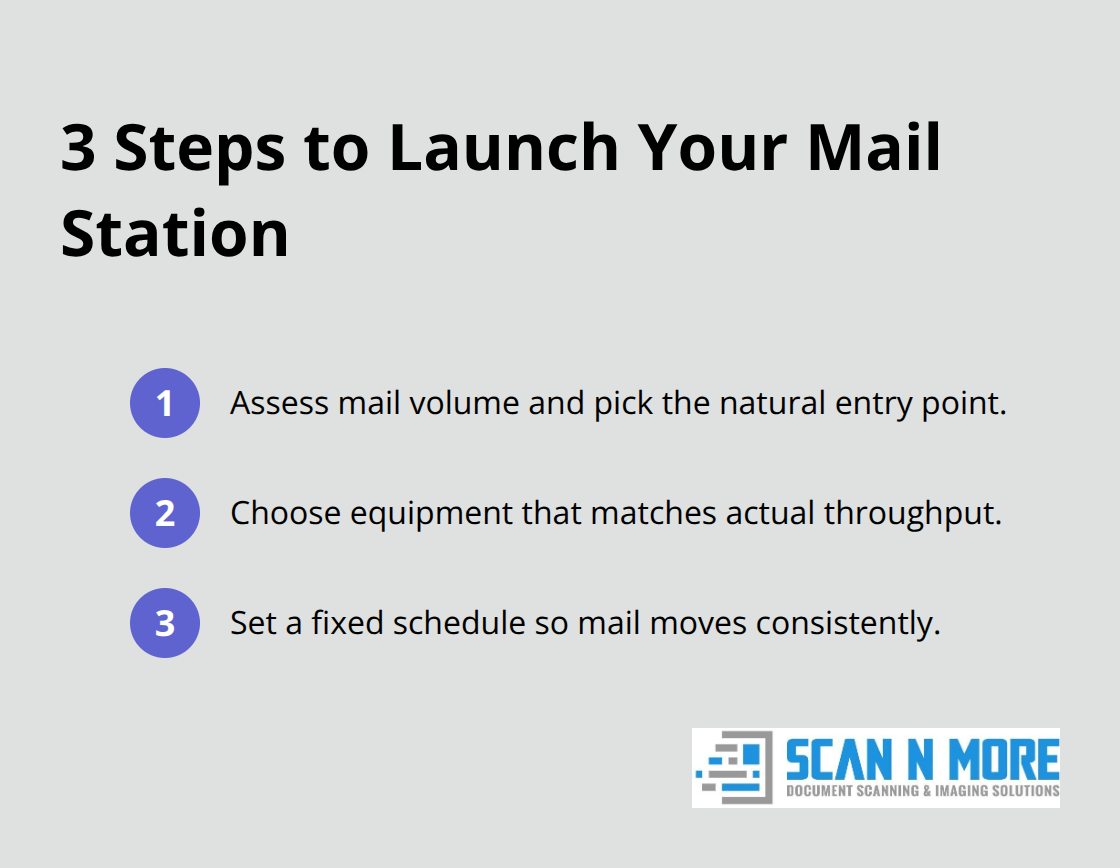
Starting your mail station strategy requires three concrete steps. First, assess your current mail volume and identify the natural entry point in your office where staff already congregate. Second, select appropriate equipment based on your actual throughput, whether that’s a simple wall-mounted organizer or a more robust centralized system. Third, establish a fixed processing schedule so mail moves through your station consistently rather than accumulating.
We at Scan N More work with businesses daily to bridge the gap between physical mail and digital operations. Our mail scanning services capture incoming documents at your mail station and convert them to secure digital files, eliminating the need for long-term physical storage while maintaining complete compliance and audit trails. A well-implemented mail station pays for itself within weeks and continues delivering value indefinitely through the time your team recovers and the documents you never lose again.