

At Scan N More, we understand the critical importance of HIPAA-compliant hard drive destruction in healthcare. Protecting patient data is not just a legal requirement, but a fundamental aspect of maintaining trust and integrity in the medical field.
In this post, we’ll explore various methods for HIPAA-compliant hard drive destruction, including physical destruction techniques and secure data erasure software solutions. We’ll also discuss the consequences of non-compliance and provide practical tips for healthcare organizations to safeguard sensitive information effectively.
The Critical Importance of HIPAA Compliance in Hard Drive Destruction
Understanding HIPAA Regulations
HIPAA regulations establish strict standards for protecting patient health information, which extend to the destruction of hard drives containing sensitive data. These regulations aim to safeguard healthcare organizations from severe consequences and protect patient privacy.
The High Stakes of Non-Compliance
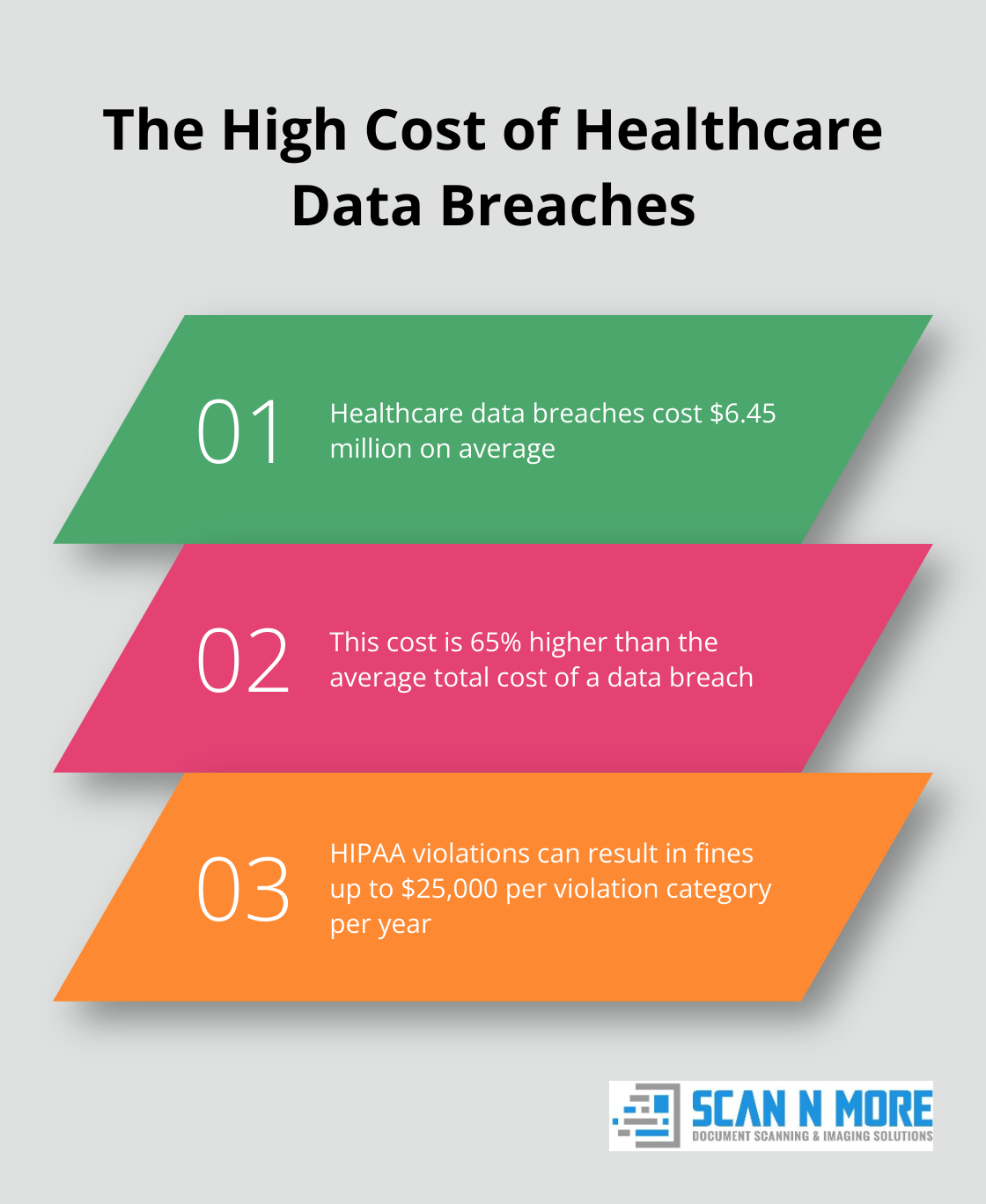
HIPAA violations can result in substantial fines, with penalties reaching up to $25,000 per violation category per calendar year. In 2018, Fresenius Medical Care North America paid $3.5 million to settle HIPAA violations, illustrating the financial risk of non-compliance. Beyond monetary penalties, healthcare organizations face reputational damage and loss of patient trust when data breaches occur.
The True Cost of Data Breaches
A 2019 study by the Ponemon Institute found that the average cost of a healthcare data breach was $6.45 million, 65% higher than the average total cost of a data breach. This staggering figure underscores the importance of thorough data destruction practices in the healthcare sector.
Consequences Beyond Financial Penalties
Non-compliance with HIPAA regulations can lead to more than just monetary fines. Healthcare organizations may face:
- Criminal charges
- Loss of medical licenses
- Mandatory corrective action plans
In 2019, a Tennessee diagnostic medical imaging services company ceased operations and paid $3 million to settle potential HIPAA violations, highlighting the severe consequences of improper data handling.
Implementing Robust Destruction Protocols
To maintain HIPAA compliance, healthcare organizations must implement comprehensive hard drive destruction protocols. These protocols should include:
- Regular audits of data storage devices
- Documented destruction procedures
- Employee training on data handling and destruction
- Partnerships with certified destruction services (such as Scan N More)
Healthcare providers can significantly reduce the risk of data breaches and HIPAA violations by prioritizing these practices. The implementation of robust destruction protocols is not just about following rules-it’s about protecting patients and maintaining the integrity of the healthcare system.
As we move forward, we will explore the various physical destruction methods that healthcare organizations can employ to ensure HIPAA compliance and protect sensitive patient information.
Physical Destruction Methods for HIPAA-Compliant Hard Drive Destruction
Physical destruction of hard drives stands as the most secure method to ensure HIPAA compliance and protect sensitive patient data. Several effective techniques can render hard drives completely unusable and unreadable.
Shredding: The Ultimate Solution
Hard drive shredding is a reliable data destruction method for HIPAA compliance. Industrial-grade shredders reduce hard drives to tiny fragments. This process destroys both the physical platters and the electronic components, which makes data recovery virtually impossible.
A study by the National Association for Information Destruction (NAID) revealed that 40% of used hard drives sold on the secondhand market still contained sensitive data. Shredding eliminates this risk entirely.

Crushing and Pulverizing: Force-Based Destruction
For organizations without access to industrial shredders, crushing and pulverizing offer effective alternatives. Specialized machines apply thousands of pounds of force to flatten hard drives, destroying their internal components.
The U.S. Department of Defense recommends crushing as an acceptable method for destroying classified data storage devices. However, organizations must ensure the secure disposal of crushed remains to prevent potential data recovery attempts.
Disintegration: Beyond Recognition
Disintegration reduces hard drives to particles that are nominally 2 millimeters in size on edge. This method uses extreme heat or mechanical force to break down the drive into small particles.
The National Security Agency (NSA) approves disintegration for Top Secret data destruction, which makes it more than sufficient for HIPAA compliance. While highly effective, this method requires specialized equipment and should be performed by certified professionals.
Degaussing: Erasing Magnetic Media
Degaussing uses powerful magnetic fields to erase data from magnetic storage media. This method proves effective for traditional hard disk drives (HDDs), but it’s important to note that it doesn’t work on solid-state drives (SSDs) or flash storage.
A 2019 report by the Information Commissioner’s Office (ICO) found that improper disposal of old IT equipment (including hard drives) was a leading cause of data breaches in the healthcare sector. Degaussing, when used correctly, can prevent such breaches for magnetic media.
Choosing the Right Method
The selection of a destruction method depends on various factors, including the type of storage media, the volume of devices to be destroyed, and the level of security required. Organizations should consider partnering with certified destruction services to ensure data security and peace of mind.
As we move forward, we’ll explore software-based solutions for secure data erasure, which offer an alternative approach to physical destruction methods.
Software-Based Data Erasure Methods for HIPAA Compliance
Department of Defense (DoD) Standard
The Department of Defense (DoD) 5220.22-M standard sets the bar for data erasure in the industry. This method overwrites all addressable locations on a hard drive with a character, its complement, and a random character. The process repeats three times to ensure thorough data removal.
The National Institute of Standards and Technology (NIST) found that a single overwrite pass suffices for most modern hard drives. However, many organizations choose multiple passes for enhanced security.
NIST Guidelines for Media Sanitization
NIST Special Publication 800-88 outlines comprehensive guidelines for media sanitization. These guidelines assist organizations and system owners in making practical sanitization decisions based on the categorization of confidentiality.
NIST recommends selecting the appropriate method based on data confidentiality and the intended media disposition.
Benefits of Software-Based Erasure
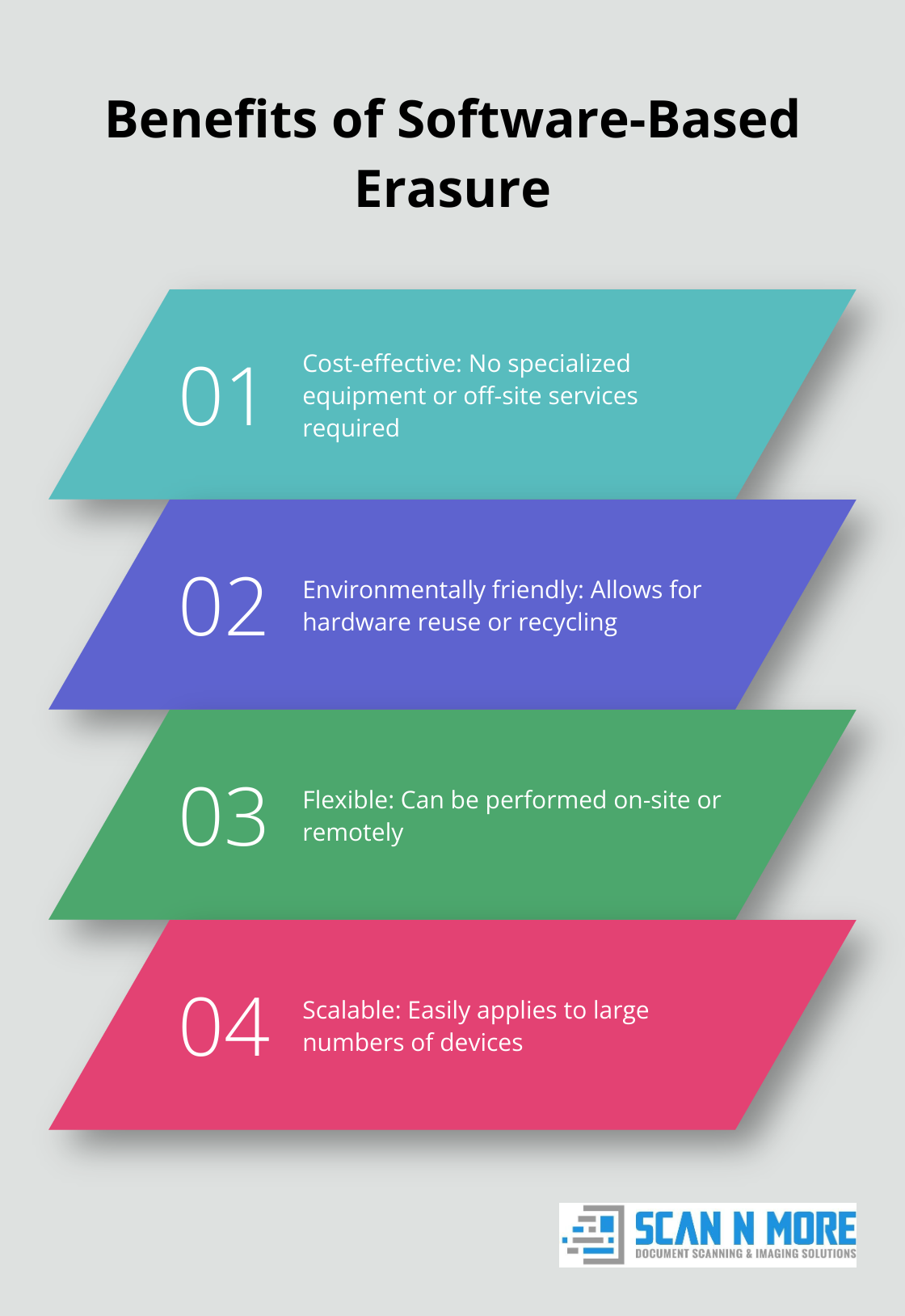
Software-based erasure offers several advantages over physical destruction:
- Cost-effectiveness: No specialized equipment or off-site destruction services required
- Environmental friendliness: Allows for hardware reuse or recycling
- Flexibility: Performs on-site or remotely
- Scalability: Applies easily to large numbers of devices
Verification and Certification Process
Proper verification and certification prove essential for HIPAA compliance when using software-based erasure methods. Reputable data erasure software provides detailed reports for each wiped device, including:
- Device serial number
- Date and time of erasure
- Erasure method used
- Verification results
These reports serve as vital documentation for HIPAA audits and provide a clear chain of custody for data destruction.
Healthcare organizations must carefully evaluate their data destruction needs and select the most appropriate method for their specific circumstances. The key lies in implementing a robust, documented process that safeguards patient data and maintains HIPAA compliance.
Final Thoughts
Healthcare organizations must select the right method for HIPAA-compliant hard drive destruction to protect sensitive patient information and maintain regulatory compliance. Professional destruction services offer expertise, advanced equipment, and rigorous processes to ensure thorough data elimination. These specialized providers also supply detailed documentation and certificates of destruction, which prove invaluable for HIPAA audits.
At Scan N More, we understand the complexities of HIPAA compliance and the critical nature of secure data destruction in healthcare. Our professional document scanning services help organizations transition to efficient digital solutions and include secure hard drive destruction. We safeguard sensitive information throughout its lifecycle.
HIPAA compliance through proper hard drive destruction requires vigilance, up-to-date knowledge of regulations, and a commitment to data security. Healthcare providers who implement robust destruction protocols reduce the risk of data breaches, avoid costly penalties, and protect their reputation. Regular training, audits, and partnerships with trusted service providers form key components of a comprehensive data security strategy.