

At Scan N More, we understand the critical importance of protecting sensitive data. Proper disposal of old hard drives is a key aspect of data security that often gets overlooked.
This guide will walk you through the process of completing a hard drive destruction form, ensuring your confidential information remains secure even after hardware retirement.
Why Hard Drive Destruction Matters
The Hidden Dangers of Improper Disposal
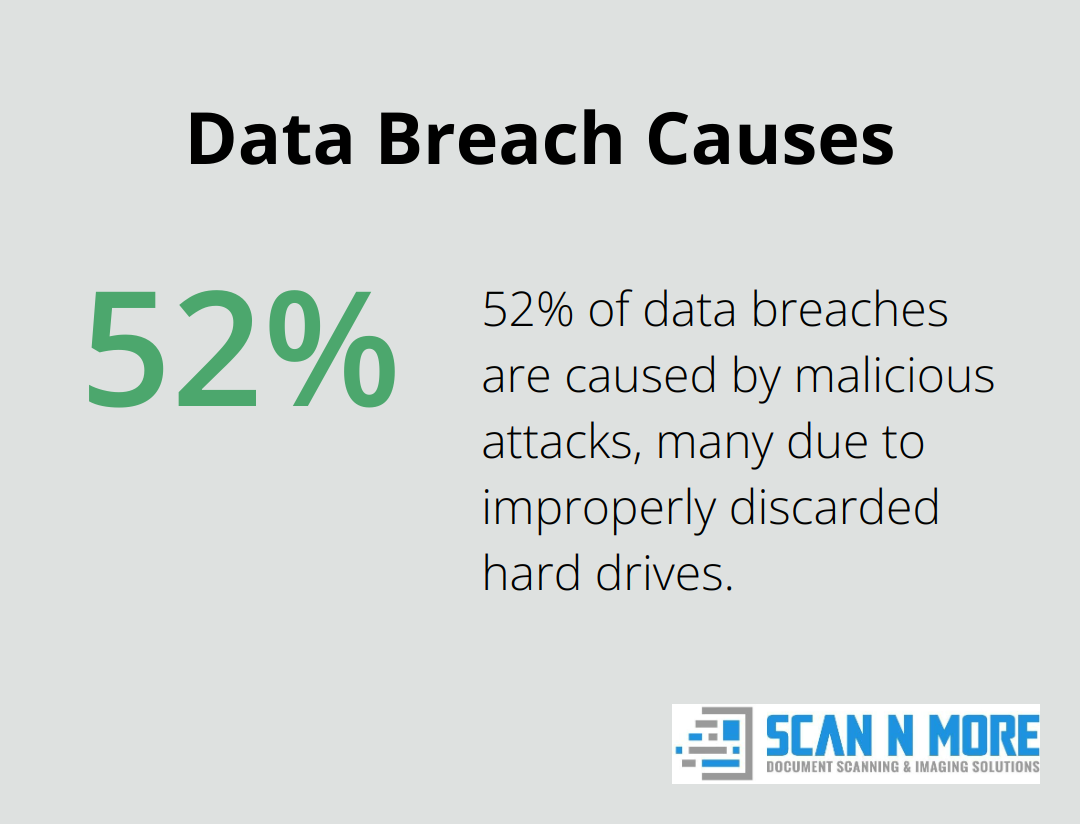
In today’s digital landscape, the proper disposal of hard drives is not just a good practice-it’s a necessity. A study by the Ponemon Institute revealed that 52% of data breaches are caused by malicious attacks. Many of these breaches occur because of improperly discarded hard drives. Even if you think you’ve deleted all the files, standard deletion methods often leave data recoverable to those with the right tools and knowledge.
Regulatory Compliance: A Legal Imperative
Compliance with data protection regulations is mandatory, not optional. The General Data Protection Regulation (GDPR) in Europe and the California Consumer Privacy Act (CCPA) in the United States are two examples of laws that require proper data disposal. Failing to comply can result in hefty fines; GDPR violations can cost up to €20 million or 4% of global annual turnover (whichever is higher).
The Real Cost of Data Breaches
IBM’s Cost of a Data Breach Report highlights the staggering financial impact of data breaches. The global average cost of a data breach in 2024 saw a 10% increase over the previous year, reaching the highest total ever. This figure includes not just direct financial losses but also reputational damage and loss of customer trust.
Environmental Responsibility
Proper hard drive destruction also plays a role in environmental sustainability. E-waste is a growing concern, and responsible disposal of electronic devices (including hard drives) helps minimize the environmental impact. Many professional destruction services offer eco-friendly disposal options, ensuring that materials are recycled or disposed of in an environmentally conscious manner.
Protecting Intellectual Property
For businesses, hard drives often contain valuable intellectual property. Competitors could potentially access trade secrets, product designs, or strategic plans if hard drives are not properly destroyed. This risk extends beyond just financial data or customer information, making proper destruction essential for maintaining a competitive edge.
The next chapter will explore the key elements of a hard drive destruction form, providing you with the knowledge to ensure your sensitive data remains secure throughout the disposal process.
What’s in a Hard Drive Destruction Form?
Data destruction, or data erasure, is a way of overwriting data to entirely wipe the contents of a hard disc or digital media. This chapter explores the key components of this essential form.

Identifying the Owner
The first section of a hard drive destruction form typically focuses on client information. This includes:
- Company name
- Address
- Contact details of the person responsible for the destruction request
Accurate information in this section creates a clear chain of custody for the devices slated for destruction.
Detailing the Hardware
The next section requires you to specify the hardware for destruction. You must list:
- Make
- Model
- Serial number of each hard drive
Meticulous documentation of each device creates an audit trail that proves invaluable in case of future inquiries or audits.
Classifying Data Sensitivity
The form should include a section for data sensitivity classification. This helps the destruction service understand the level of security required. Accurate classification of your data ensures the use of an appropriate destruction method.
Choosing the Destruction Method
The final section allows you to specify your preferred destruction method. Options typically include:
- Physical shredding
- Degaussing
- Disintegration
Secure erase methods can ensure that data on a hard disk drive (HDD) does not fall into the wrong hands. However, the best method varies depending on specific needs and regulatory requirements.
The completion of a hard drive destruction form represents more than just paperwork – it marks a crucial step in protecting your organization’s sensitive information. The next chapter will provide a step-by-step guide on how to fill out this form accurately and efficiently.
How to Fill Out a Hard Drive Destruction Form
Prepare Your Information
Before you start the form, collect all necessary details. This includes your company information, hard drive specifications, and data sensitivity levels. Create a list of all hard drives for destruction, noting the make, model, and serial number for each. You can find this information on the hard drive label or in your IT asset management system.

Enter Company Details
Start the form by inputting your company’s information. This typically includes:
- Company name
- Address
- Contact information
- Name and contact details of the person responsible for the destruction request
Accuracy in this section establishes a clear chain of custody for the devices marked for destruction. A proper chain of custody provides visibility and transparency to the entire data destruction process.
Specify Hardware Details
Move to the hardware details section. Enter information for each hard drive separately. Pay special attention to serial numbers (these are critical for maintaining a proper audit trail). Double-check all entries to ensure accuracy.
Classify Data Sensitivity
The form should include a section for data sensitivity classification. This helps the destruction service understand the required security level. Be thorough and honest in your classification. If you’re unsure about certain data’s sensitivity level, it’s better to classify it at a higher level.
Select Destruction Method
Choose the appropriate destruction method for your needs. Options typically include:
- Physical shredding (often the most secure for highly sensitive data)
- Degaussing (might suffice for less sensitive information)
- Disintegration
Consider your industry regulations and internal policies when making this decision. The best method varies depending on specific needs and regulatory requirements.
Review and Submit
Take time to review all the information you’ve entered. Check for typos or missing details. Consider having a colleague review the form for an extra layer of verification. Once you’re confident in the accuracy and completeness of the information, submit the form to your chosen destruction service provider.
The accuracy of this form is vital not only for the destruction process but also for your records and potential future audits. Your diligence in completing this form represents a significant step in protecting your organization’s sensitive information and maintaining compliance with data protection regulations.
Final Thoughts
A hard drive destruction form serves as a critical safeguard for your organization’s sensitive data. This document creates a robust audit trail, demonstrating your commitment to data security and regulatory compliance. The risks of improper disposal are significant, ranging from data breaches to hefty fines for non-compliance with data protection regulations.
Accurate form completion ensures each device is accounted for, the appropriate destruction method is applied, and a clear chain of custody is maintained. This attention to detail enhances the security of the process and provides peace of mind that your sensitive data won’t fall into the wrong hands. We at Scan N More understand the complexities of data security in the digital age.
Our professional document scanning services can help your organization transition to a more secure, digital environment. We offer comprehensive solutions to enhance your operational efficiency while ensuring data security and compliance. The security of your information is paramount in today’s data-driven world.