

Document scanning rates vary dramatically across providers, making it challenging to budget for digitization projects. Most businesses underestimate the true costs involved in converting paper documents to digital formats.
We at Scan N More see companies struggle with pricing confusion daily. Understanding the key factors that drive scanning costs helps you make informed decisions and avoid unexpected expenses.
What Drives Document Scanning Costs
Document Volume Creates the Biggest Price Impact
Volume represents the single most important factor in document scanning costs. The per-page pricing model remains most prevalent in the document scanning industry, but costs drop significantly with larger projects. A standard banker’s box holds 2,200 to 2,500 sheets and costs approximately $225 to scan at typical rates.
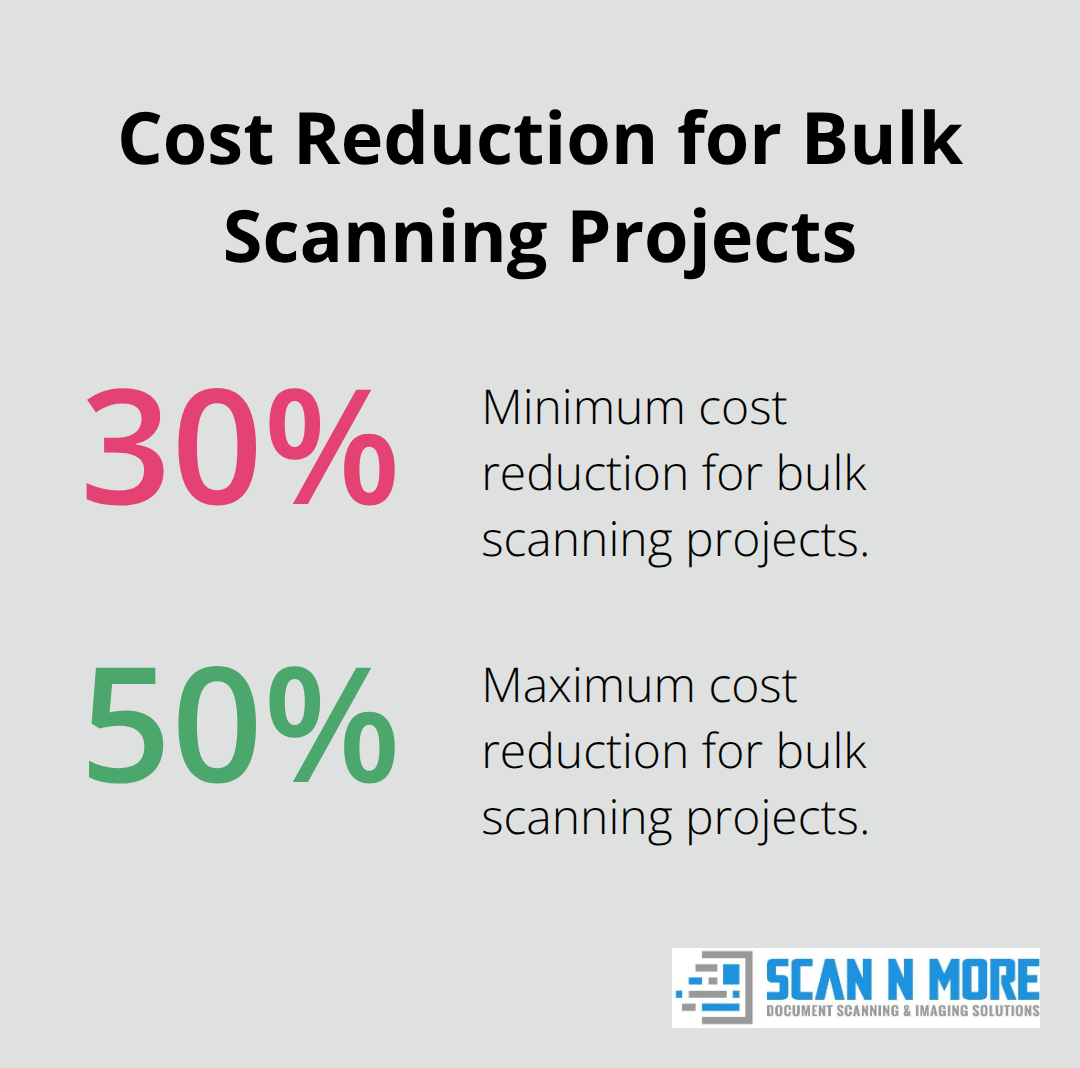
Bulk projects reduce per-page costs by 30-50% through economies of scale. An 18-inch vertical file drawer with 3,200 sheets runs about $288, while a 36-inch lateral drawer holds 6,300 sheets and costs around $567 for complete conversion. These volume discounts make large-scale projects more economical than small batches.
Document Format Changes Costs Dramatically
Standard letter-size documents cost significantly less than specialized formats. Large format work for blueprints and technical documents ranges from $1.25 to $1.75 per page – nearly 15 times higher than regular documents. Microfiche presents even steeper costs, with 16mm and 35mm jackets at $0.75 to $1.25 per sheet.
COM microfiche can reach $3.00 to $5.00 per image. Double-sided documents effectively double your page count (a 2,700-page box becomes 5,400 billable pages). Document preparation adds substantial labor costs when staples, clips, or bindings require removal before processing.
Resolution Requirements Multiply Storage and Processing Costs
Higher resolution work creates larger file sizes that demand more storage space and processing time. Standard 300 DPI works for most business documents, but legal and medical records often require 600 DPI or higher for compliance purposes. OCR technology adds costs but transforms static images into searchable, editable text.
Quality specifications directly impact project timelines – high-resolution work can triple processing time compared to standard resolution projects. These technical requirements significantly affect your final investment, making it essential to understand different service models and their associated costs.
How Much Should You Pay for Document Scanning
The document scanner market was estimated at $3.7 billion in 2024 with per-page rates that dominate industry standards. Standard rates range from $0.07 to $0.12 per page, but this baseline price shifts dramatically based on your project specifications. Most providers calculate costs with 175-200 sheets per inch in document stacks, which translates to roughly 2,400 documents per foot of storage space.
Per-Page Rates Change with Document Complexity
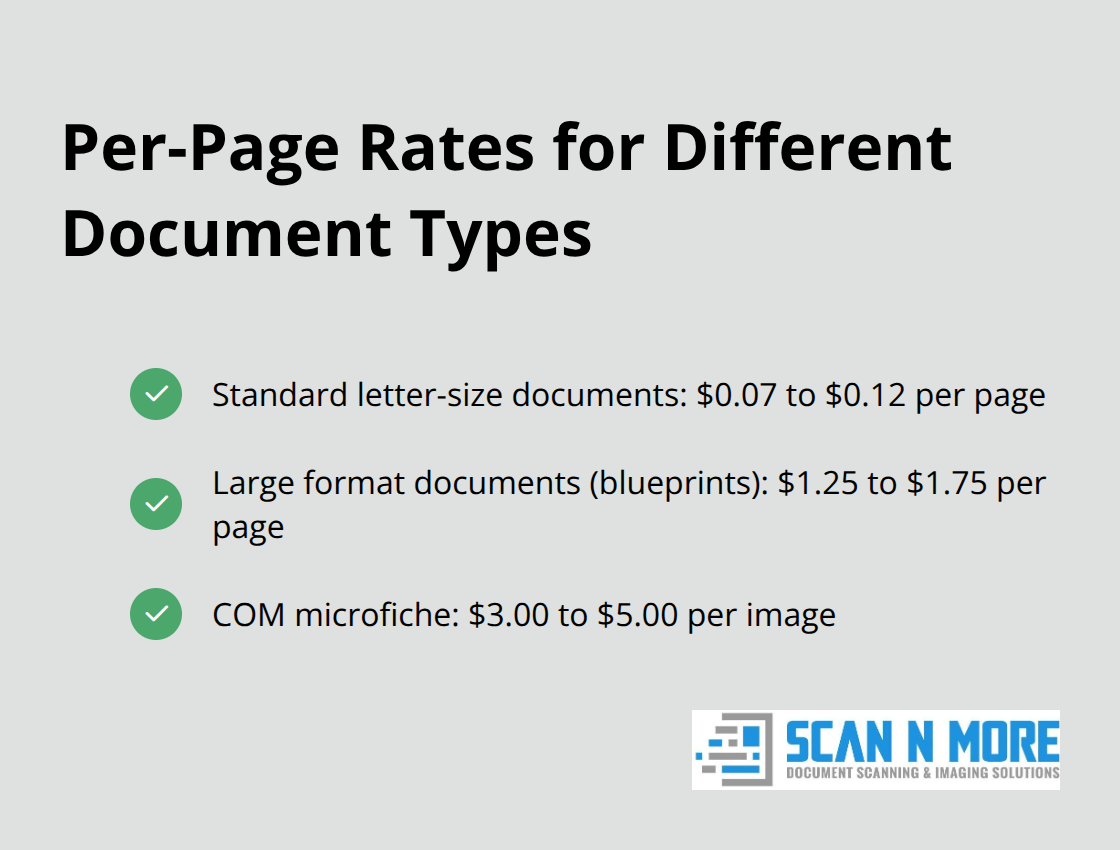
Simple letter-size documents fall within the standard $0.07-$0.12 range, while specialized formats command premium rates. Large format work for blueprints and technical documents costs $1.25-$1.75 per page (nearly 15 times higher than regular documents). Microfiche presents the steepest costs, with COM fiche that reaches $3.00-$5.00 per image and standard 16mm/35mm jackets at $0.75-$1.25 per sheet. Double-sided documents effectively double your page count, which turns a 2,700-page box into 5,400 billable pages.
Volume Discounts Create Substantial Savings
Bulk projects reduce per-page costs by 30-50% through economies of scale. A standard banker’s box with 2,500 sheets costs approximately $225 at average rates, but larger projects achieve better rates. Per-box models range from $50-$125 per banker’s box, which simplifies cost estimation for large-scale digitization. Project-based rates work best for complex jobs that require customized solutions, while subscription models range from $100-$1,000 monthly for businesses with consistent needs.
Additional Services Add Significant Value
OCR technology saves time and cost through automated data extraction capabilities but increases costs through enhanced processing requirements. Indexing and metadata creation improve document organization and retrieval, which often justifies initial cost increases through improved efficiency. Secure document destruction services cost $30-$100 per banker’s box, while cloud storage and document management systems range from $5-$25 per user monthly. These add-on services create ongoing expenses but enhance accessibility and compliance capabilities.
Understanding these rates helps you evaluate whether professional services or DIY approaches better fit your budget and timeline requirements.
Should You Scan Documents Yourself or Hire Professionals
Equipment Investment Creates Hidden Costs
DIY document scanning requires substantial upfront investment that most businesses underestimate. Professional-grade scanners capable of high volumes are available for significantly less than expected, with high-volume models starting around $395, while software licenses for OCR and document management add $500-$3,000 annually. A basic setup with a mid-range scanner, software, and basic indexing capabilities runs approximately $5,000-$8,000 initially.
Consumer-grade scanners at $200-$800 cannot match professional quality standards and break down quickly under heavy use. Most businesses discover they need multiple scanners, maintenance contracts, and regular software updates that push total costs beyond $15,000 in the first year alone.
Time Investment Makes DIY Extremely Expensive
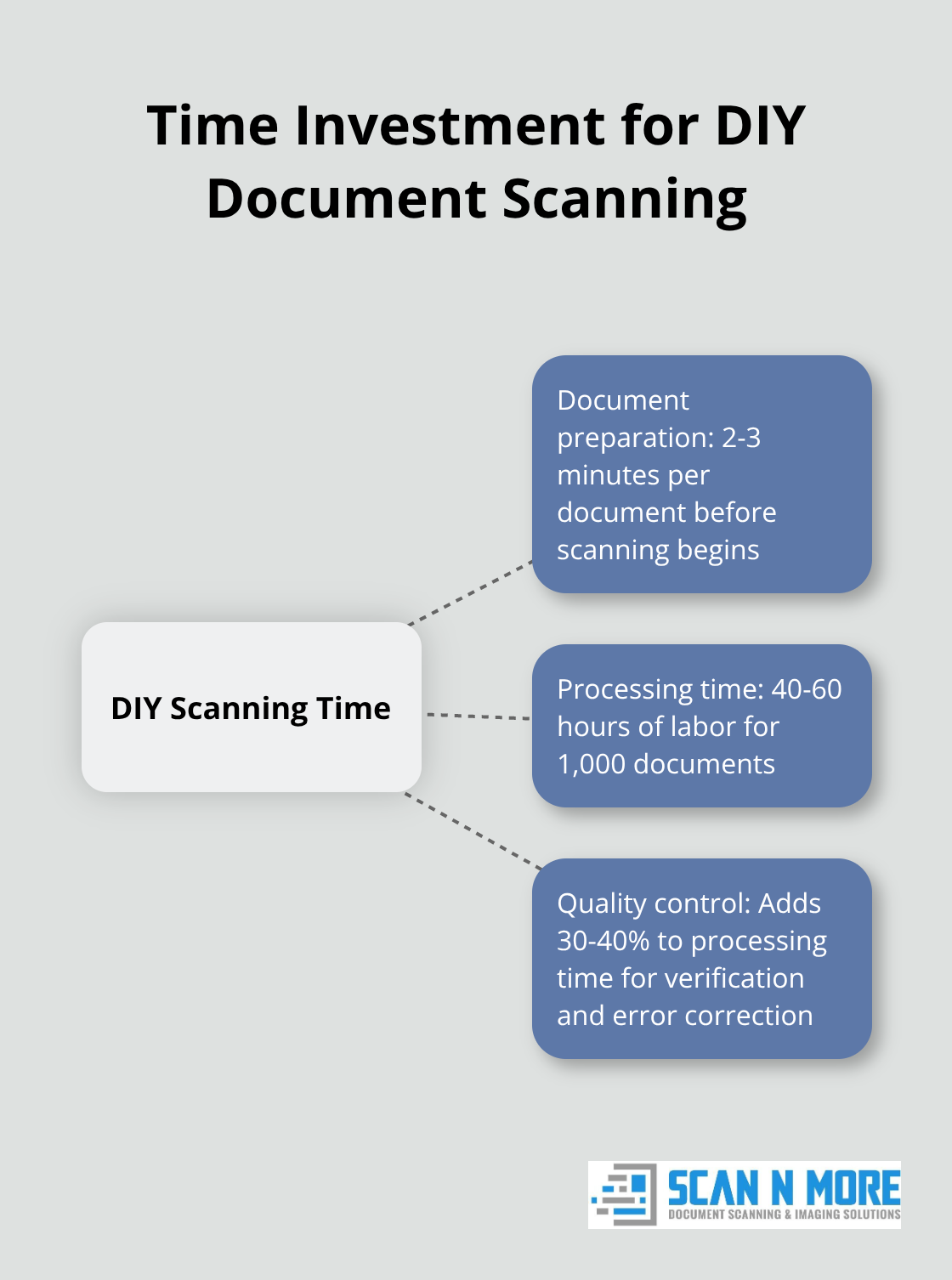
Document preparation consumes far more time than expected – staff must remove staples, organize pages, and handle damaged documents for 2-3 minutes per document before scanning begins. A typical employee who earns $25 per hour costs your business $50-$75 hourly (including benefits and overhead). Processing 1,000 documents requires 40-60 hours of labor, which creates $2,000-$4,500 in internal costs before considering equipment expenses.
Professional services complete the same work in days rather than weeks while they maintain consistent quality standards. Quality control adds another 30-40% to processing time when employees must verify scans, correct errors, and organize digital files properly.
Professional Services Deliver Superior Compliance and Quality
Professional scanning services maintain ISO certifications and compliance standards that DIY operations cannot match. Medical and legal documents require specific resolution standards and retention protocols that untrained staff frequently violate. Professional services include secure chain-of-custody documentation, encrypted file transfer, and certified destruction services that protect against liability issues.
Internal scanning operations lack proper backup systems, disaster recovery protocols, and security measures that professional services provide as standard features. These compliance gaps expose businesses to significant legal and financial risks that far exceed the cost savings from DIY approaches.
Final Thoughts
Document scanning rates depend on three primary factors: volume, format complexity, and quality requirements. Standard documents cost $0.07-$0.12 per page, while specialized formats like blueprints reach $1.25-$1.75 per page. Volume discounts reduce costs by 30-50% for bulk projects, which makes professional services increasingly cost-effective at scale.
Professional services deliver superior value compared to DIY approaches. Equipment investments, labor costs, and compliance requirements make internal operations expensive and risky. Professional providers maintain ISO certifications, secure chain-of-custody protocols, and quality standards that protect your business from liability issues.
Accurate quotes require understanding your document volume, format types, and quality needs. Count your storage containers carefully – a standard banker’s box holds 2,500 sheets and costs approximately $225 to process. Scan N More offers professional document services with on-site and off-site options for all formats while maintaining data security and compliance standards throughout the digitization process.