
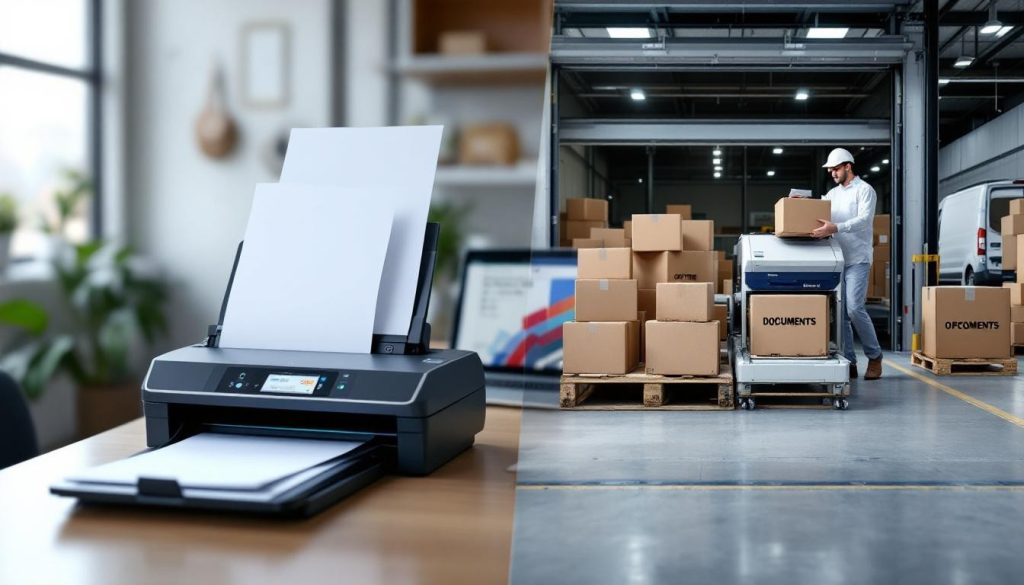
Choosing between onsite and offsite scanning shapes how your organization handles document digitization. The right approach depends on your specific needs around security, speed, and budget.
We at Scan N More help businesses navigate this decision by breaking down what each method offers. This guide walks you through the key factors that matter most to your operation.
On-Site Scanning: How It Works and Key Advantages
Minimal Document Handling and Transportation
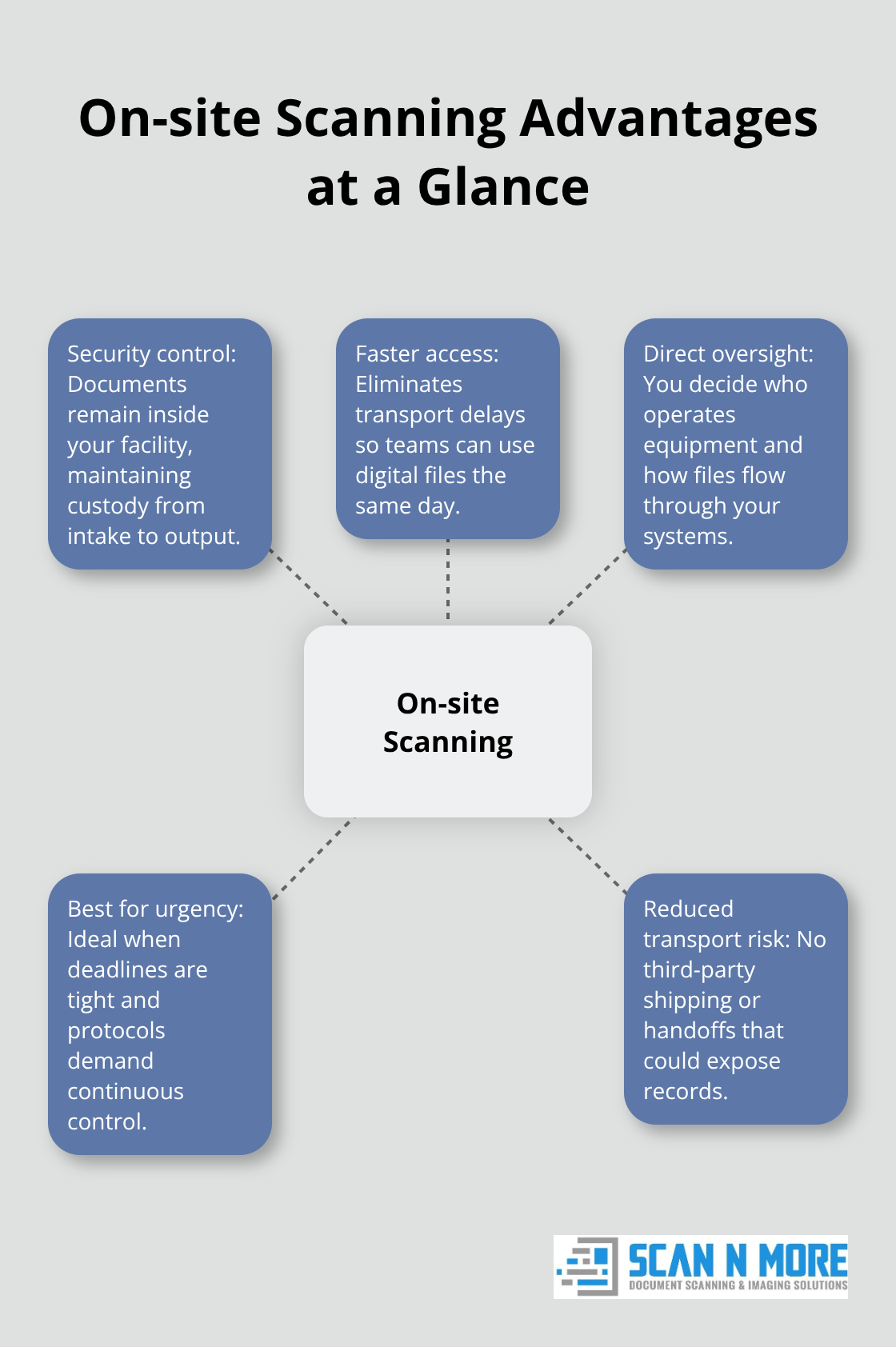
On-site scanning keeps your documents within your facility throughout the entire digitization process. Your team maintains direct oversight of sensitive materials from start to finish, which matters significantly when handling confidential records. The scanning equipment operates on your premises, so no transportation step exists between your office and a third-party facility. This approach works best when you have urgent deadlines, strict security protocols, or regulatory requirements that demand continuous control over your data.
Faster Turnaround Times for Time-Sensitive Materials
Speed is the primary advantage here. On-site scanning eliminates the transportation time that offsite providers require, so your digitized documents are ready for immediate use. If you process time-sensitive materials or need rapid access to digital copies during your transition to a paperless workflow, on-site scanning delivers faster turnaround. Your staff can begin working with scanned documents the same day they arrive at the scanning station, which accelerates downstream processes like data entry, compliance reviews, or client delivery. This matters particularly in healthcare, legal, and financial sectors where delays create operational bottlenecks.
Greater Control Over Data Security and Confidentiality
The security benefits are equally compelling. Your documents never leave your building, reducing the risk of data breaches during transport. You control who accesses the scanning equipment, who handles your materials, and how the digitized files move through your systems. For organizations with highly sensitive data, this level of control provides peace of mind that offsite providers, despite their security certifications, cannot fully replicate. You also avoid relying on a third party’s chain-of-custody protocols and transportation security.
The tradeoff is that on-site scanning requires your team to manage the process internally. You need dedicated staff, appropriate equipment, and workspace. For small organizations or those with intermittent scanning needs, these overhead costs can become prohibitive. Understanding these internal demands helps clarify whether offsite scanning might better suit your operation and budget constraints.
Off-Site Scanning: When Specialization Beats Internal Operations
The Real Cost of Keeping Documents In-House
Off-site scanning fundamentally changes your economics by shifting the burden to providers with dedicated infrastructure, trained staff, and high-speed equipment designed specifically for volume processing. The real advantage appears when you calculate what on-site scanning actually costs your organization. A 20-person company storing documents internally spends roughly $35,559 annually on filing cabinets, office space, and labor to manage those files, whereas off-site storage runs just $387 per year. That $35,000 gap represents staff hours better spent on revenue-generating work rather than file retrieval and management.
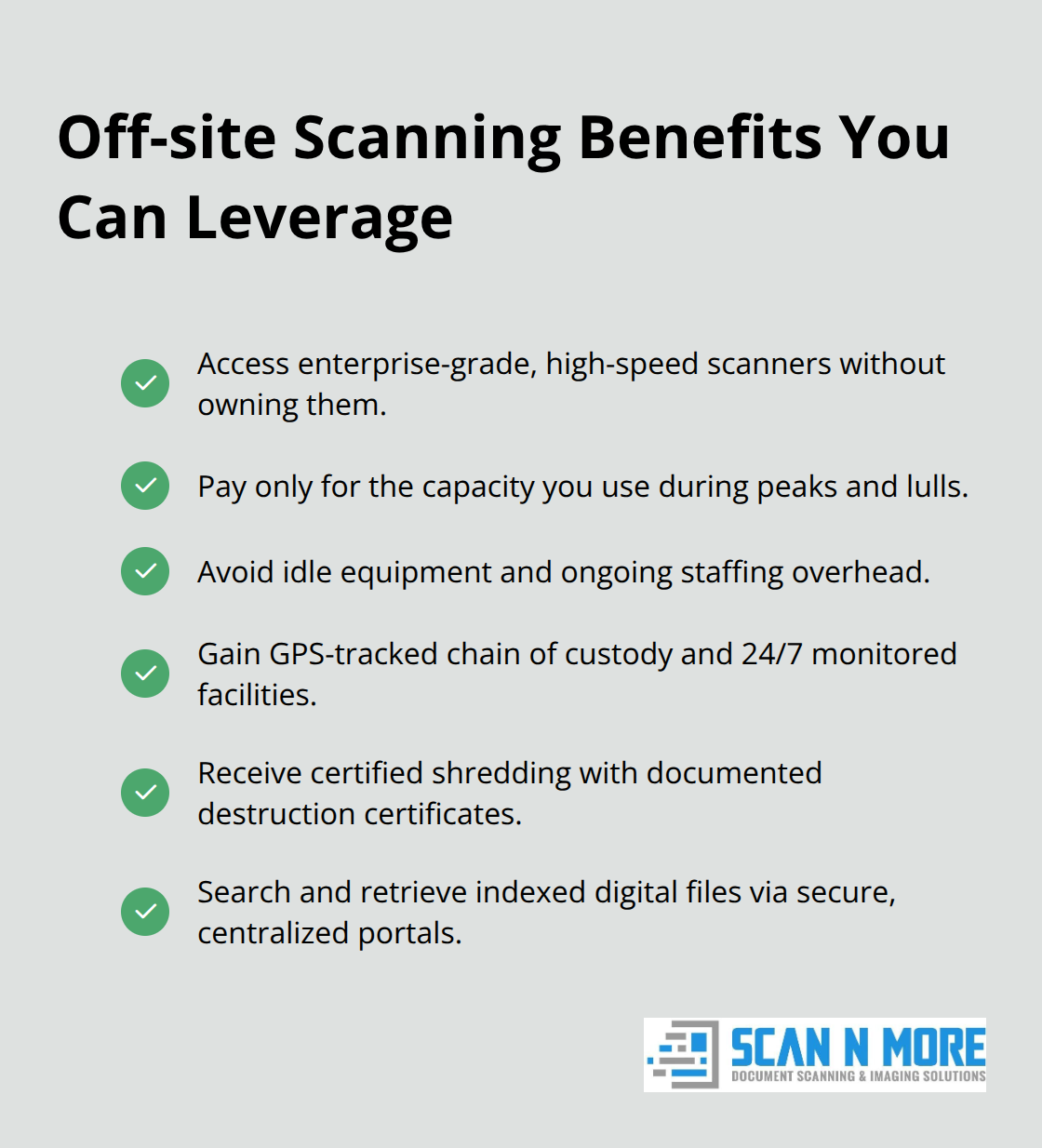
Off-site providers operate at scale, meaning they absorb equipment costs across hundreds of clients, giving you access to scanners that process thousands of pages daily without you owning or maintaining them. For organizations with fluctuating scanning needs or seasonal document surges, this flexibility matters tremendously because you pay only for what you use rather than maintaining idle equipment and staff.
Compliance Infrastructure That Protects Your Organization
Off-site providers maintain ISO 27001 certification, implement chain-of-custody protocols with GPS-tracked transport, and operate in climate-controlled facilities with 24/7 security monitoring that most on-site operations cannot replicate. They handle regulatory destruction through certified shredding with documented certificates, which matters if you face HIPAA, GLBA, SOX, FERPA, or state retention law requirements. Their digital platforms integrate retention policies that automatically dispose of records when legal holds expire, eliminating the manual compliance risk your staff would otherwise manage.
For industries like healthcare, banking, and legal services where regulatory audits happen frequently, this built-in compliance infrastructure reduces your liability exposure significantly. The scanning itself produces searchable, indexed digital files within hours through secure, isolated networks with encryption in transit and at rest, so your team accesses documents through centralized portals rather than hunting through physical boxes.
Handling Volume Without Operational Disruption
Large-volume projects present another decisive scenario where off-site scanning prevents operational disruption. If you need to digitize 50,000 archived files, keeping your on-site equipment tied up for weeks grinds normal scanning to a halt. Off-site providers absorb that volume through dedicated project teams, regional processing centers, and logistics coordination, meaning your urgent daily scanning continues uninterrupted.
Customers report time savings of approximately 26,000 hours annually when consolidating scattered physical records into centralized digital access, a productivity gain that justifies the service cost immediately. This efficiency advantage becomes the deciding factor when you weigh speed, compliance, and cost together-which brings us to how you should evaluate these competing priorities for your specific situation.
Comparing On-Site and Off-Site Scanning for Your Business
Evaluating Your Document Volume and Complexity
Document volume is your first decision point, and the numbers matter more than you might think. If you process fewer than 5,000 pages annually, on-site scanning with a basic automatic-feed scanner makes financial sense because your equipment and labor costs stay contained. However, once you exceed 20,000 pages per year, the economics shift dramatically toward off-site providers who operate at scale.
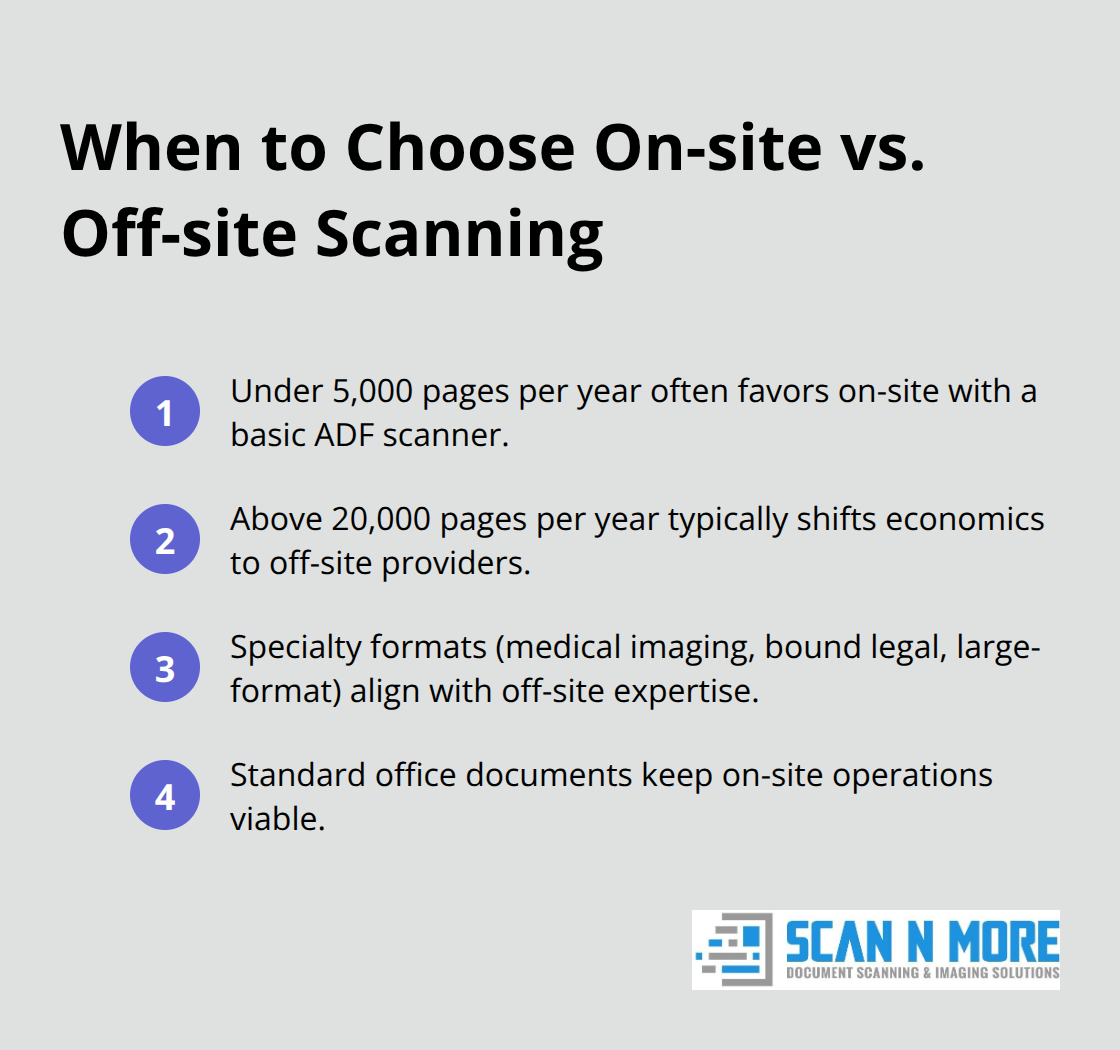
The complexity of your documents also influences this calculation. Medical imaging files, bound legal documents, large-format blueprints, and materials requiring specialized handling demand the dedicated equipment and expertise that off-site providers maintain. On-site operations struggle with these formats because they require different scanning resolutions, output specifications like DICOM for medical files, and quality control processes that justify professional infrastructure. If your organization handles standard office documents exclusively, on-site scanning remains viable. If your materials span multiple formats or include specialty documents, off-site providers eliminate the need to invest in multiple scanning solutions.
Assessing Your Security and Compliance Requirements
Security and compliance requirements often override cost considerations, making them the decisive factor. Organizations handling HIPAA-regulated healthcare data, financial records subject to SOX requirements, or legal materials under FERPA rules cannot treat compliance as optional. Off-site providers implement chain-of-custody protocols with GPS-tracked transport, secure facility access controls, and automated retention policies through their systems that prevent accidental data exposure. They generate destruction certificates proving documents were securely shredded, which satisfies auditors and regulators far more effectively than internal documentation. On-site scanning gives you control, but that control becomes a liability if your staff lacks formal security training, your facility lacks environmental protections like climate control and fire suppression, or your destruction process lacks certified documentation.
Calculating Total Cost of Ownership
Your total cost of ownership calculation must include these hidden expenses: a 20-person company spends roughly $35,559 annually on internal document storage versus $387 for off-site services. This $35,000 gap reveals that off-site services deliver superior economics once you factor in space costs, labor hours, and equipment maintenance. The decision ultimately hinges on whether your organization possesses the internal expertise, infrastructure, and ongoing resources to manage scanning as a core operation or whether partnering with a specialized provider eliminates complexity while reducing total expenses.
Final Thoughts
Your choice between onsite and offsite scanning depends on three factors: document volume, security requirements, and total cost of ownership. Organizations with fewer than 5,000 pages annually and standard office documents benefit from onsite scanning’s speed and control. However, once your volume exceeds 20,000 pages per year or your materials include specialty formats like medical imaging or bound legal documents, offsite scanning delivers superior economics and compliance infrastructure.
Security and compliance requirements often become the deciding factor for regulated industries. If your organization handles HIPAA-regulated healthcare data, SOX-compliant financial records, or FERPA-protected materials, offsite providers eliminate compliance risk through chain-of-custody protocols, GPS-tracked transport, climate-controlled facilities, and automated retention policies that your internal team cannot replicate. Their destruction certificates satisfy auditors far more effectively than internal documentation, and they maintain the environmental controls and access restrictions that regulated industries demand.
Scan N More offers professional onsite and offsite scanning services for all document formats, including legal and medical materials, with guaranteed data security and compliance. Whether you need rapid turnaround for time-sensitive materials or scalable capacity for large-volume projects, we align your digitization strategy with your operational and regulatory needs. Contact us to discuss how onsite and offsite scanning options can accelerate your transition to digital workflows.