

Most businesses still waste thousands of dollars annually storing paper documents in filing cabinets and warehouses. At Scan N More, we’ve seen firsthand how document digitization benefits transform operations, cutting costs while making information instantly accessible.
The shift from paper to digital isn’t just about saving space. It’s about reclaiming productivity, reducing errors, and building a foundation for smarter business decisions.
Why Document Digitization Cuts Real Costs
The True Price of Paper Storage
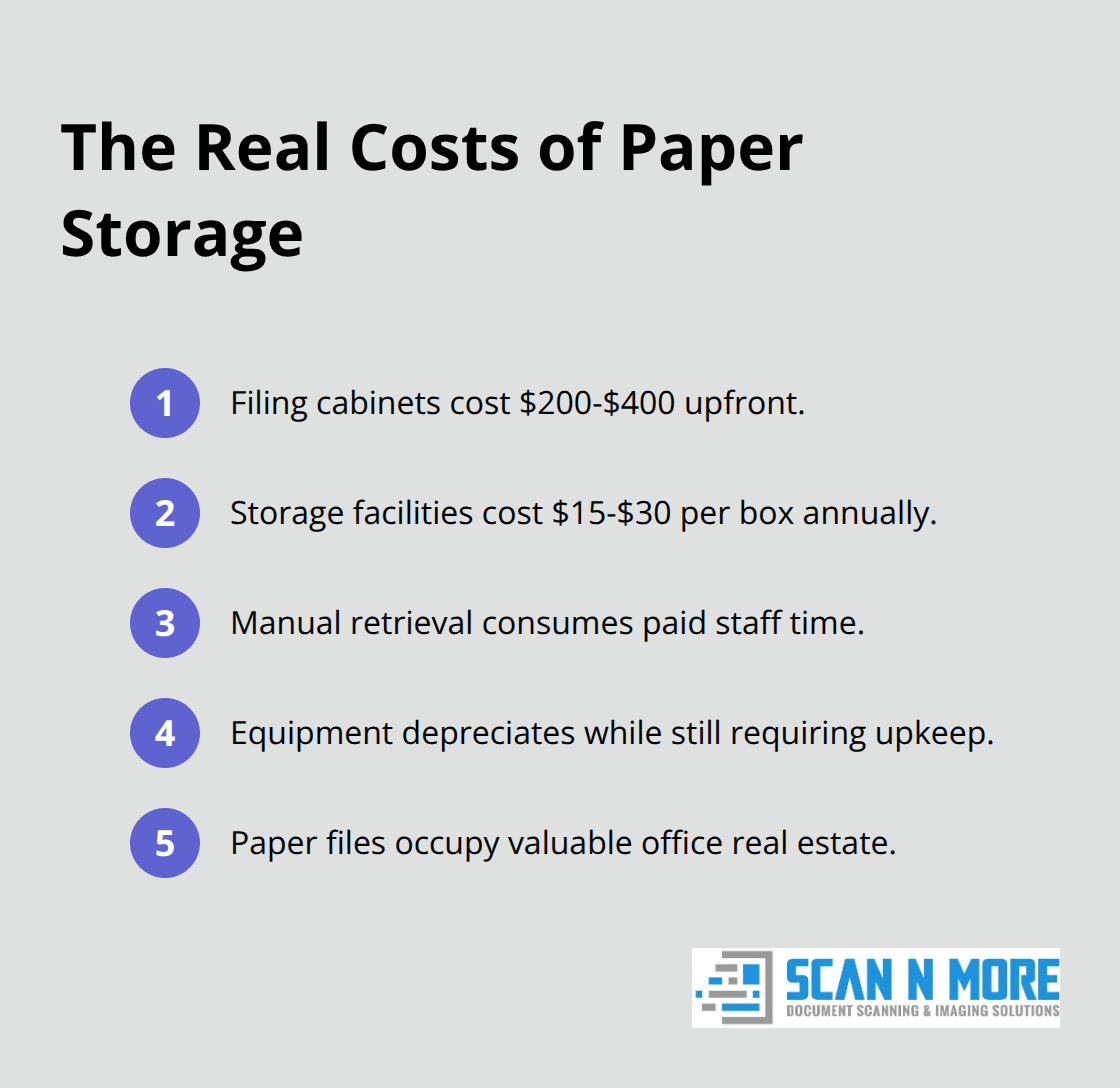
Physical document storage drains budgets faster than most businesses realize. According to AIIM’s 2020 survey, organizations continue facing financial pressure from significant paper volumes. Filing cabinets cost between $200 and $400 upfront, then require ongoing maintenance. Storage facilities run $15 to $30 per box annually. When you calculate the total-space rental, equipment depreciation, labor hours wasted on manual retrieval, and the opportunity cost of that real estate-digitization becomes a financial imperative, not an option.
How Speed Transforms Productivity
Paper-based workflows cripple productivity. Finding a single document buried in filing systems takes an average employee 18 minutes per search. Digital systems cut that to seconds.
With OCR technology and proper indexing, employees locate files instantly using keyword searches, eliminating the frustration of manual digging through cabinets. This speed advantage compounds across teams. When multiple people need the same document simultaneously, digital systems allow instant access from different locations without physical handoffs.
Remote Work Demands Digital Access
Remote and hybrid workforces gain immediate file access without requesting documents from an office manager, accelerating decision-making and client response times. Employees work from anywhere with secure, authorized access to the files they need. This flexibility transforms how modern teams operate, especially when client demands require rapid responses across multiple time zones.
Security and Compliance Become Automatic
Digital documents support encryption, access controls, and complete audit trails showing who accessed what and when. Regulatory requirements that demand document retention schedules, version control, and restricted access are handled automatically rather than through manual processes prone to human error. These capabilities aren’t optional in regulated industries like healthcare, finance, and government-they’re mandatory for staying compliant. Organizations that fail to implement proper digital controls face penalties, legal exposure, and reputational damage that far exceed the cost of digitization itself.
How Digital Documents Drive Faster Operations and Better Decisions
Speed Transforms Productivity and Revenue
Digitization eliminates the operational drag that paper creates. When teams spend 1.8 hours every day searching and gathering information, that time compounds across hundreds of daily searches. A department of 10 people searching for documents just 5 times per day loses over 15 hours weekly to manual retrieval alone. Digital systems cut retrieval to seconds, freeing staff to focus on actual work rather than filing cabinet archaeology. The impact multiplies in customer-facing roles where delays directly affect revenue.
Financial services firms report that digitization reduces loan approval times from days to hours because underwriters access all supporting documents instantly instead of waiting for physical file transfers between departments. Healthcare organizations see similar gains when patient records appear on screen within seconds rather than requiring staff to locate paper charts from storage areas. This speed advantage compounds when multiple people need the same information simultaneously-digital systems serve unlimited concurrent users while paper documents sit in one person’s hands.
Real-Time Data Accelerates Decision-Making
Decision-making accelerates dramatically when data surfaces in real time rather than through manual compilation. Executives no longer wait for reports compiled from scattered paper files across multiple locations. Sales teams access customer history instantly, enabling them to respond to inquiries within minutes instead of hours. Operations managers spot process bottlenecks faster because digital workflows create automatic visibility into document flow and processing times.
Manufacturing facilities using digitized work orders and quality checklists catch production issues before they cascade, reducing scrap rates and rework costs. The visibility that digital systems provide transforms how leaders identify problems and seize opportunities across their organizations.
Automation Eliminates Human Error
The human error component shrinks substantially when organizations move from manual processes to automated capture. Manual data entry from paper documents introduces typos, misread numbers, and transposed information that cascade through systems. Digital capture with OCR technology converts documents to searchable text automatically, and structured data extraction pulls specific fields directly into databases without human transcription.
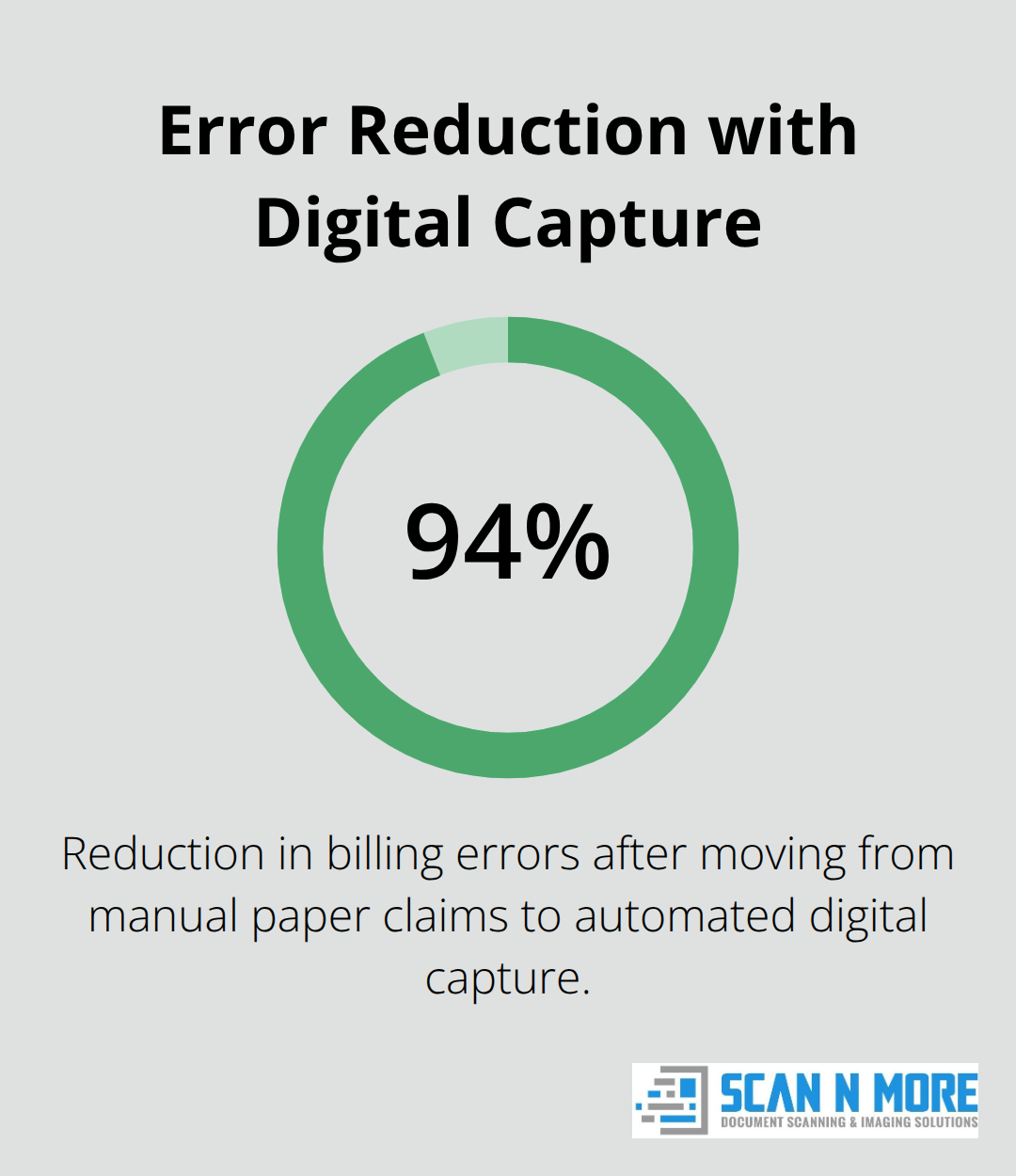
One healthcare provider reduced billing errors by 94% simply moving from manual paper claim entry to automated digital capture, cutting both error correction costs and payment delays. Compliance teams also benefit from automatic audit trails showing exactly when documents were accessed, modified, or shared-eliminating the guesswork of manual record-keeping and providing ironclad proof of regulatory adherence during audits.
Compliance and Audit Trails Become Automatic
Digital systems handle regulatory requirements that demand document retention schedules, version control, and restricted access automatically rather than through manual processes prone to failure. These capabilities aren’t optional in regulated industries like healthcare, finance, and government-they’re mandatory for staying compliant. Organizations that fail to implement proper digital controls face penalties, legal exposure, and reputational damage that far exceed the cost of digitization itself.
The question isn’t whether your organization can afford to digitize-it’s whether you can afford the operational costs, compliance risks, and competitive disadvantages of staying paper-based. The next section explores the obstacles that prevent organizations from making this transition and how to overcome them.
Common Obstacles to Document Digitization
The financial argument for digitization is ironclad, yet most organizations delay implementation for years. The barrier isn’t logic-it’s the collision between upfront costs, legacy systems that refuse to cooperate, and employees who view change as a threat rather than an opportunity. These obstacles are entirely surmountable once you understand what’s actually happening beneath the surface.
The Upfront Investment Problem
The upfront investment required to scan backlogs, purchase software licenses, and train staff creates real budget pressure, especially for mid-sized companies operating on tight margins. A typical office with 50,000 legacy documents costs between $5,000 and $15,000 to digitize professionally, plus ongoing cloud storage fees. Many finance teams reject digitization proposals because they see only the immediate expense without modeling the long-term savings.
The mistake is treating digitization as a capital project rather than a cost-reduction initiative. Organizations that calculate the three-year ROI-factoring in eliminated storage facility fees, reduced labor hours, and fewer errors-discover that digitization pays for itself within 6 to 12 months.
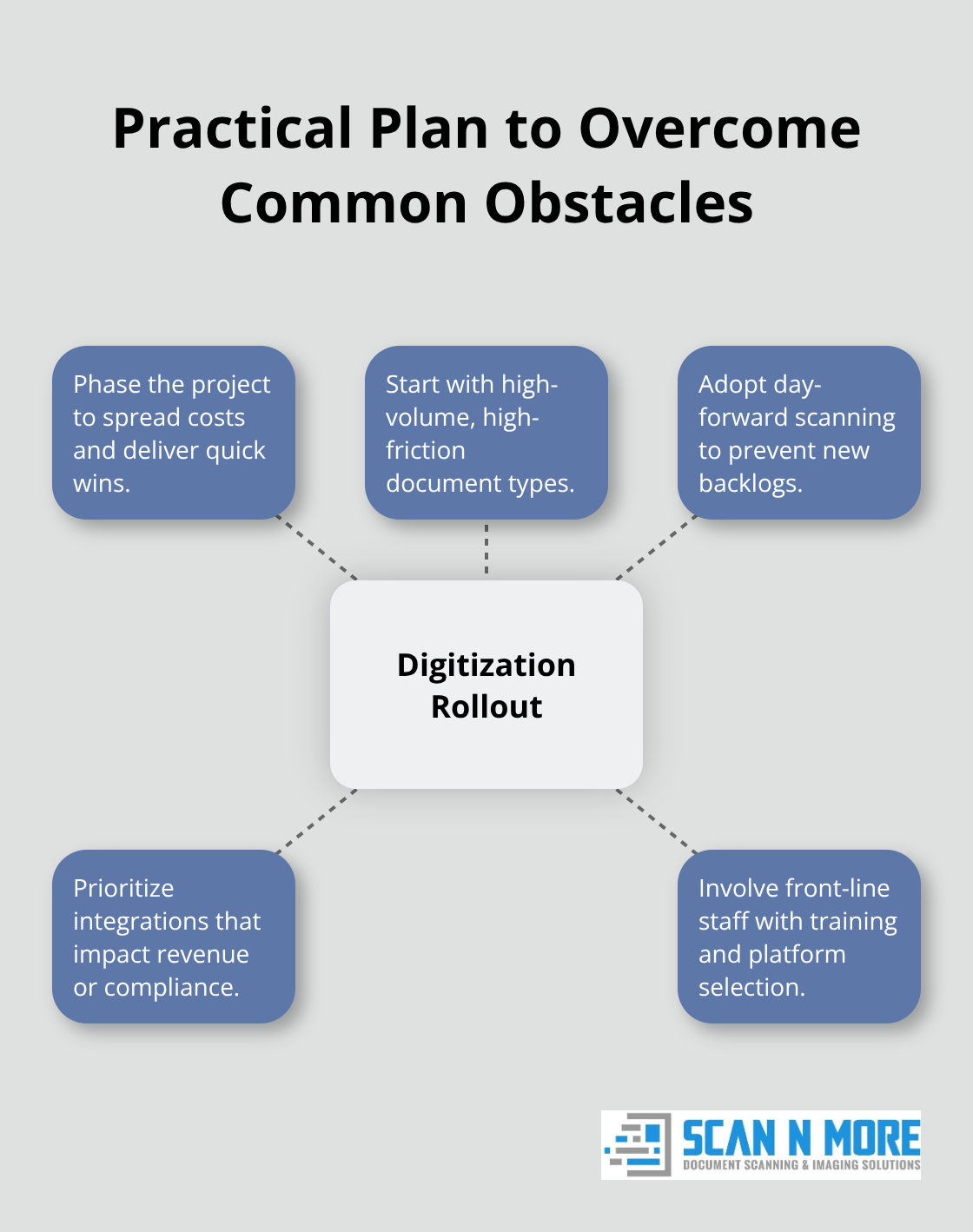
Phase the implementation instead of attempting a full overhaul simultaneously. Start with high-volume document types that create the most friction, scan those backlogs, then shift to day-forward scanning as new documents arrive. This approach spreads costs across multiple budget cycles while delivering immediate productivity gains that justify continued investment.
Integration Headaches With Legacy Systems
Existing software systems rarely talk to new document management platforms without custom development work. Finance departments run on ERP systems installed a decade ago, HR departments use isolated applicant tracking systems, and operations teams maintain custom databases that contractors built years ago. Connecting a modern document management system to these legacy platforms requires either expensive custom integration work or accepting that documents exist in separate silos.
The technical reality is that many older systems lack APIs or modern data connection capabilities, forcing organizations to choose between expensive integration projects or maintaining parallel workflows. Experienced scanning vendors understand legacy system limitations and design workflows that minimize integration complexity. Start by auditing which systems actually need to connect to your document management platform. Sales teams need customer files linked to CRM systems. Finance needs invoices flowing into accounting software. HR needs personnel records accessible through their recruitment platform. Other departments often function fine with a standalone document repository. Prioritize integrations that directly impact revenue-generating or compliance-critical processes, then tackle less essential connections later. Many organizations waste budget integrating systems that don’t genuinely need to communicate.
The Real Reason Employees Resist Change
Staff resistance to digitization often stems from loss of control and uncertainty about job security. Employees who’ve spent years mastering paper-based workflows suddenly face unfamiliar systems, new processes, and the uncomfortable reality that their expertise in the old way no longer matters. Digital transformation fails more often because of people and systems than because of scanning technology itself.
This psychological barrier often outweighs technical obstacles. Organizations that simply implement new systems without addressing these concerns face sabotage disguised as incompetence-employees who claim the system is too complicated, report false errors, or continue using paper despite having digital access. The solution requires visible leadership commitment, transparent communication about job security, and involving front-line staff in system selection and implementation. Employees who participate in choosing the new platform and receive thorough training become advocates rather than resisters. Frame digitization as a tool that eliminates tedious work, not as a replacement for their skills. Show specifically how the new system makes their jobs easier (reducing search time, eliminating manual filing, enabling focus on higher-value work) rather than threatening their positions.
Final Thoughts
Document digitization benefits transform how organizations operate, cutting costs while accelerating decision-making across teams. The financial case proves itself within months as companies eliminate storage fees, reduce manual labor, and prevent errors that drain profitability. More importantly, digitization creates competitive advantages that compound over years as teams respond to client needs faster and executives access real-time data instead of outdated reports.
The obstacles you face are entirely manageable when you approach implementation strategically. Phase your project to spread costs across multiple budget cycles, prioritize system integrations that directly impact revenue, and involve staff in the transition so they become advocates rather than resisters. Starting with your highest-volume document types delivers immediate wins while building momentum for broader organizational change.
We at Scan N More help organizations transition to digital environments smoothly through professional document scanning services that handle on-site and off-site scanning for all document formats. Our team guarantees fast, cost-effective digitization with exceptional quality while maintaining data security and compliance throughout the process. Contact Scan N More today to discuss how we can transform your paper-based processes into efficient digital solutions that drive real business results.