

Data security in healthcare is a critical concern in our increasingly digital world. At Scan N More, we understand the unique challenges faced by healthcare providers in protecting sensitive patient information.
This blog post explores the risks, best practices, and cutting-edge technologies that can help safeguard healthcare data. We’ll provide practical strategies to enhance data security and maintain compliance with regulatory requirements.
The Biggest Healthcare Data Security Risks
Escalating Threats in Healthcare Data Security
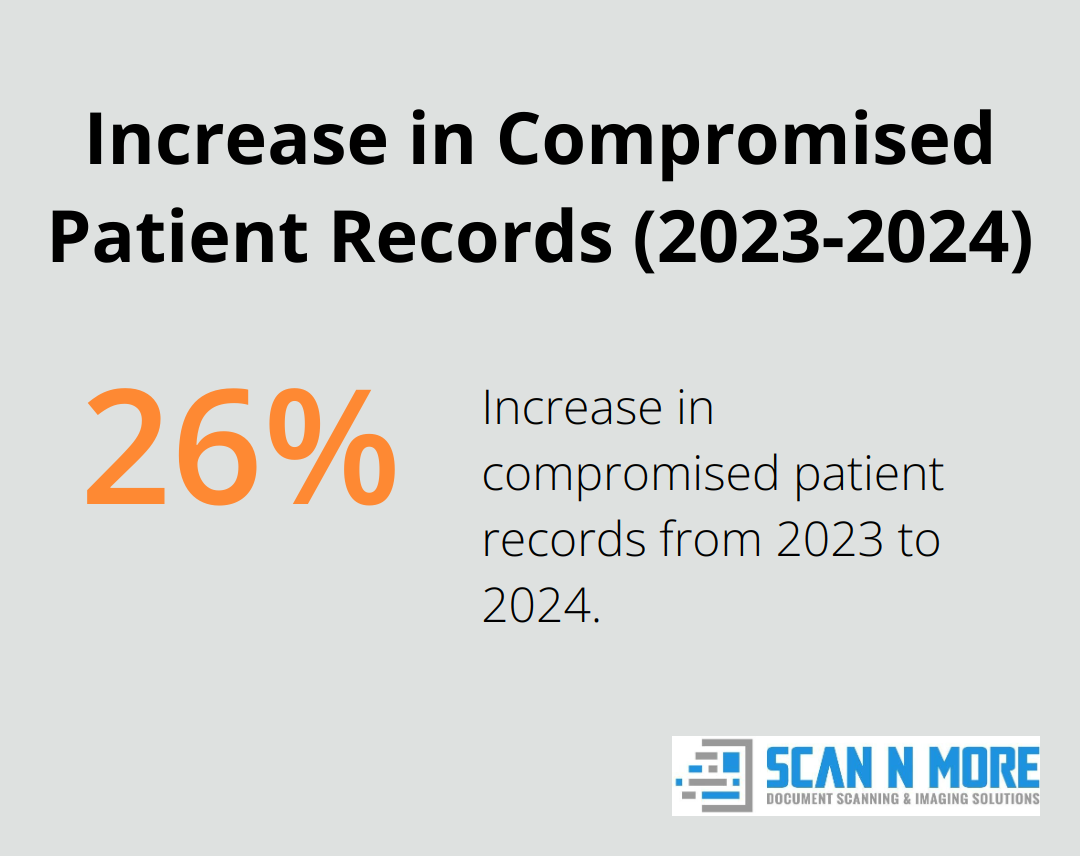
Healthcare organizations face numerous data security risks with severe consequences for patients and providers. In 2024, hackers compromised over 305 million patient records, a 26% increase from the previous year. This statistic highlights the urgent need for robust data protection in healthcare settings.
Common Data Breaches in Healthcare
Cyberattacks, especially ransomware schemes, lead the pack in healthcare data breaches. These attacks can paralyze entire hospital systems, jeopardizing patient care and exposing sensitive information. The healthcare sector reported 1,160 data breach incidents in 2024, affecting both patient and organizational data.
Insider threats also present a significant risk. Employees can expose patient data through malicious intent or simple negligence. Human error contributed to 16 million breached records last year, underscoring the need for comprehensive staff training.
The Staggering Cost of Data Breaches
Healthcare data breaches carry far-reaching and expensive consequences. IBM’s Cost of a Data Breach Report reveals that the average cost of a healthcare data breach is 10.93 million USD per incident (the highest across all sectors). This financial burden can cripple healthcare providers, particularly smaller practices.
The impact extends beyond immediate financial losses. Data breaches erode patient trust and tarnish organizational reputations. The theft of confidential patient information can lead to identity theft, financial fraud, and even blackmail attempts against patients.
Navigating the Regulatory Maze
Healthcare organizations must comply with complex regulatory requirements to protect patient data. The Health Insurance Portability and Accountability Act (HIPAA) sets the standard for safeguarding sensitive patient data in the United States. Violations result in hefty fines, with penalties reaching up to $1.5 million per violation category per year.
Compliance demands ongoing vigilance. Healthcare providers must conduct regular risk assessments, implement strong access controls, and maintain detailed audit trails of all data access and use.
The landscape of healthcare data security risks continues to evolve. As we move forward, we’ll explore best practices and cutting-edge technologies that can help healthcare organizations fortify their defenses against these ever-present threats.
How Healthcare Organizations Can Secure Patient Data
At Scan N More, we understand the critical importance of safeguarding patient information in healthcare settings. This chapter explores practical strategies that healthcare organizations can implement to enhance their data security measures.

Implement Robust Access Controls
Strong access controls form the foundation of healthcare data security. Healthcare organizations should implement role-based access control (RBAC) to ensure employees only access information necessary for their specific job functions. This approach significantly reduces data breaches by enforcing the principle of least privilege, restricting access to sensitive information, and tracking user activity.
Multi-factor authentication (MFA) adds another crucial layer of security. MFA requires two or more forms of identification (such as a password and a fingerprint scan), which makes it much harder for cybercriminals to gain unauthorized access to sensitive systems.
Encrypt All Sensitive Data
Encryption serves as a powerful tool in protecting patient information. Healthcare organizations must encrypt data both at rest (stored on servers or devices) and in transit (sent over networks). This practice ensures that even if data is intercepted or stolen, it remains unreadable and unusable to unauthorized parties.
For data in transit, organizations should use secure protocols like HTTPS for web traffic and VPNs for remote access. Full-disk encryption and database-level encryption provide essential safeguards for data at rest.
Conduct Regular Security Audits
Proactive security measures play a vital role in the ever-evolving landscape of cyber threats. Healthcare organizations should perform comprehensive security audits at least annually, with more frequent assessments for critical systems.
These audits must include vulnerability scans, penetration testing, and thorough reviews of access logs. Prompt identification and addressing of vulnerabilities allow organizations to stay one step ahead of potential attackers.
Prioritize Employee Training
Human error remains a significant factor in data breaches. Comprehensive and ongoing employee training mitigates this risk. Healthcare organizations should implement a structured cybersecurity awareness program that covers topics such as:
- Recognition and reporting of phishing attempts
- Proper handling of sensitive patient information
- The importance of strong, unique passwords
- Safe use of mobile devices and public Wi-Fi networks
Organizations can make training engaging and relevant by using real-world examples and simulated phishing exercises. Regular refresher courses help keep security best practices top of mind for all staff members.
As we move forward, it’s essential to consider how technology can further enhance healthcare data security. The next chapter will explore cutting-edge solutions that healthcare organizations can leverage to protect sensitive patient information in an increasingly digital landscape.
How Technology Enhances Healthcare Data Security
Technology plays a pivotal role in safeguarding sensitive patient information in the rapidly evolving landscape of healthcare data security. Let’s explore some of the most impactful technological advancements in this field.
Cloud Storage: A Game-Changer for Healthcare Data
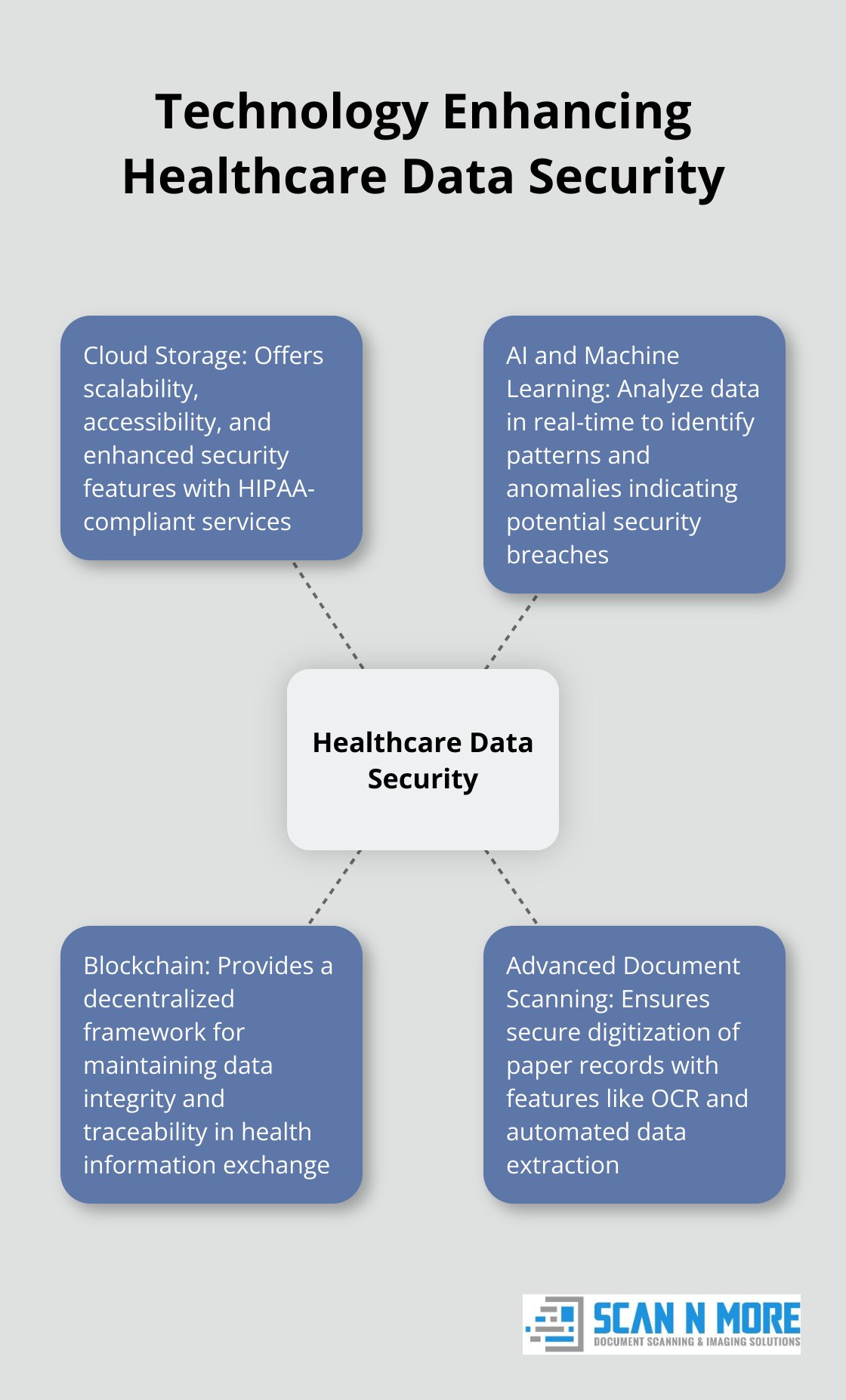
Cloud storage has revolutionized healthcare data management, offering scalability, accessibility, and enhanced security features. Healthcare organizations must choose providers that offer HIPAA-compliant services with end-to-end encryption, access controls, and audit trails. For example, Box has been compliant with HIPAA and HITECH since 2012, featuring end-to-end encryption, physical controls, and audit trails.
AI and Machine Learning: The New Frontier in Threat Detection
Artificial Intelligence (AI) and Machine Learning (ML) prove to be powerful allies in the fight against cybersecurity threats. These technologies analyze vast amounts of data in real-time, identifying patterns and anomalies that might indicate a security breach.
AI-powered systems can detect unusual user behavior, such as accessing patient records outside of normal working hours or from unfamiliar locations. This proactive approach allows healthcare organizations to respond to potential threats before they escalate into full-blown data breaches.
Blockchain: Securing Health Information Exchange
Blockchain technology offers a promising solution for secure health information exchange. Its decentralized nature and immutable record-keeping provide a robust framework for maintaining data integrity and traceability.
While still in its early stages of adoption in healthcare, blockchain has shown potential in areas such as medication supply chain management and secure sharing of patient records across different healthcare providers.
Advanced Document Scanning and Management Systems
In the transition from paper to digital records, secure document scanning and management systems are essential. These systems not only digitize paper records but also incorporate features like optical character recognition (OCR) for searchability and automated data extraction.
Advanced scanning solutions can transform healthcare data management. Professional scanning services ensure that the digitization process adheres to strict security protocols, maintaining data integrity from paper to pixel.
Implementing these technological solutions requires careful planning and expertise. Healthcare organizations should conduct thorough risk assessments and work with trusted partners to ensure that their data security measures leverage the full potential of these advanced technologies.
Final Thoughts
Data security in healthcare requires a multi-faceted approach. Strong access controls, encryption, regular audits, and employee training form the foundation of effective protection. Healthcare providers must stay informed about emerging threats and update their security measures continuously to combat evolving cybercrime tactics.
The future of healthcare data protection will involve new challenges from IoMT devices and innovative solutions like biometric authentication. AI algorithms will play a larger role in predictive threat analysis, enhancing overall security posture. Healthcare organizations should embrace these advancements to stay ahead of potential risks.
Scan N More offers professional scanning services to help healthcare organizations transition securely from paper to digital systems. We prioritize data integrity and compliance throughout the digitization process. A comprehensive security strategy (including secure document management) allows healthcare providers to focus on their primary mission: delivering high-quality patient care.