
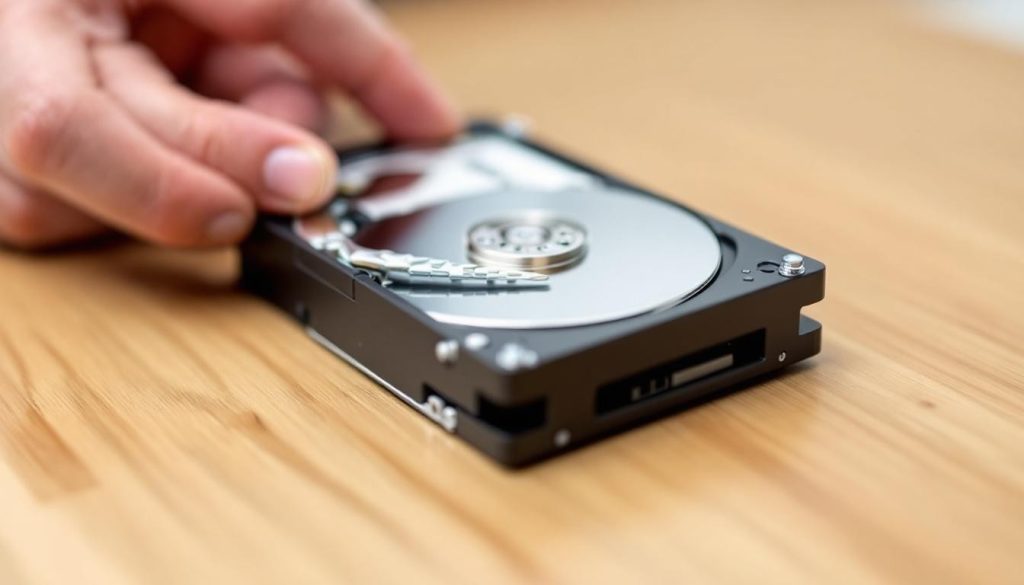
At Scan N More, we understand the critical importance of secure data destruction.
Choosing the right hard drive destruction device is essential for protecting sensitive information and maintaining compliance with data protection regulations.
In this post, we’ll guide you through the key factors to consider when selecting a hard drive destruction device, ensuring you make an informed decision that meets your specific needs.
Hard Drive Destruction Devices Explained
At Scan N More, we recognize the importance of selecting the right hard drive destruction device. This chapter explores four main types of devices used for secure data elimination.
Degaussers: Magnetic Force Data Erasure
Degaussers employ powerful magnetic fields to scramble data on hard drives. These devices prove effective for traditional magnetic hard drives but do not work on solid-state drives (SSDs). Degaussers offer quick operation and leave the drive physically intact, which can benefit certain disposal processes.
Shredders: Physical Data Destruction
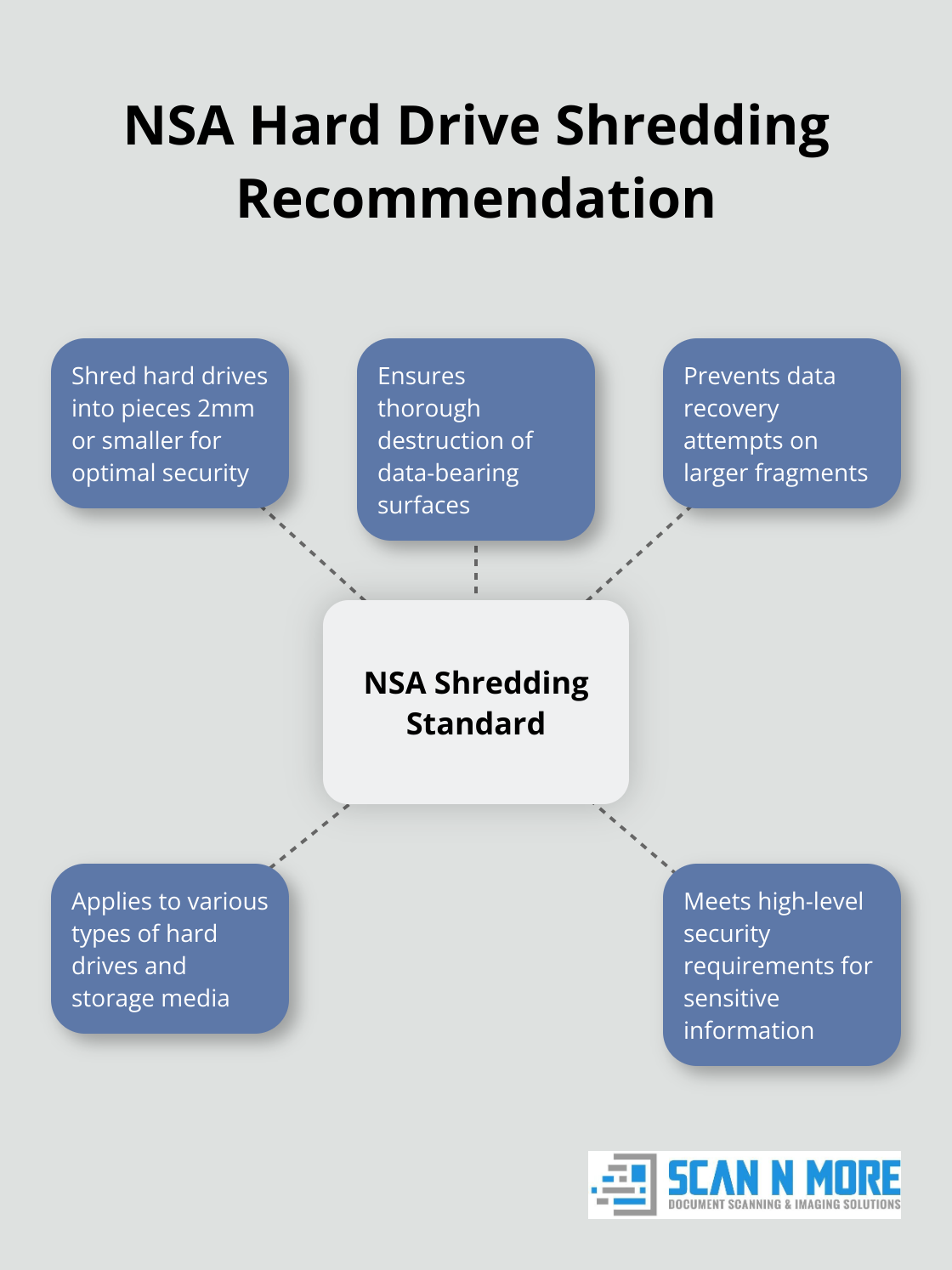
Hard drive shredders are industrial-strength machines that cut drives into small pieces. The National Security Agency (NSA) recommends shredding hard drives into pieces measuring 2 millimeters or smaller for optimal security. Shredders offer versatility (handling various drive types) and provide visual confirmation of destruction.
Disintegrators: Ultimate Security Through Pulverization
Disintegrators take destruction further by grinding hard drives into tiny particles. These machines can reduce drives to a dust-like consistency, making data recovery virtually impossible. Organizations with the highest security requirements often choose disintegrators, despite their higher cost and slower operation compared to other methods.
Crushers: Compact and Efficient Destruction
Hard drive crushers use hydraulic force to bend and warp drive platters, rendering data unreadable. They offer a more compact and less expensive option than shredders (typically costing between $7 to $20 per hard drive). Crushers suit organizations with moderate volume and security needs.
The selection of a destruction device depends on specific requirements. High-volume operations might benefit from a shredder’s speed, while those with limited space might prefer a crusher. For top-tier security, a disintegrator could be the best choice.
As we move forward, let’s examine the crucial factors to consider when choosing a hard drive destruction device, ensuring you make an informed decision that aligns with your organization’s needs and security requirements.
Selecting the Right Hard Drive Destruction Device
At Scan N More, we understand that choosing the appropriate hard drive destruction device is a critical decision for any organization. The right choice depends on several key factors that directly impact your data security and operational efficiency.
Assessing Your Destruction Needs
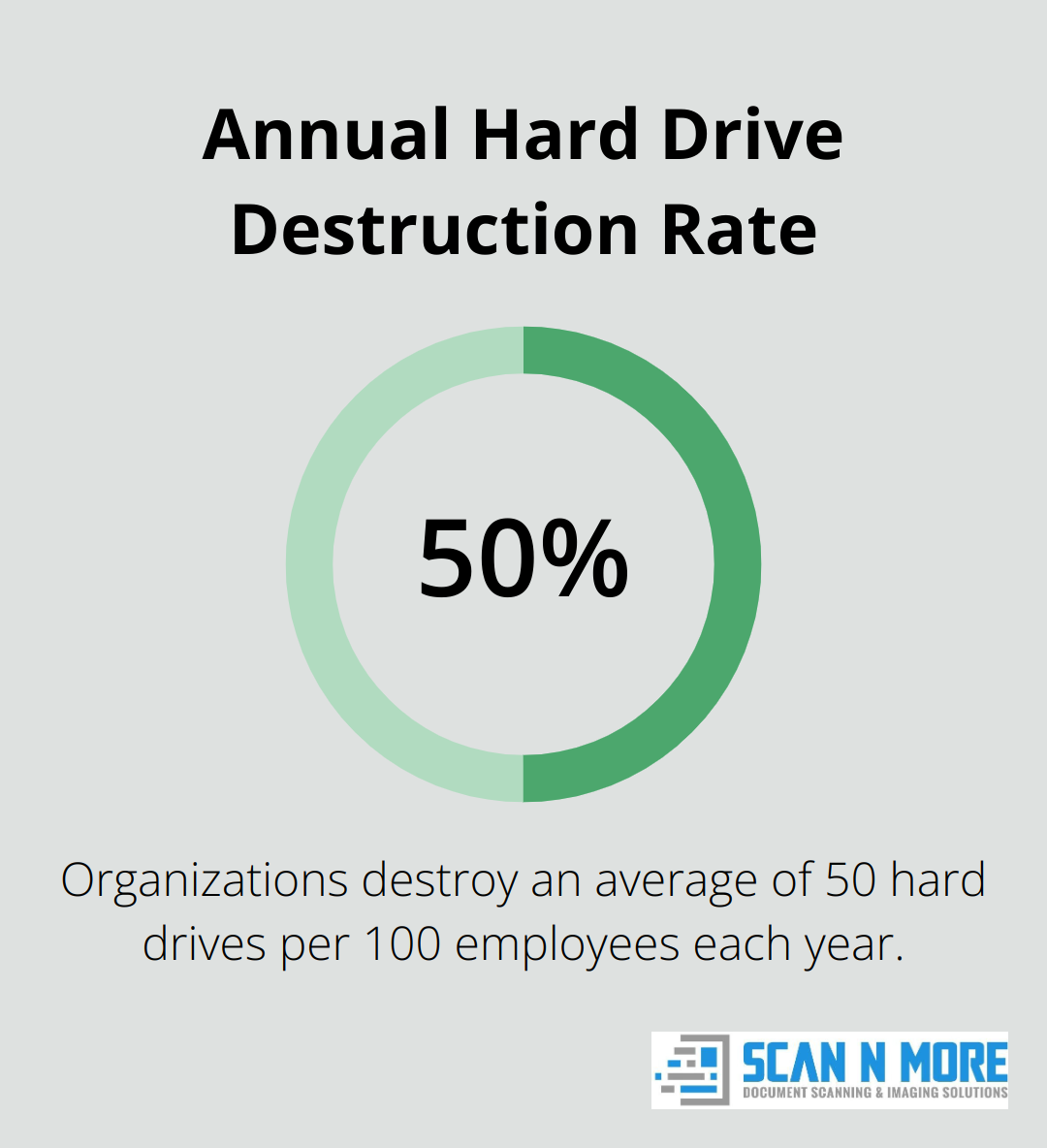
You should start by evaluating the volume of hard drives you need to destroy regularly. For small businesses that process a few drives per month, a compact crusher might suffice. However, large enterprises that deal with hundreds of drives weekly should consider high-capacity shredders or disintegrators. A 2024 study by the Data & Storage Association reveals that organizations destroy an average of 50 hard drives per 100 employees annually.
Balancing Security and Efficiency
The level of security required often dictates the type of device you’ll need. While all methods render data unrecoverable, disintegrators offer the highest level of security by reducing drives to dust-like particles. However, they operate slower than shredders, which can process up to 30 drives per hour. You should consider your risk tolerance and any industry-specific regulations when making this trade-off.
Cost Considerations and ROI
Budget plays a significant role in device selection. Initial costs vary widely (from $5,000 for basic crushers to over $50,000 for industrial shredders), but it’s essential to consider long-term value. You should factor in operational costs, maintenance, and potential savings from in-house destruction versus outsourcing. In-house destruction can save costs over the long term by avoiding third-party service fees.
Environmental Impact
When selecting a hard drive destruction device, you should also consider its environmental impact. Some devices offer more eco-friendly options, such as the ability to separate materials for recycling. This aspect becomes increasingly important as organizations strive to meet sustainability goals and comply with environmental regulations.
Compliance and Certification
Ensure that the device you choose meets relevant industry standards and certifications. Devices listed on the NSA EPL (National Security Agency Evaluated Products List) provide an extra layer of assurance for organizations handling sensitive data. Compliance with data protection regulations such as GDPR or HIPAA should also factor into your decision-making process.
As we move forward to explore the key features to look for in hard drive destruction devices, keep these factors in mind. The next section will help you identify the specific attributes that can make a significant difference in the effectiveness and efficiency of your data destruction process.
Essential Features for Hard Drive Destruction Devices
At Scan N More, we recognize the importance of selecting a hard drive destruction device with the right features. This chapter explores key attributes that enhance your data destruction process.
NSA/CSS EPL Certification
NSA/CSS EPL certification represents the highest standard for hard drive destruction devices. This listing by the National Security Agency confirms that a device meets stringent security standards. NSA-listed degaussers can erase all data on hard drives and tapes in under 15 seconds, ensuring Top Secret compliance with a small footprint. While not every organization requires this level of security, it strongly indicates a device’s effectiveness.
Regulatory Compliance
Your chosen device must align with relevant data protection regulations. For example, if you handle healthcare data, you need devices that meet HIPAA requirements. According to the ENISA Threat Landscape 2024 report, 8% of observed incidents during the reporting period targeted civil society. You should select a device that supports compliance with GDPR, CCPA, or other applicable regulations to avoid hefty fines and reputational damage.
User-Friendly Operation
The ease of use significantly impacts the efficiency of your destruction process. You should look for devices with intuitive controls and clear safety features. A study by the National Association for Information Destruction (NAID) found that user error accounts for 23% of data destruction failures. Devices with automated feed systems and clear status indicators minimize the risk of human error.
Portability vs. Stationary Options
Your operational needs dictate the choice between portable and stationary devices. Portable units offer flexibility for on-site destruction, which reduces the risk associated with transporting sensitive data. However, stationary units often have higher capacity and throughput. A 2024 survey by TechTarget revealed that 62% of enterprises prefer on-site destruction for highly sensitive data, making portability a key feature for many organizations.
Comprehensive Warranty and Support
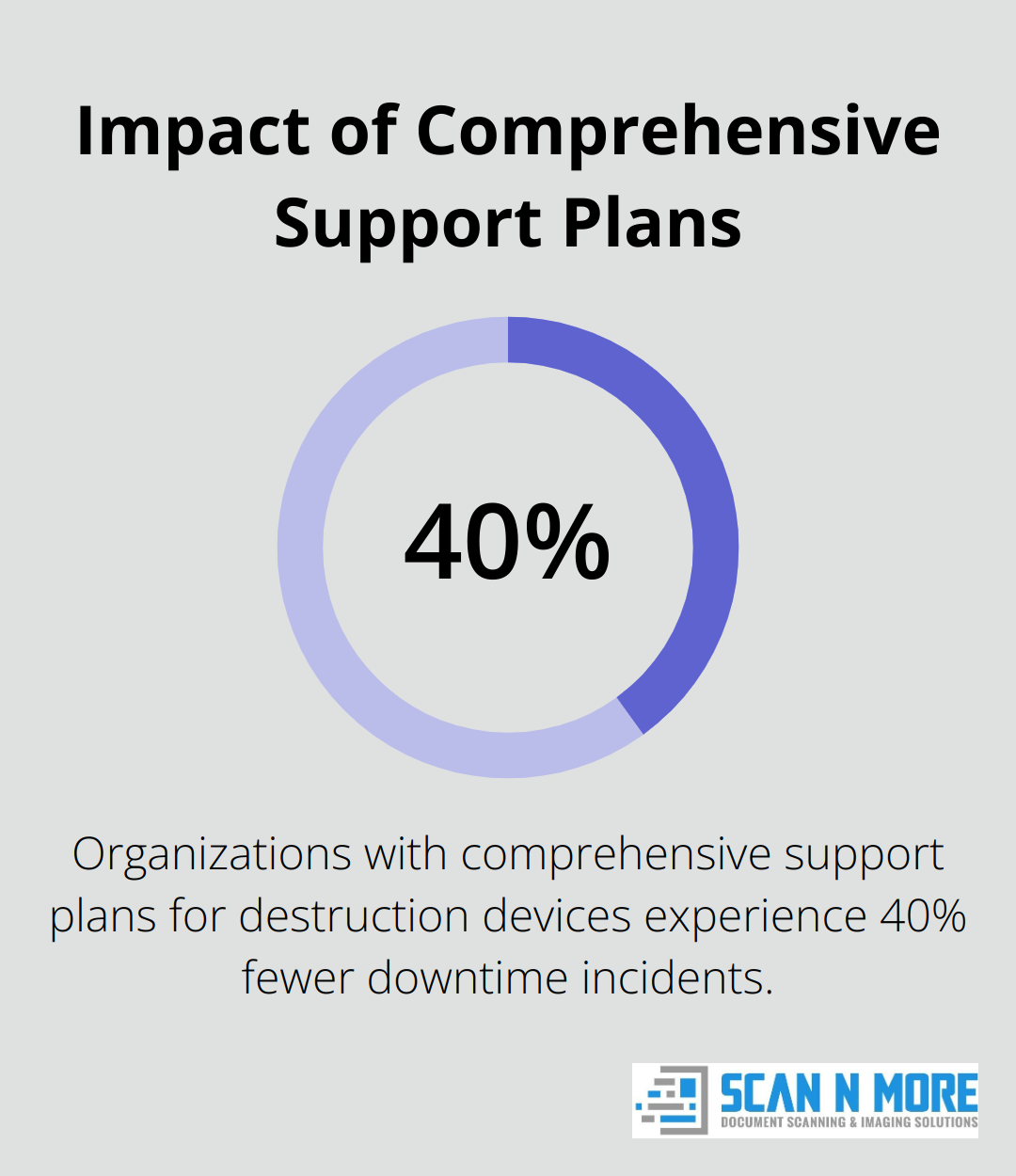
The importance of robust warranty and support options cannot be overstated. You should choose manufacturers that offer extended warranties and responsive customer support. A 2025 report by Gartner showed that organizations with comprehensive support plans for their destruction devices experience 40% fewer downtime incidents. This translates to significant cost savings and improved security over the device’s lifetime.
Final Thoughts
Selecting the right hard drive destruction device impacts your organization’s data security, operational efficiency, and regulatory compliance. The best choice aligns with your specific needs, considering factors such as destruction volume, security requirements, and budget constraints. User-friendly operation and robust support can significantly improve your destruction process’s efficiency and reliability.
Proper hard drive destruction is a necessity in our data-driven world. The potential costs of a data breach far outweigh the investment in a quality destruction device. You protect sensitive information and demonstrate your commitment to data security and privacy when you choose wisely.
We at Scan N More understand the complexities of data management and security. Our expertise in document digitization and hard drive destruction can complement your data security strategy (ensuring that your information remains protected throughout its lifecycle). You create a robust defense against data breaches and unauthorized access with the right hard drive destruction device and comprehensive data management practices.