

Most companies waste thousands of dollars every year moving documents around for scanning. We at Scan N More know that on-site document scanning eliminates this entirely-your files get digitized where they sit, cutting costs and speeding up your workflow.
The real payoff comes fast: no travel delays, tighter security, and immediate compliance wins. This guide shows you exactly how to make it work.
How On-Site Scanning Cuts Your Real Costs
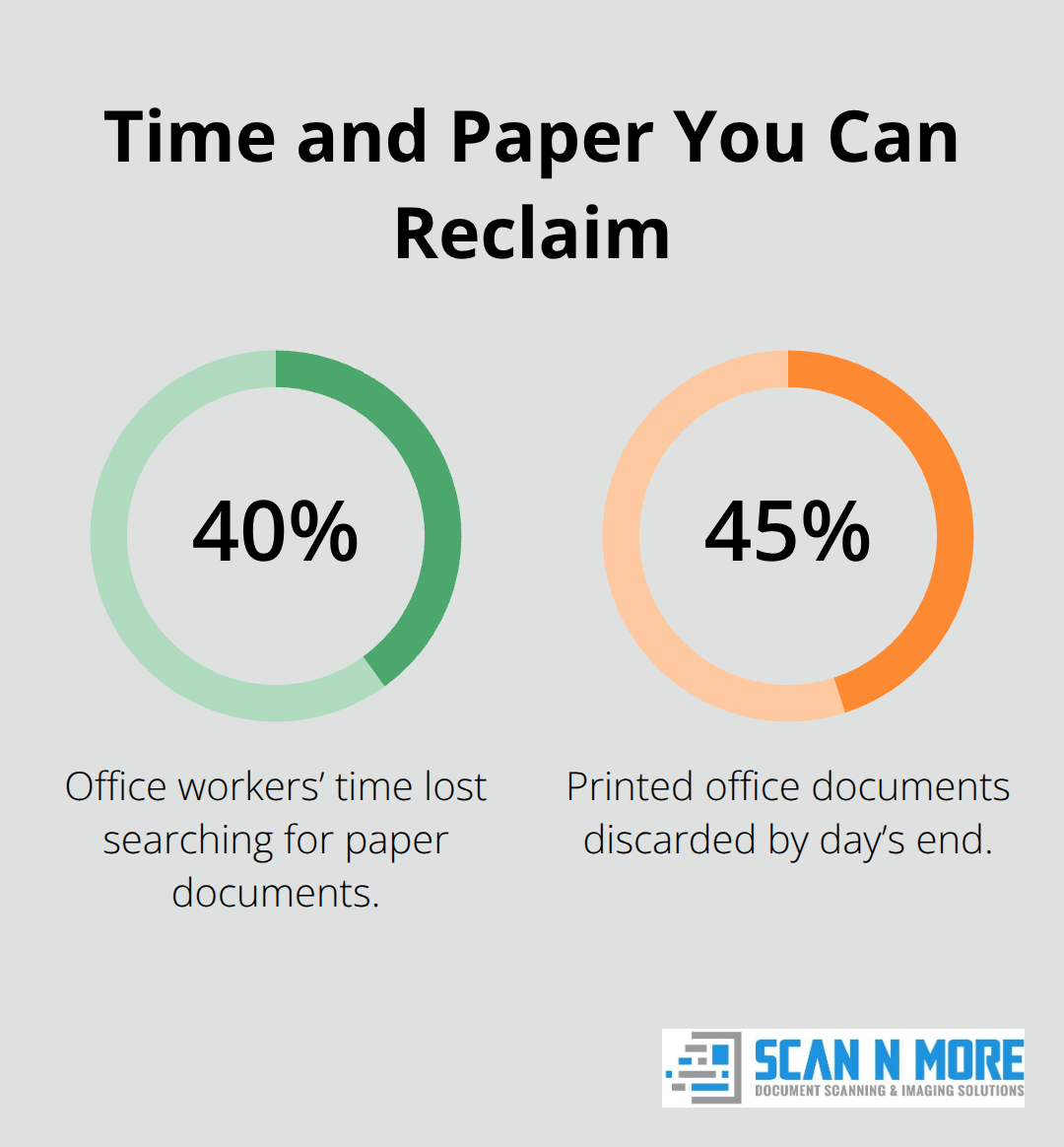
Shipping documents off-site for scanning creates hidden expenses that most companies underestimate. Transportation costs in document shipping create a real drain when you factor in courier fees, packaging, and logistics coordination. The real drain comes from lost productivity while files travel. Office workers spend nearly 40% of their time searching for paper documents. When your critical files leave the building, that search time multiplies across your team. On-site scanning eliminates this entirely.
Your documents stay in your facility and get processed immediately, meaning your staff accesses digitized files within hours instead of days.
This matters most for time-sensitive work. Mortgage applications average 500 pages per file, and every day a lender waits costs money in delayed closings. Healthcare providers who digitize patient records see immediate gains when files never leave the clinic. Legal teams working on active cases cannot afford multi-day turnarounds on document retrieval.
The Space and Storage Reality
Filing cabinet space costs annually when you account for rent, climate control, and organization. Most organizations maintain multiple cabinets for active files, archived records, and backups. On-site scanning eliminates this expense entirely because digitized files occupy virtually no physical space. You recover square footage immediately, which translates to real dollars, especially in urban markets where real estate costs run high.
How On-Site Operations Protect Your Workflow
The scanning team brings equipment to your location and works through your backlog during scheduled shifts (typically weekday eight-hour blocks). This approach means zero disruption to daily operations because scanning happens in parallel with your normal workflow. Your team continues processing transactions, serving customers, and handling urgent matters while the scanning progresses in a dedicated area.
One office worker processes nearly 10,000 sheets of paper annually, so the volume your organization generates justifies rapid local digitization. When scanning happens on-site, documents move from file cabinet to searchable digital format without leaving your control, reducing the risk of loss or mishandling that comes with shipping.
Why Control Matters for Your Documents
On-site scanning keeps sensitive materials within your facility throughout the entire process. You maintain visibility over every document from the moment the scanning team arrives until they complete the work. This direct oversight prevents documents from traveling through multiple courier hands or sitting in external warehouses where security risks increase. Your staff can verify that the right files get scanned, monitor quality in real time, and confirm destruction protocols happen exactly as planned. The scanning team works in your space under your supervision, which strengthens your ability to meet compliance requirements and maintain proper chain of custody documentation.
Why On-Site Scanning Strengthens Your Security Posture
On-site scanning fundamentally changes how you protect sensitive information during digitization. When documents leave your facility for external scanning, they travel through multiple hands and locations, each creating a potential security vulnerability. Off-site scanning requires courier pickups, transit storage, facility handoffs, and return logistics-every step introduces risk of loss, theft, or unauthorized access.
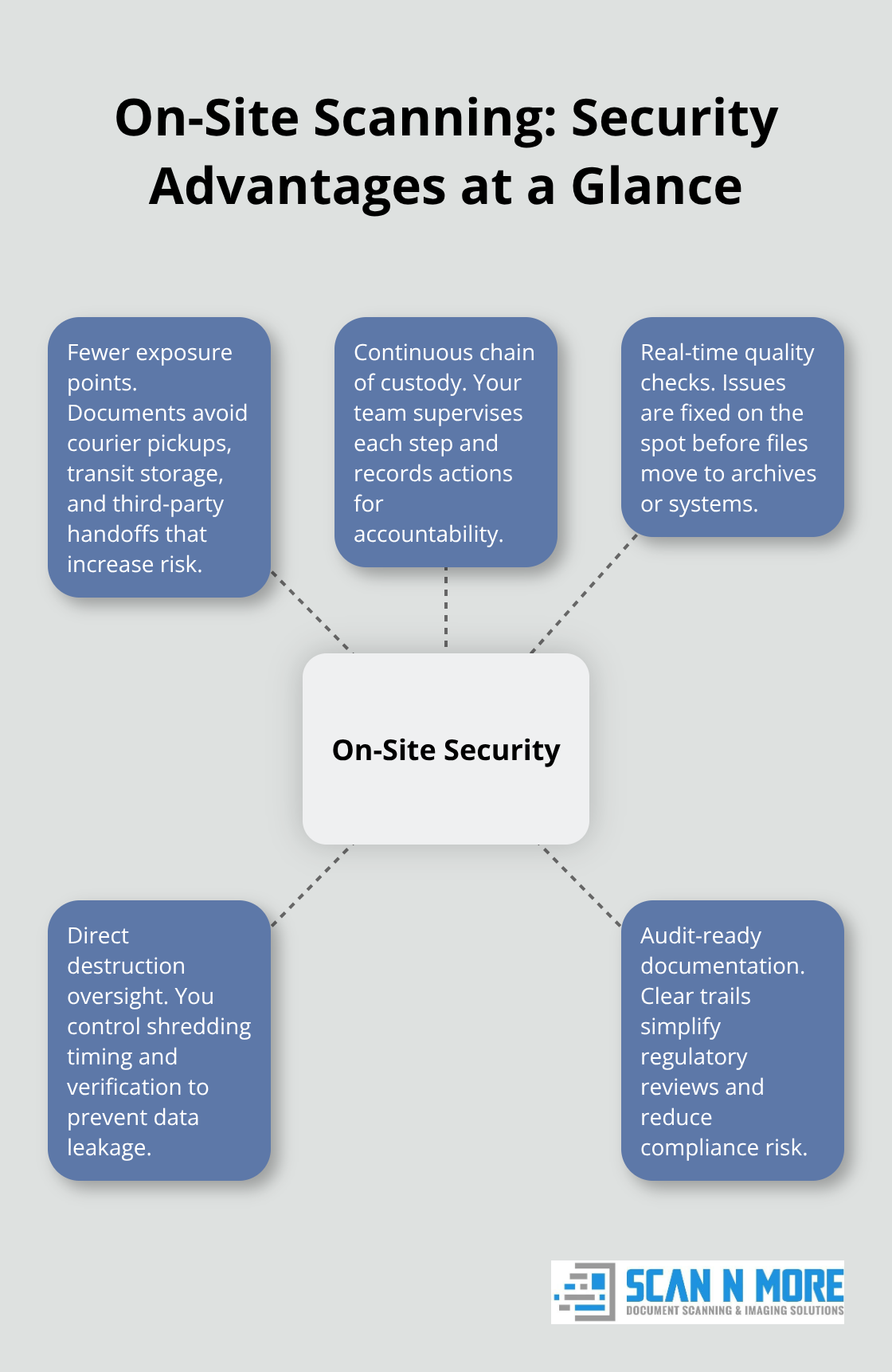
On-site scanning eliminates exposure points by keeping documents under your control, which means you maintain unbroken visibility and accountability from the moment scanning begins until files are securely destroyed or archived according to your specifications.
Compliance Becomes Manageable When Documents Stay Put
Regulatory requirements like HIPAA for healthcare, GDPR for data privacy, and industry-specific standards demand strict chain of custody documentation. On-site scanning simplifies compliance because your team directly oversees the entire process and documents every action with audit trails and metadata tagging. You control which documents get scanned, verify quality checks in real time, and confirm destruction happens exactly when scheduled. This direct oversight generates the documentation regulators expect to see during audits.
Healthcare organizations digitizing patient records, legal firms managing case files, and financial institutions processing loan applications all benefit from this transparency. The scanning team works within your facility under your supervision, making it straightforward to demonstrate that sensitive materials never left your control and that security protocols were followed precisely.
Immediate Verification Prevents Compliance Failures
When scanning happens on-site, your staff spot-checks digitized files immediately to confirm accuracy and completeness. Real-time quality assurance catches indexing errors and metadata problems before compliance failures occur. You also control the destruction process directly-watching documents get shredded or incinerated according to your retention schedules proves to auditors that you followed proper protocols.
This hands-on verification approach works particularly well for industries handling high-value or heavily regulated documents. The alternative of trusting an external vendor’s destruction reports creates audit risk because you cannot independently confirm that sensitive files were actually destroyed. On-site operations eliminate this verification gap entirely, giving your compliance team the certainty they need during regulatory reviews or litigation discovery processes.
Chain of Custody Documentation Strengthens Your Audit Position
On-site scanning generates clear, verifiable documentation at every stage of the process. Your team witnesses document preparation, scanning, quality checks, and destruction firsthand, then records these actions in your systems. This creates an unbroken audit trail that demonstrates compliance with retention schedules and regulatory requirements. External auditors and legal teams reviewing your procedures find it far easier to verify that you maintained proper controls when the entire process happened under your roof.
The next critical step involves preparing your facility and team to execute on-site scanning effectively, which determines whether you capture these security and compliance benefits fully.
How to Prepare Your Facility for Maximum Scanning Efficiency
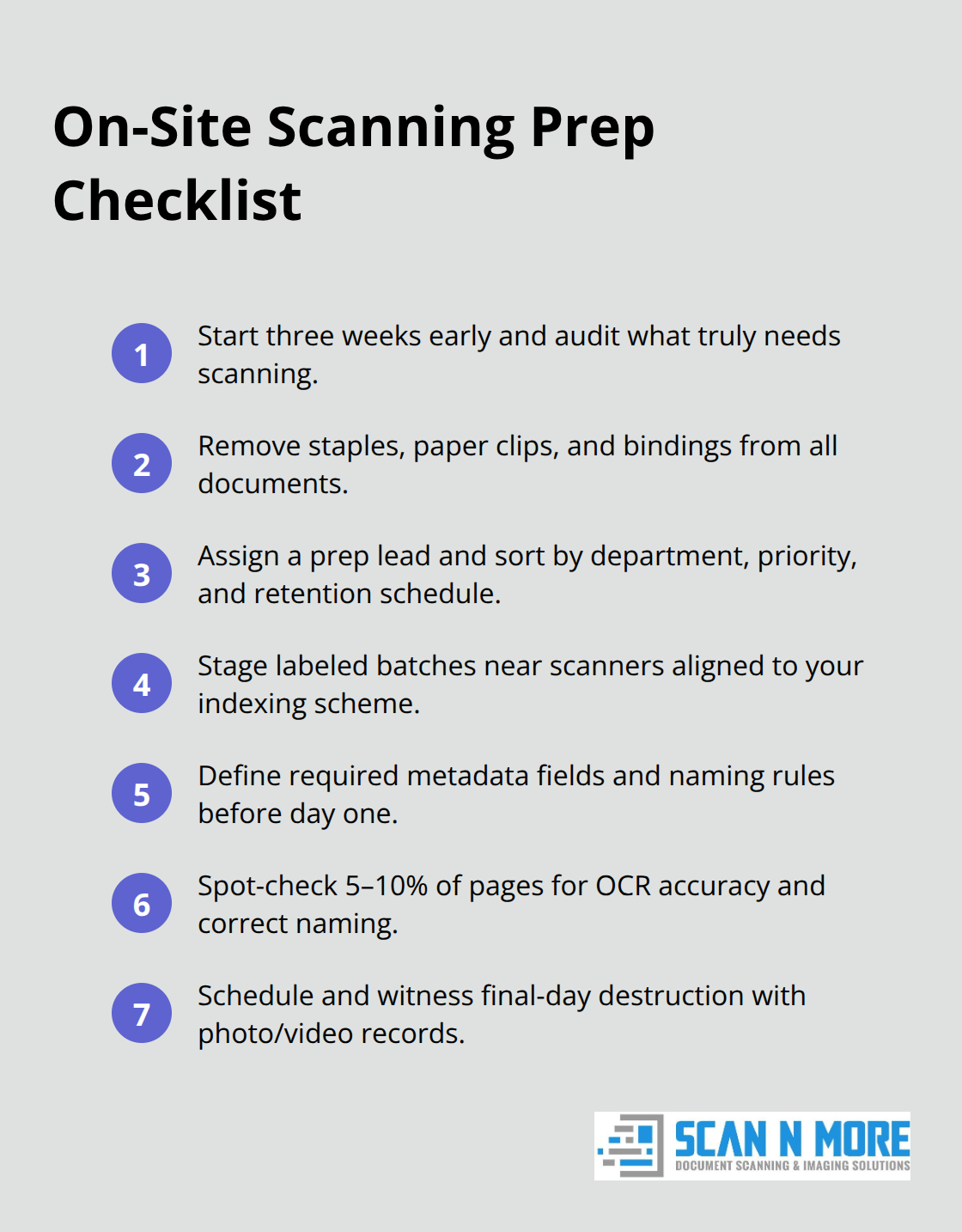
Preparation determines whether your on-site scanning delivers the promised speed and security benefits or creates bottlenecks that waste time and money. Start three weeks before the scanning team arrives and audit your document inventory to identify what actually needs scanning versus what should be destroyed immediately. Most organizations discover that 45% of printed documents in offices get discarded by the end of the day anyway, meaning you can eliminate significant volume before scanning even begins.
Remove Physical Obstacles That Slow Scanners
Staples, paper clips, and binding materials must come off all documents because these slow down scanners and create quality problems. Industrial high-volume scanners process over 100 pages per hour, but only when documents arrive clean and prepared. Assign one person to oversee preparation and verify that files get organized by department, priority level, and retention schedule before the team arrives. This single decision cuts scanning time by 20-30% because workers spend less time deciding which documents to process next and more time actually scanning.
Organize Documents Into Logical Batches
Create a staging area near your scanning location where prepared batches wait in labeled containers that correspond to your indexing scheme (document type, date, client name, employee ID, case number). Your team should decide in advance which metadata fields matter most so the scanning team configures their indexing correctly from day one. This structured approach prevents confusion and ensures that digitized files land in the right folders within your system immediately after scanning completes.
Verify Quality While the Team Works On-Site
Quality verification happens immediately after scanning, which means your staff must be available to spot-check completed batches while the team still works on-site. Assign someone to review 5-10% of scanned pages from each batch to confirm that OCR accuracy meets your standards and that file naming follows your specifications. If errors appear, the scanning team corrects them immediately rather than discovering problems weeks later when files are already archived.
Document Destruction Protocols From Start to Finish
Establish clear destruction protocols before scanning begins and document exactly which documents get shredded, when destruction occurs, and who verifies it. Schedule destruction on the final day of the scanning project so you maintain chain of custody documentation through completion. Your team should witness the destruction process and photograph or video-record shredding of sensitive batches for audit compliance. Create a checklist that covers document preparation, scanning configuration, quality assurance, and destruction completion so nothing gets overlooked during the engagement.
Final Thoughts
On-site document scanning transforms how your organization handles paper records and recovers productivity that filing cabinets steal from your team. Your staff accesses digitized files within hours instead of waiting days for external processing, and office workers stop wasting 40% of their time searching for documents. The speed advantage compounds across departments as teams work with searchable digital versions from day one, eliminating delays that slow transactions, approvals, and customer service.
Security and compliance strengthen immediately when documents stay within your facility throughout the entire digitization process. Your team maintains unbroken chain of custody documentation, generates audit trails that regulators expect, and directly oversees preparation, scanning, quality checks, and destruction. This hands-on control eliminates the exposure points that courier pickups and external warehouses create, making compliance straightforward and audit-ready.
We at Scan N More bring equipment and expertise directly to your facility to handle on site document scanning from start to finish. Contact Scan N More today to schedule your first project and start recovering the time and money your paper processes currently cost.