
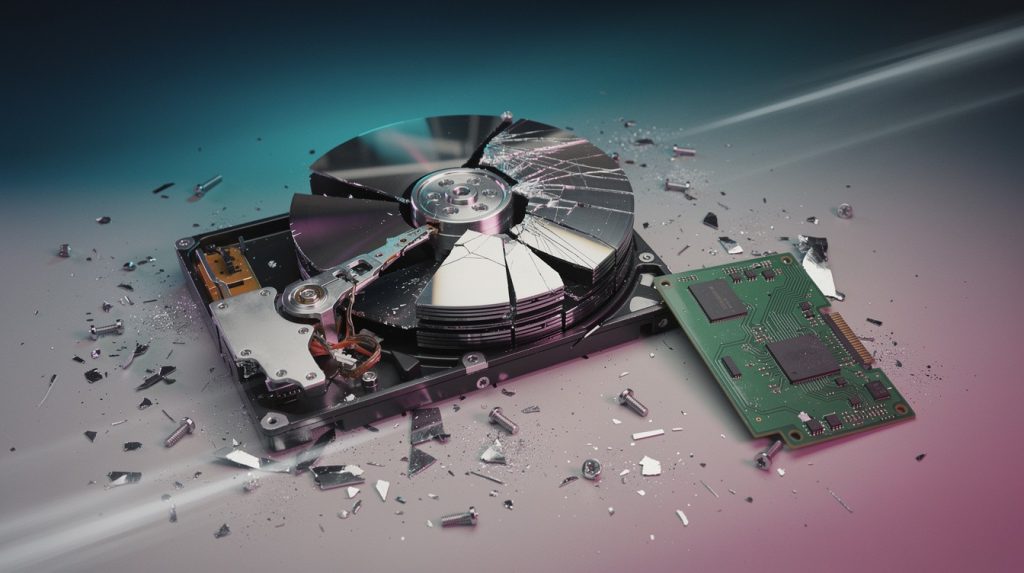
Deleting files from your hard drive isn’t enough. Data recovery tools can still retrieve sensitive information from drives that haven’t been properly destroyed, putting your business at serious risk.
At Scan N More, we’ve seen firsthand how many organizations underestimate the importance of physically destroying a hard drive before disposal. This guide walks you through the methods that actually work, the mistakes to avoid, and why professional services matter.
Why Hard Drive Destruction Matters
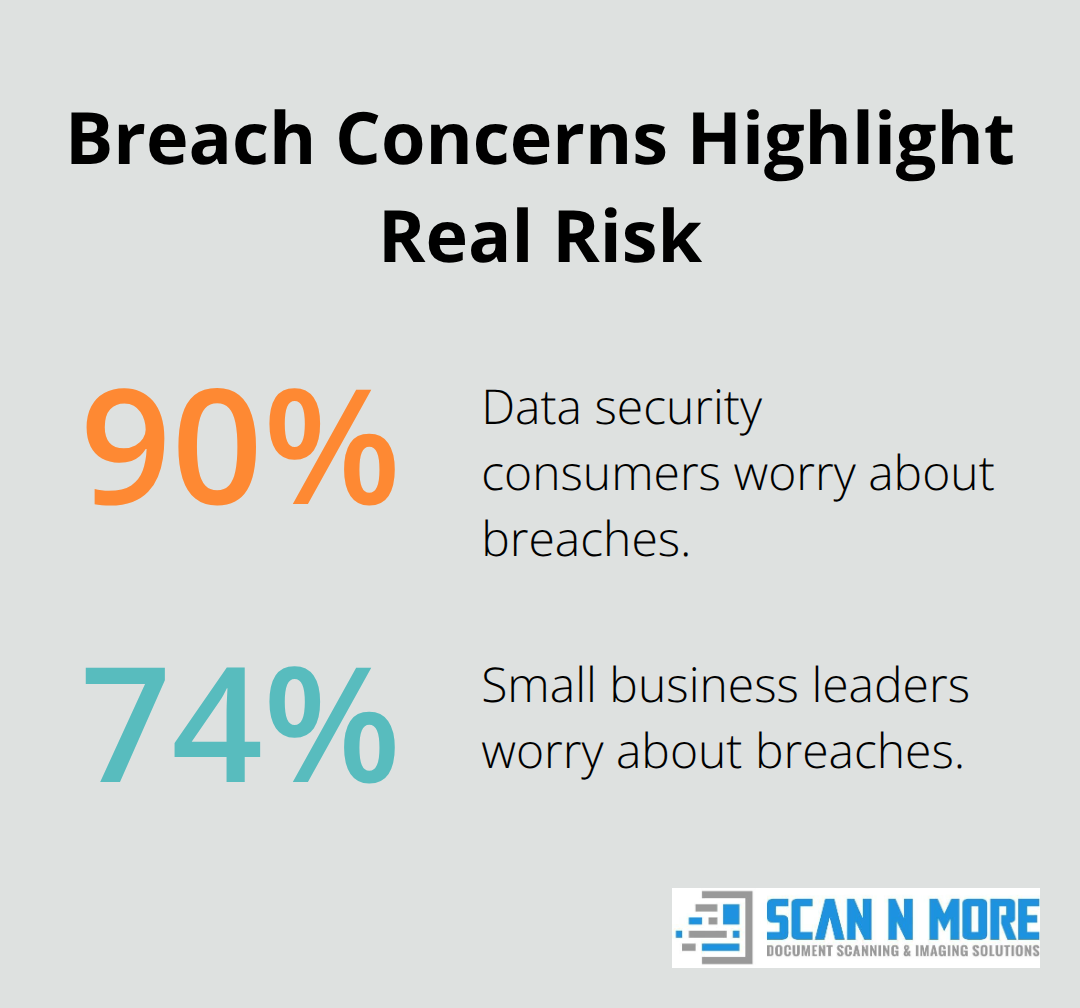
Data breaches from improperly disposed hard drives cost organizations an average of $4.45 million according to IBM’s 2023 Data Breach Report. When you delete files or format a drive, the data remains on the platter. Specialized recovery tools can retrieve this information weeks, months, or even years after deletion. A single unwiped drive containing customer records, financial data, or proprietary information exposes your business to lawsuits, regulatory fines, and reputational damage that takes years to recover from. The Data Protection Report 2023 found that 90 percent of data security consumers and 74 percent of small business leaders worry about breaches. These concerns are justified because hard drive disposal is where many organizations drop their guard.
Physical Destruction Eliminates Uncertainty
Software-based data erasure, like DoD 5220.22-M standard wiping, works only if the drive functions properly. A damaged drive, a drive with bad sectors, or a drive with hidden zones may not erase completely through software alone. Physical destruction removes this uncertainty entirely. Crushing requires 7,500 pounds of force or shearing at 40,000 pounds of force to render data unrecoverable. NAID AAA-certified destruction facilities monitor and document every step of the process, creating an audit trail that proves your company took the threat seriously. This documentation protects you during compliance audits and demonstrates due diligence if a breach investigation occurs.
Compliance Requires Professional Documentation
HIPAA requires healthcare organizations to implement physical safeguards for protected health information. Destroying hard drives that contained patient data is not optional-it is mandatory. Failure to document proper destruction can result in significant penalties. Financial institutions face similar requirements under regulations like PCI DSS and SOX. Professional destruction services provide a Certificate of Erasure that satisfies auditors and regulators. This certificate proves material collection, destruction method, and final recycling disposition. DIY destruction leaves no paper trail, which means you cannot prove compliance even if you completed everything correctly.
What Happens Next in Your Disposal Process
Understanding the risks and compliance requirements sets the foundation for making the right choice. The methods you select-whether physical destruction, software erasure, or a combination approach-determine whether your data truly disappears or remains vulnerable.
What Actually Works to Destroy a Hard Drive
Crushing and Shearing Render Data Unrecoverable
Crushing and shearing stand as the most reliable physical destruction methods available today. Shearing applies 40,000+ psi to obliterate the drive’s internal components, while crushing uses 7,500 pounds of force to render platters unrecoverable. Both methods work on any drive regardless of age, capacity, or interface type-whether your organization has legacy IDE drives from 2005 or current SATA models. Physical destruction offers immediate and verifiable results that software erasure cannot match. A software wipe following DoD 5220.22-M standard can fail on drives with bad sectors or hidden zones that the operating system cannot access, leaving data fragments behind. Physical destruction eliminates this risk entirely.
Documentation Creates Your Compliance Trail
NAID AAA-certified facilities document every drive’s serial number, the destruction method used, and the final recycling disposition, creating a chain of custody that satisfies auditors. This documentation becomes essential when regulators ask how you handled sensitive data disposal. On-site destruction services bring the equipment to your facility, allowing you to watch the process and verify results immediately. Off-site services use GPS-tracked vehicles with locked containers and 24/7 surveillance, then provide photographic or video evidence of destruction completion. The certificate you receive proves material collection, destruction method, and final recycling disposition-exactly what compliance audits require.
Why Degaussing Falls Short
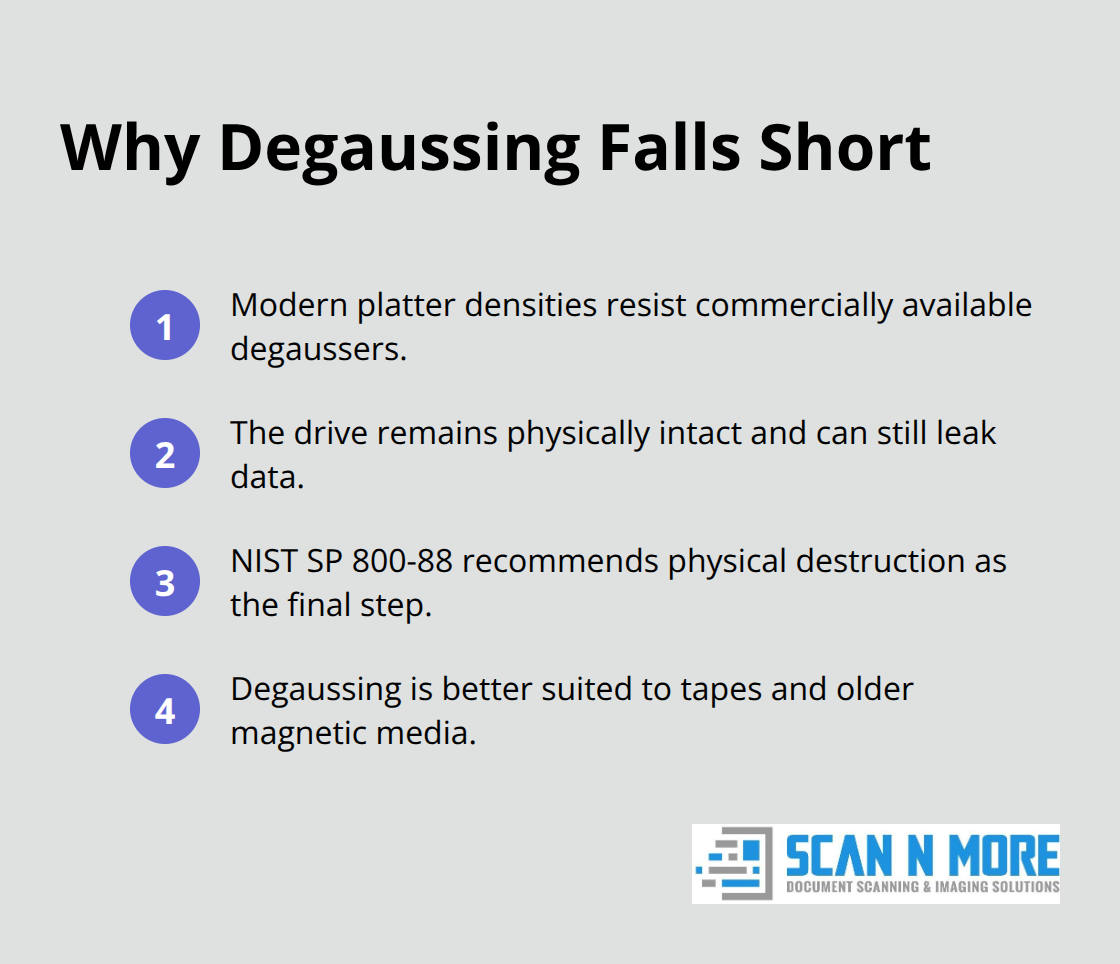
Degaussing and magnetic erasure sound promising in theory but fall short in practice. Degaussing uses powerful magnetic fields to scramble data on magnetic media, and it works on tape backups and older magnetic drives. However, modern hard drives with increased platter density resist degaussing at commercially available strengths. More importantly, degaussing leaves the drive physically intact, which means data recovery specialists with sophisticated equipment can still extract information from the platter. The NIST SP 800-88 guidelines acknowledge degaussing’s limitations and recommend physical destruction as the preferred final step for sensitive data.
Professional Services Handle the Complexity
Professional hard drive destruction services combine the security of physical destruction with the accountability of NAID AAA-certified processes. These providers handle pickup, document serial numbers, perform shredding or crushing at secure facilities, and provide certificates proving destruction occurred. This approach removes the operational burden from your team while creating the documentation your compliance audits demand. The next step involves understanding which mistakes organizations make when they attempt destruction on their own-and why those mistakes expose your business to serious risk.
What Mistakes Leave Your Data Vulnerable
Most organizations fail at hard drive destruction not because they lack good intentions, but because they stop too early in the process. Software deletion or basic formatting creates a false sense of security that evaporates the moment a data recovery specialist connects your drive to specialized equipment. The Data Protection Report 2023 found that 90 percent of data security consumers worry about breaches, yet many of these same organizations treat hard drive disposal as a checkbox item rather than a security-critical operation.
Software Erasure Fails on Damaged Drives
Software-based erasure following DoD 5220.22-M standards works only on fully functional drives with no bad sectors or hidden zones. A drive with mechanical damage, a failed head, or firmware corruption halts the erasure process mid-way, leaving significant portions of your data intact. Your team may believe the erasure completed successfully because the software reported no errors, but the data remains on the platter. Physical destruction eliminates this risk category entirely, but only if you document the process properly.
Missing Documentation Exposes You to Penalties
Without a Certificate of Erasure from a NAID AAA-certified facility, you cannot prove to auditors that destruction actually occurred. Healthcare organizations handling patient data under HIPAA must provide proof of physical safeguards during audits. Financial institutions under PCI DSS face similar requirements. A handwritten note or internal email stating you destroyed the drives carries zero weight with regulators.
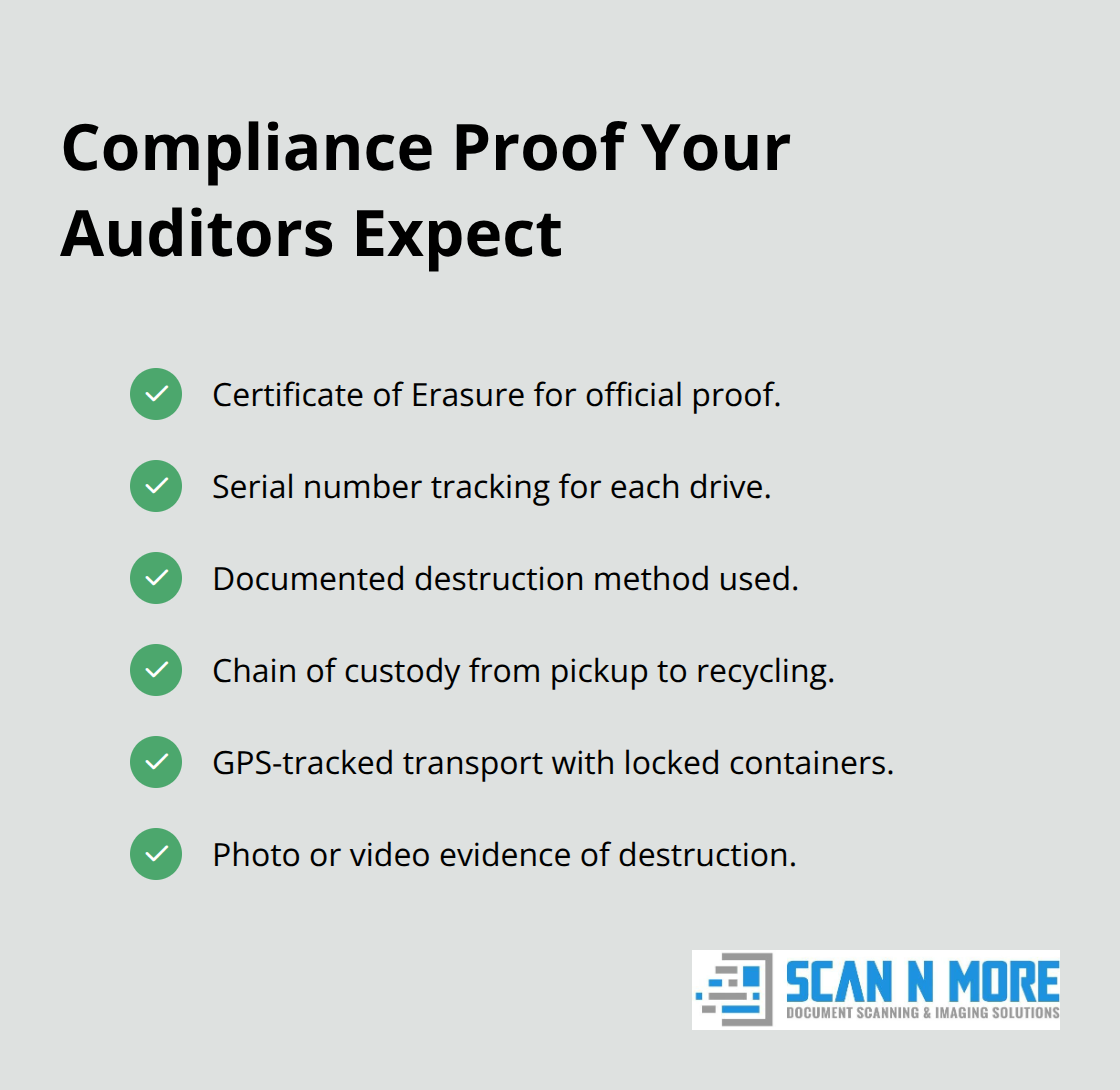
Professional destruction services provide serial number documentation, destruction method confirmation, and final recycling disposition records that satisfy compliance requirements.
Incomplete Destruction Leaves Data Readable
Some organizations crush the drive housing but fail to destroy the platters inside, which still contain readable data. Others attempt magnet-based erasure on modern drives, unaware that current platter densities resist degaussing at commercially available strengths. Incomplete destruction methods frequently damage only the outer casing while leaving the actual storage medium intact. Facilities using adequate crushing or shearing force ensure complete obliteration, but casual destruction methods do not.
The Real Cost of Cutting Corners
The cost difference between professional destruction and DIY approaches is minimal when you factor in regulatory penalties and potential breach response expenses. Organizations that skip proper documentation or use incomplete destruction methods inevitably face regulatory fines, breach investigations, and reputational damage that extends far beyond the initial disposal decision.
Final Thoughts
Hard drive destruction before disposal protects your business from data breaches, regulatory penalties, and reputational damage that costs far more than proper destruction ever would. Data breaches from improperly disposed drives average $4.45 million in costs, and 74 percent of small business leaders worry about breaches-concerns that reflect real vulnerabilities in how most companies handle end-of-life hardware. The best approach combines physical destruction with professional documentation, since crushing or shearing renders data unrecoverable regardless of drive age or condition, while NAID AAA-certified facilities provide the serial number tracking and Certificate of Erasure that auditors demand.
Professional destruction services protect your business in ways DIY methods cannot, handling the operational burden while providing the audit trail compliance frameworks like HIPAA and PCI DSS require. These providers eliminate the risk of incomplete destruction or missing documentation that leaves your organization exposed during regulatory audits. When you partner with a provider that combines hard drive destruction with broader data security solutions, you gain comprehensive protection across your entire data lifecycle.
We at Scan N More understand that destroying a hard drive before disposal demands both technical expertise and documented accountability. Our professional hard drive destruction services combine physical destruction with the documentation your business needs to satisfy auditors and regulators. Make the choice that protects your business today and your reputation tomorrow.