

At Scan N More, we understand the critical importance of data security in today’s digital landscape. On-site hard drive destruction has emerged as a popular method for businesses to protect sensitive information.
This process involves physically destroying hard drives at your location, ensuring complete data erasure. In this post, we’ll explore the advantages and potential drawbacks of on-site hard drive destruction to help you make an informed decision for your business.
What Is On-Site Hard Drive Destruction?
The Essence of On-Site Destruction
On-site hard drive destruction is a secure method to permanently erase sensitive data directly at a company’s premises. This process involves the physical destruction of hard drives to prevent any possibility of data recovery. The demand for this service continues to grow as businesses become increasingly aware of the risks associated with improper data disposal.
Common Physical Destruction Methods
Several methods are used for on-site destruction:
- Shredding: Industrial-grade machines reduce hard drives to tiny fragments (often as small as 2mm).
- Crushing: Hydraulic presses deform and break the drive platters.
- Disintegration: Specialized equipment pulverizes drives into a fine powder.
Data Security in the Digital Age
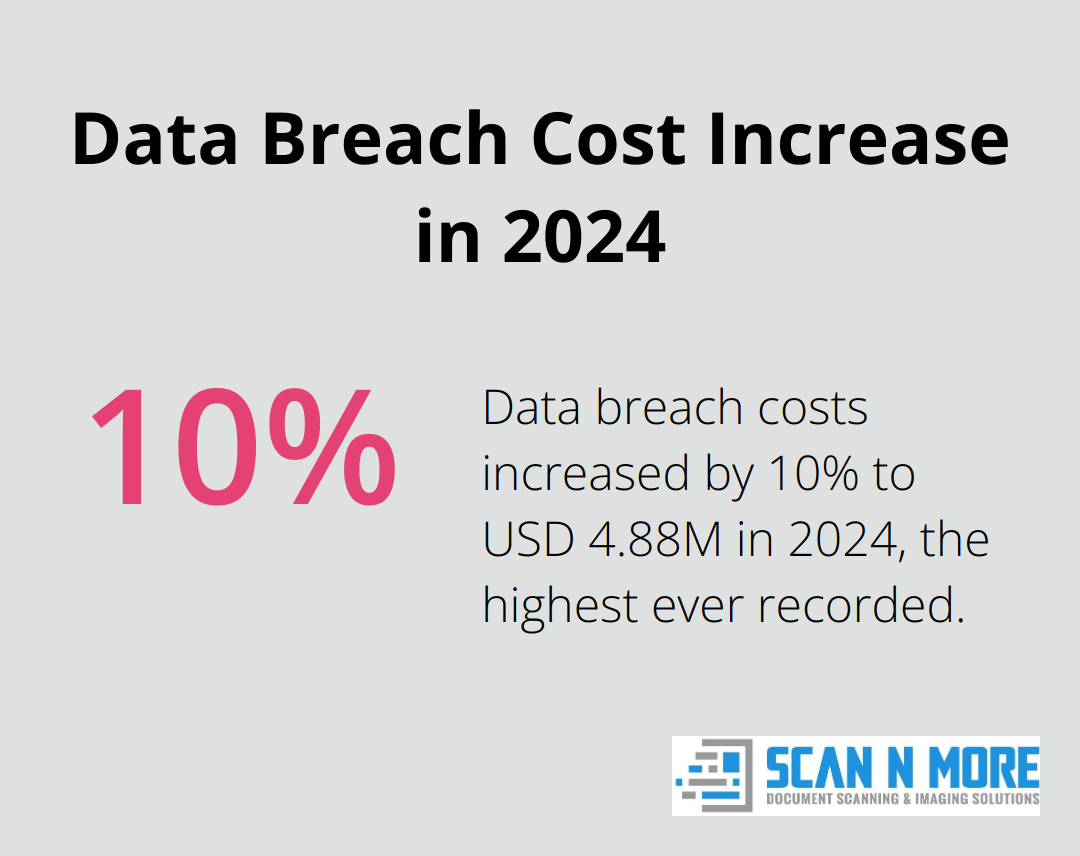
The importance of data security cannot be overstated in today’s business environment. With cyber threats that evolve rapidly, physical destruction of hard drives provides an additional layer of protection against data breaches. The global average cost of a data breach in 2024 was USD 4.88M, a 10% increase over the previous year and the highest total ever recorded. This figure underscores the financial risks associated with inadequate data protection measures.
Regulatory Compliance and On-Site Destruction
On-site hard drive destruction helps businesses comply with stringent data protection regulations (such as GDPR and HIPAA). These laws mandate secure disposal of confidential information, with significant penalties for non-compliance. Companies that choose on-site destruction can directly oversee the process, which ensures adherence to regulatory compliance and maintains a clear chain of custody.
The Role of Professional Services
Professional on-site hard drive destruction services play a vital role in this process. These services bring specialized equipment and expertise to ensure thorough destruction of data storage devices. They also provide documentation and certificates of destruction, which are essential for compliance and audit purposes.
As we explore the advantages of on-site hard drive destruction in the next section, you’ll see why many businesses consider this method a cornerstone of their data security strategy.
Why Choose On-Site Hard Drive Destruction?
Real-Time Verification
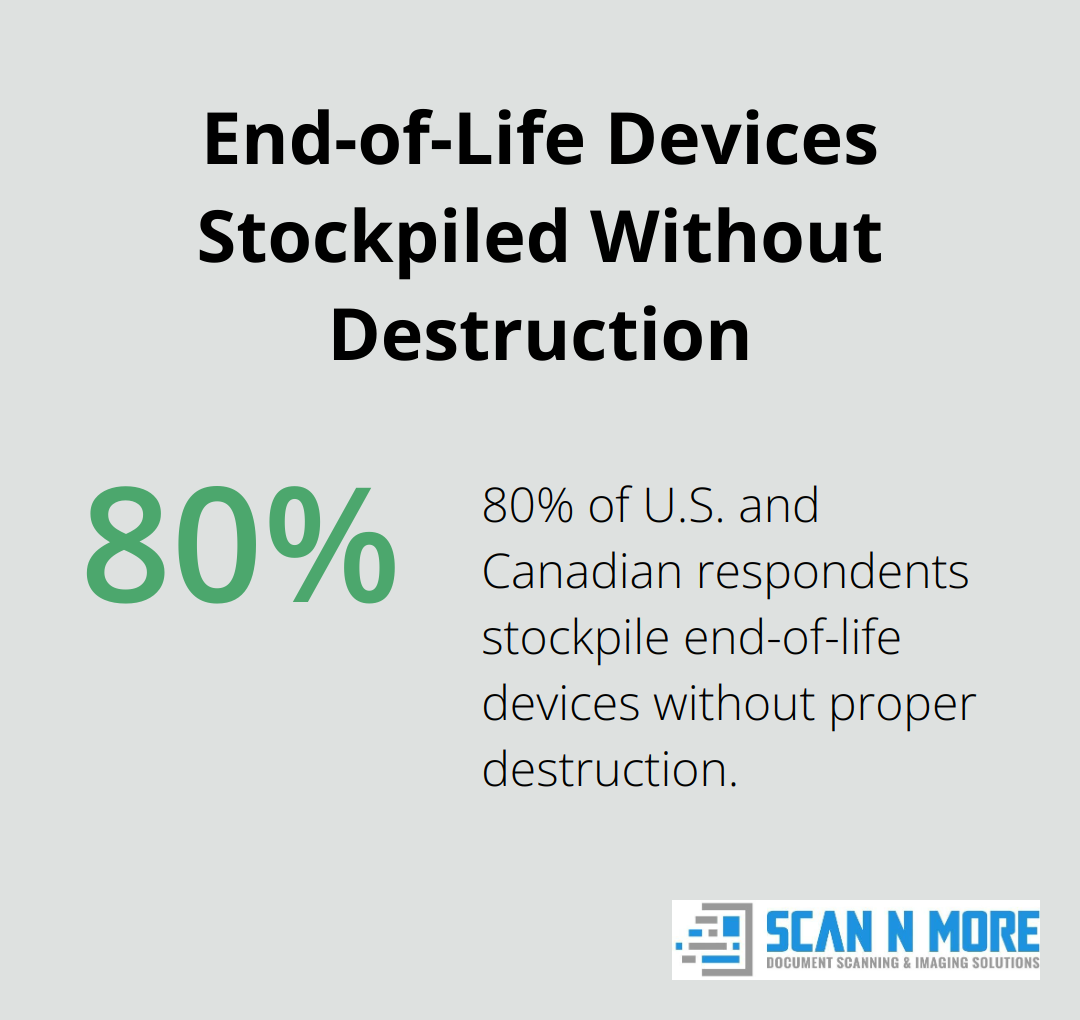
On-site hard drive destruction allows businesses to observe the entire process firsthand. This transparency confirms that sensitive data is completely destroyed, eliminating any doubts. A staggering 80% of U.S. and Canadian respondents reported that their end-of-life devices were simply stockpiled in storage without proper destruction, highlighting the importance of real-time verification.
Reduced Transportation Risks
On-site destruction eliminates the need to move sensitive data to another location, which can introduce potential vulnerabilities. The U.S. Department of Health and Human Services reported that 11% of healthcare data breaches in 2024 occurred during the transport of physical records or devices. On-site destruction mitigates this risk entirely.
Enhanced Control Over the Process
Companies maintain full control over the entire destruction process when it occurs on-site. This level of oversight enables immediate adjustments if necessary and ensures strict adherence to company policies and procedures. A Ponemon Institute survey found that 73% of IT professionals believe on-site destruction provides superior control over the data disposal process compared to off-site alternatives.
Immediate Results
On-site destruction offers instant results. Companies can verify the complete destruction of their data immediately, without waiting for confirmation from a third-party facility. This immediacy can be particularly valuable for time-sensitive operations or in situations where rapid data disposal is required.
Customized Solutions
On-site destruction services often offer customized solutions to meet specific business needs. These may include specialized equipment for different types of storage devices (e.g., hard drives, SSDs, tapes) or tailored destruction processes that align with particular industry regulations. Professional services save time and money by handling the process efficiently with specialized equipment.
The benefits of on-site hard drive destruction are clear, but it’s important to consider potential drawbacks as well. Let’s examine some challenges businesses might face when opting for this method of data disposal.
Challenges of On-Site Hard Drive Destruction
Cost Considerations
On-site hard drive shredding typically incurs higher upfront costs compared to off-site alternatives. This price difference results from the need for specialized mobile equipment and on-site technicians. However, businesses must balance these costs against the potential financial impact of a data breach.
Operational Disruptions
The process of on-site destruction can cause disruptions to daily business operations. Industrial-grade shredders and crushers generate considerable noise, which can interfere with office environments. To minimize these disruptions, companies often schedule destruction services during off-hours or weekends, which can lead to additional costs.
Capacity Limitations
On-site destruction services may face limitations when handling large volumes of hard drives. Mobile destruction units typically have lower capacity compared to dedicated off-site facilities. This limitation can pose challenges for businesses undergoing major IT upgrades or data center decommissioning projects.
Environmental Impact
The environmental implications of on-site hard drive destruction often go unnoticed. The process generates electronic waste that requires proper disposal. On-site destruction services must adhere to strict environmental regulations for the disposal of shredded materials. Some companies partner with certified e-waste recyclers to ensure responsible disposal and recycling of destroyed hard drive components.
Logistical Challenges
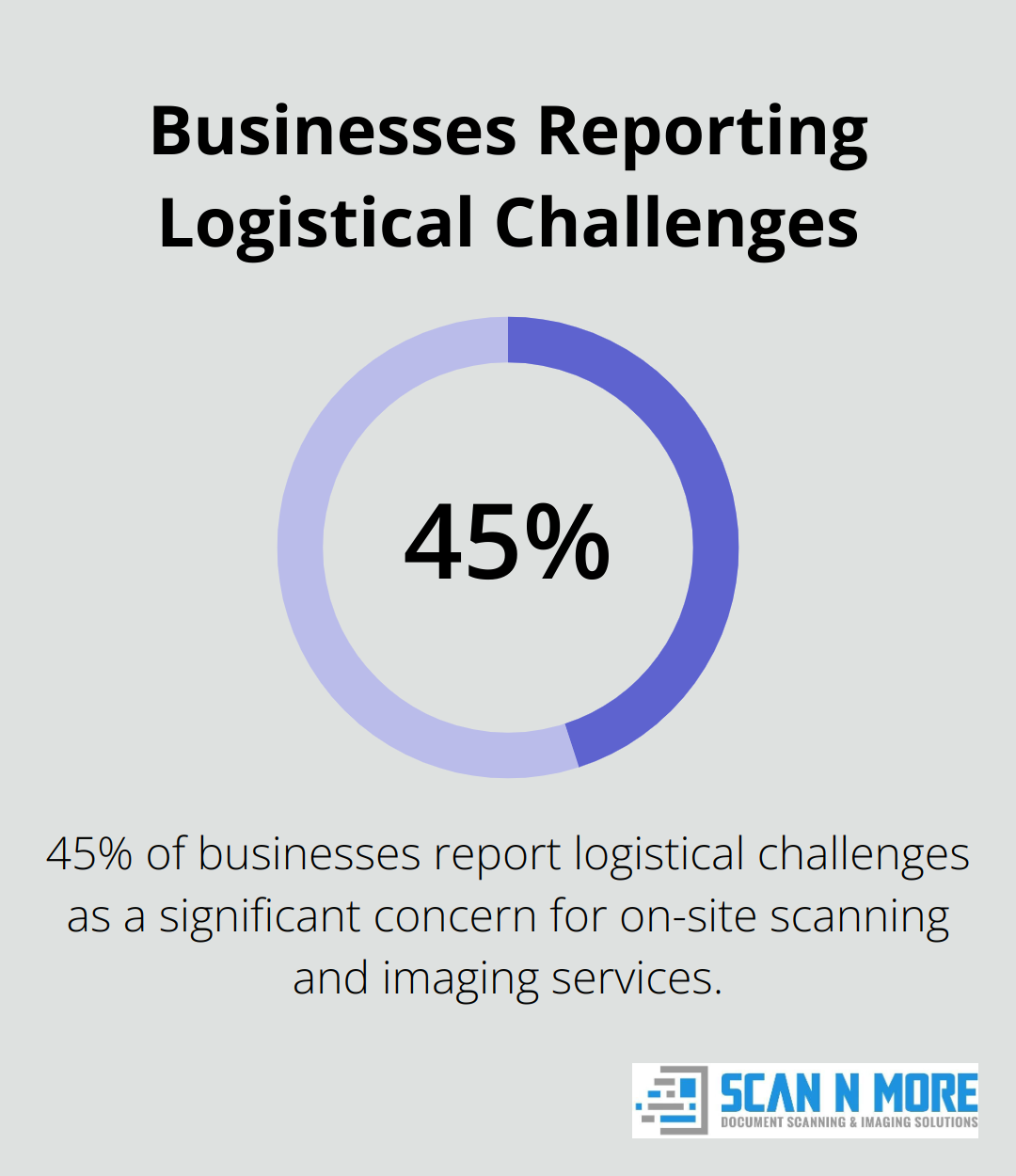
Coordinating on-site destruction can present logistical hurdles. Businesses need to allocate secure space for the destruction process, ensure proper power supply for equipment, and manage employee access during the procedure. A survey by the International Association of IT Asset Managers (IAITAM) found that 45% of businesses reported logistical challenges as a significant concern when implementing on-site scanning and imaging services.
Final Thoughts
On-site hard drive destruction provides significant advantages for businesses that prioritize data security. Companies can witness the destruction process firsthand, which ensures compliance with data protection regulations and eliminates transportation risks. However, businesses must consider potential drawbacks such as higher costs, operational disruptions, and capacity limitations when they opt for this method.
We recommend a thorough assessment of your specific needs and resources before you choose on-site hard drive destruction. You should evaluate the volume of devices that require destruction, your budget constraints, and the sensitivity of your data. The decision to implement on-site hard drive destruction should align with your overall data security strategy.
At Scan N More, we offer professional hard drive destruction services tailored to your business needs. Our team can help you enhance your data protection measures and mitigate the risks associated with improper data disposal. On-site hard drive destruction is not just a best practice-it’s a business imperative in today’s digital age.