
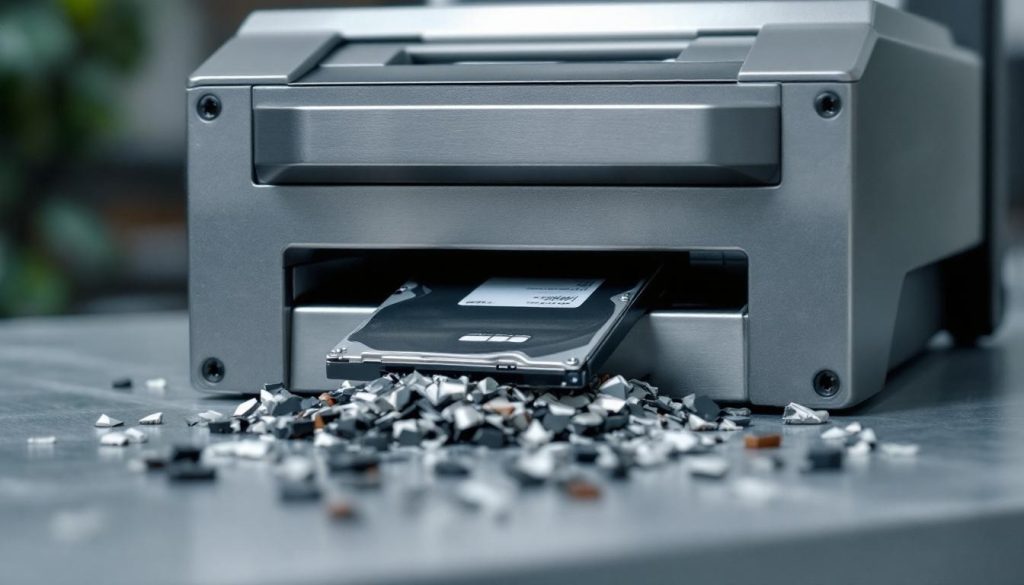
Data breaches cost organizations an average of $4.88 million in 2024, making proper hard drive destruction more important than ever.
NSA hard drive destruction guidelines provide the gold standard for permanently eliminating sensitive data from storage devices. We at Scan N More follow these federal protocols to help businesses protect classified information and maintain compliance with strict security requirements.
What NSA Standards Apply to Hard Drive Destruction
The NSA mandates three primary destruction methods through its Evaluated Products List: degaussing with equipment rated for 5000 Oersteds coercivity, disintegration to particles smaller than 2mm for solid-state drives, and physical destruction that completely damages internal platters. Organizations that handle classified information must use only EPL-approved equipment, with devices like the HPM-2 degausser that meet federal standards for Top Secret and Sensitive Compartmented Information levels.
NIST Special Publication 800-88 Requirements
Federal Information Processing Standards require organizations to follow NIST SP 800-88 guidelines, which assist organizations in making practical sanitization decisions based on the categorization of confidentiality. The NSA recommends that organizations combine multiple methods, start with degaussing followed by physical destruction, as single-method approaches leave organizations vulnerable to data recovery attempts. Heat Assisted Magnetic Recording drives require incineration at 670°C since conventional degaussing proves insufficient for these newer storage technologies.
Mandatory Documentation and Witness Requirements
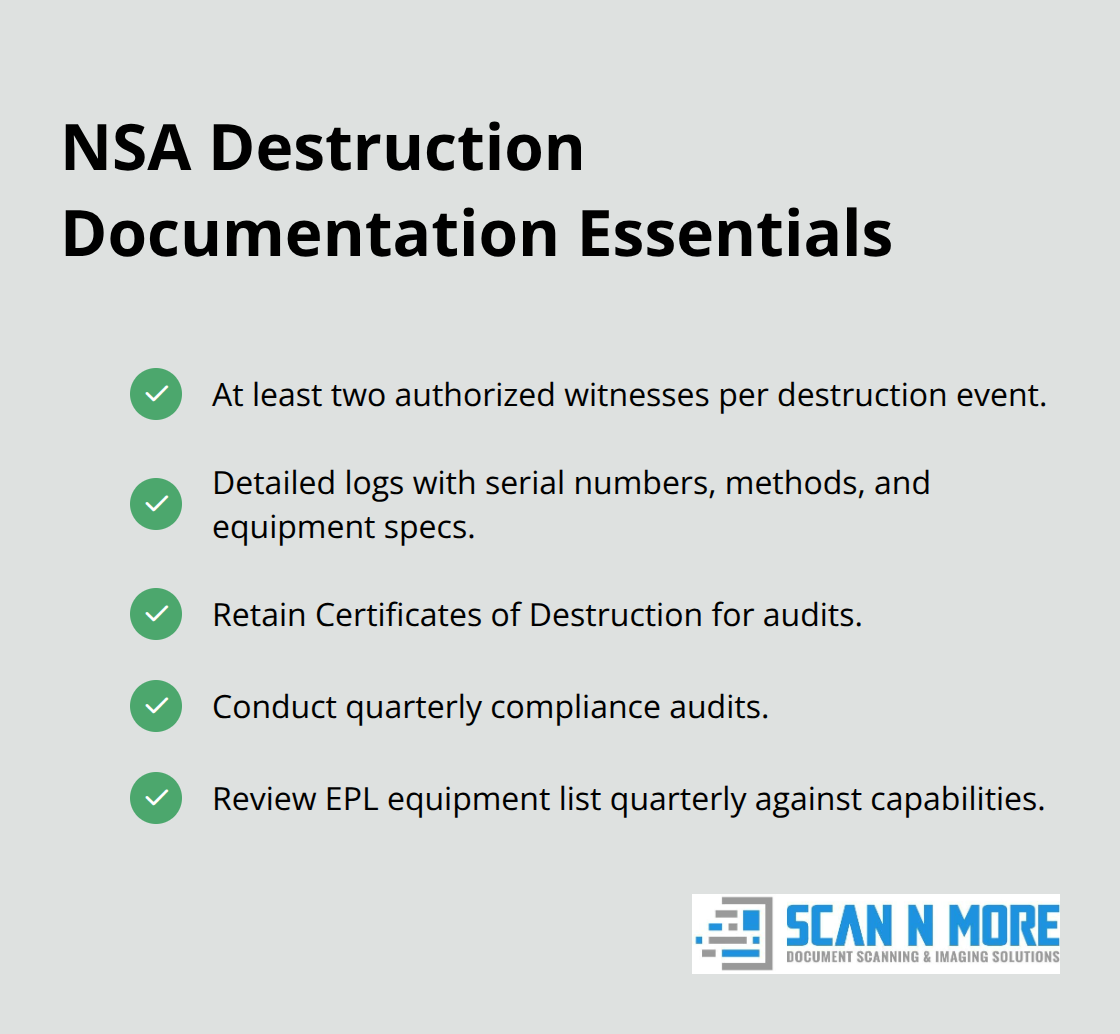
NSA compliance demands that at least two authorized personnel witness every destruction event while they maintain detailed logs that include device serial numbers, destruction methods used, and equipment specifications. Organizations must retain Certificates of Destruction and conduct quarterly audits to verify adherence to federal standards. The NSA Center for Storage Device Sanitization Research updates approved equipment lists quarterly, which requires organizations to regularly review their destruction capabilities against current federal requirements.
Equipment Certification and Approval Process
The NSA evaluates destruction equipment through rigorous testing protocols before devices earn placement on the Evaluated Products List. Approved degaussers must demonstrate effectiveness against both longitudinal and perpendicular magnetic recorded data, while disintegrators must achieve particle sizes that prevent data reconstruction. Organizations cannot use non-EPL equipment for classified material destruction, as these devices lack the verification necessary for federal compliance standards.
Professional destruction services become essential when organizations lack access to NSA-approved equipment or trained personnel to execute these complex procedures safely.
How Do You Execute NSA-Compliant Hard Drive Destruction
Initial Assessment and Data Inventory
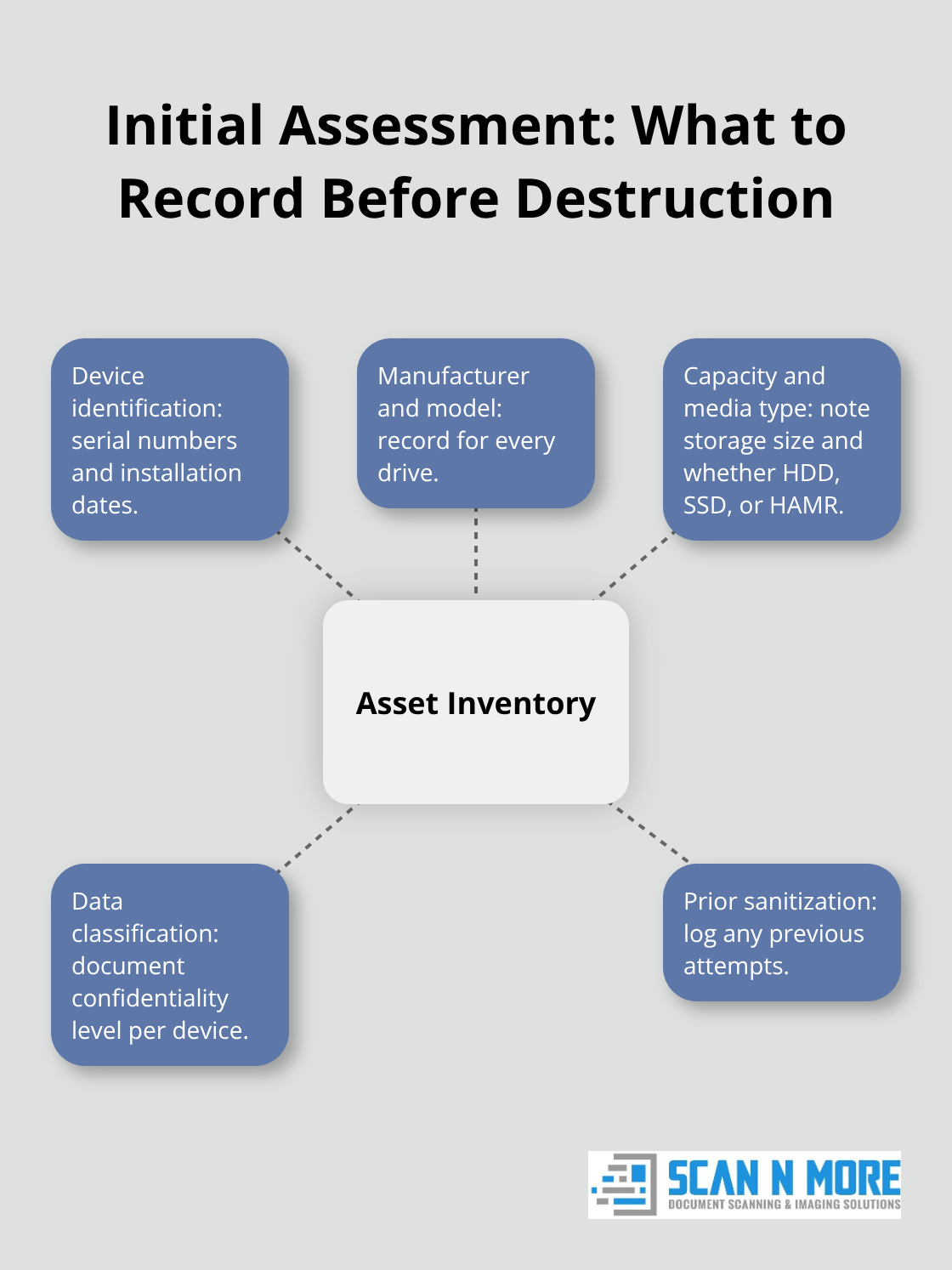
Organizations must catalog every hard drive before destruction begins. They record manufacturer details, storage capacity, and data classification levels for each device. The NSA requires complete asset inventories that include serial numbers, installation dates, and previous sanitization attempts.
This assessment determines which destruction method applies since Heat Assisted Magnetic Recording drives need incineration while standard drives require degaussing followed by physical destruction. Federal agencies report that data breaches stem from incomplete asset tracking, making this initial step non-negotiable for compliance.
Equipment Setup and Personnel Safety
NSA-approved destruction requires specific safety protocols since degaussers generate magnetic fields that exceed 5000 Oersteds and disintegrators operate under extreme pressure. Personnel must remove all metal objects including watches, pacemakers, and magnetic storage devices before they operate EPL-listed equipment.
The destruction area needs proper ventilation for particle containment and emergency shutoff switches within reach of operators. Two authorized witnesses must remain present throughout the process while they maintain visual contact with devices under destruction.
Chain of Custody Documentation
Every destruction event requires detailed documentation that includes device serial numbers, destruction method timestamps, and witness signatures. The NSA mandates that organizations maintain these records for audit purposes and compliance verification.
Documentation must specify equipment model numbers, operator certifications, and environmental conditions during destruction. Organizations that fail to maintain proper chain of custody face federal penalties and lose their security clearances, which makes meticulous record-keeping essential for continued operations.
While proper execution of NSA protocols protects sensitive data, many organizations struggle with the complexity and costs associated with in-house destruction capabilities.
Why Professional Hard Drive Destruction Beats DIY Methods
Equipment Costs Make DIY Destruction Financially Impractical
NSA-approved degaussers cost between $15,000 and $50,000, while disintegrators range from $75,000 to $200,000 according to industry suppliers. Organizations that attempt in-house destruction face additional expenses for facility modifications, electrical upgrades to support high-powered equipment, and specialized ventilation systems that particle containment requires.
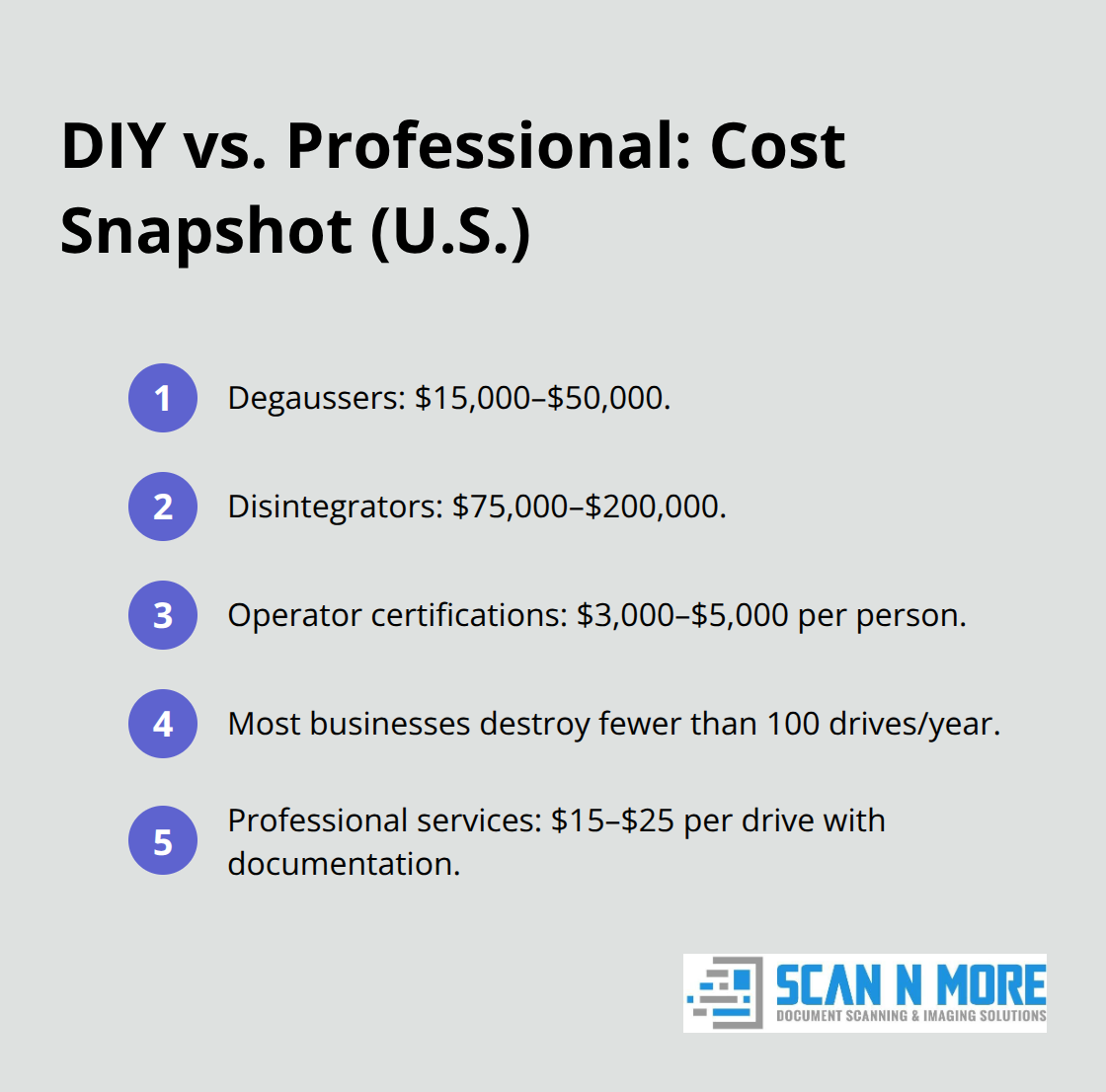
Personnel training to operate EPL-listed equipment adds $3,000 to $5,000 per operator in certification costs. Most businesses destroy fewer than 100 drives annually, which makes equipment purchase financially unjustifiable when professional services charge $15 to $25 per drive with full NSA compliance documentation.
Safety Risks and Liability Exposure
In-house destruction exposes organizations to significant liability since degaussers generate magnetic fields that damage medical devices and electronic equipment within 10-foot radiuses. Disintegrator accidents result in severe injuries when operators lack proper training (with OSHA reporting multiple workplace incidents involving shredding equipment in 2023).
Professional destruction companies carry specialized insurance and maintain trained technicians who understand equipment hazards, while organizations that attempt DIY methods face potential lawsuits and regulatory violations. Heat Assisted Magnetic Recording drives require incineration at 670°C, which creates fire hazards and toxic fume exposure that exceed most facility safety capabilities.
Time Investment and Operational Efficiency
Professional services complete destruction processes within 24 to 48 hours including documentation, while in-house efforts require weeks for equipment procurement, personnel training, and compliance verification. Organizations spend 40 to 60 hours per destruction event managing logistics, witness coordination, and documentation requirements according to federal compliance studies.
Professional providers handle chain of custody documentation, witness requirements, and audit preparation automatically (freeing internal resources for core business activities) while they maintain federal compliance standards.
Final Thoughts
NSA hard drive destruction protocols establish the most rigorous data security standards available. Organizations must use degaussers with 5000 Oersteds equipment, disintegrate SSDs to 2mm particles, and completely destroy internal platters. Companies that handle sensitive information cannot afford shortcuts when data breaches average $4.88 million in damages.
Professional destruction services eliminate the financial burden of EPL-approved equipment that costs $15,000 to $200,000. These services remove safety risks from high-powered degaussers and disintegrators while handling complex witness requirements and chain of custody documentation. Most organizations find in-house destruction impractical due to quarterly compliance audits and operational complexity.
We at Scan N More provide comprehensive document management services that complement secure data destruction protocols. Organizations that combine NSA-compliant destruction with professional document digitization create robust security frameworks. These integrated approaches protect sensitive information throughout its entire lifecycle while maintaining operational efficiency and federal compliance standards.