
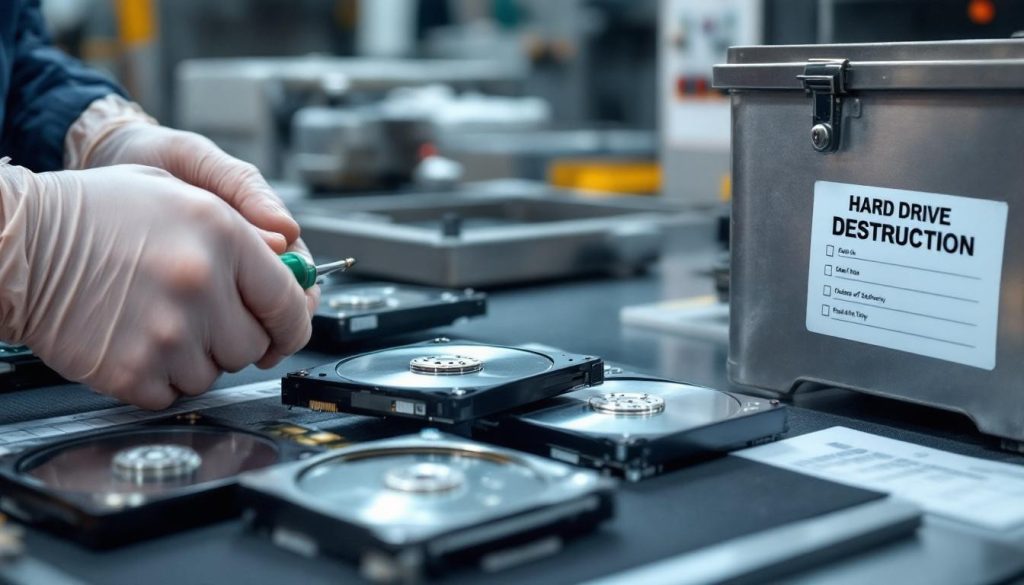
Most organizations don’t realize that throwing away old hard drives without proper precautions exposes them to serious data breaches. We at Scan N More know that hard disk drive disposal requires more than just tossing equipment in the trash.
The stakes are high: data theft, environmental damage, and legal penalties all hang in the balance. This guide walks you through the safest methods to protect your business.
Why Proper Disposal Protects Your Business
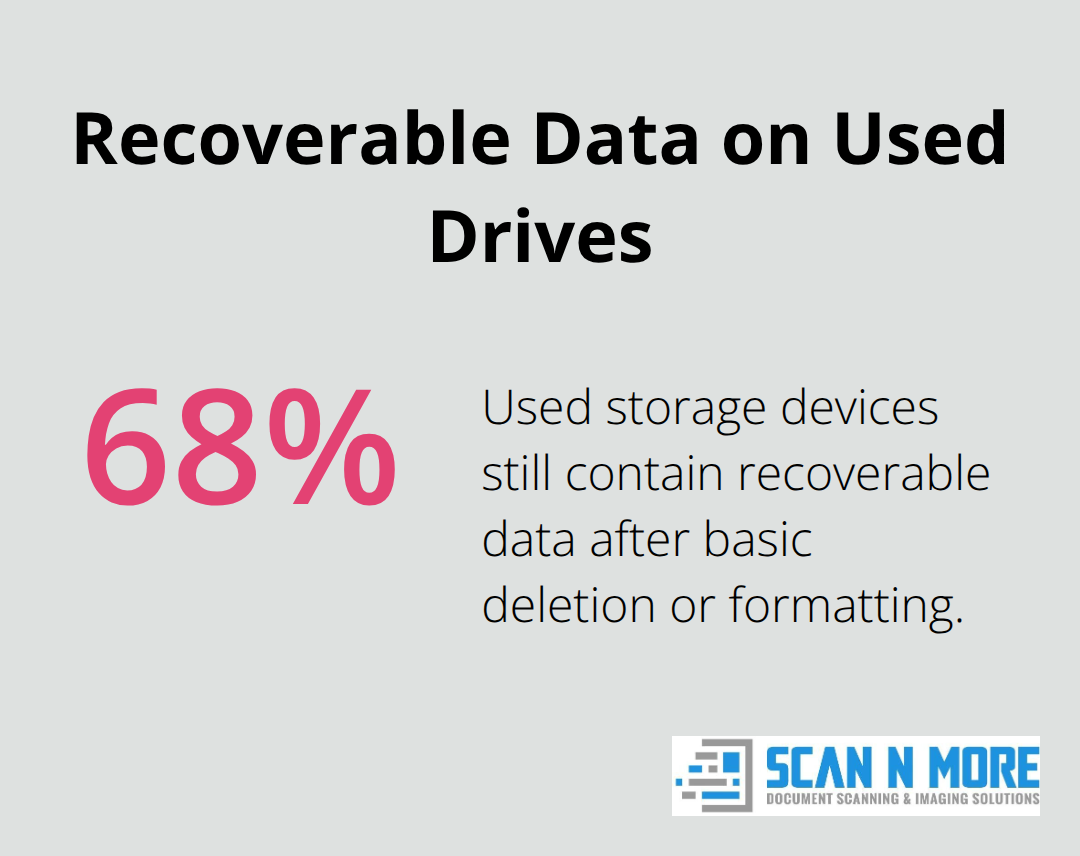
Leaving hard drives unsecured exposes sensitive company data to theft and regulatory penalties. A 2020 study found that approximately 68% of used storage devices still contained recoverable data from previous owners, even after basic deletion or formatting. Criminals access this data with standard recovery software that costs less than $100 and retrieves files from supposedly wiped drives within hours. If your organization stores customer records, financial data, or employee information on those drives, improper disposal transforms them into a liability. Morgan Stanley Wealth Management learned this lesson expensively when the SEC charged the company $35 million for inadequate disposal of customer personal information, demonstrating that regulators treat careless drive disposal as a serious breach of fiduciary responsibility.
Data Recovery Remains Trivially Simple
Deleting files, formatting drives, or reinstalling operating systems leaves data intact on the physical platters. The deleted information sits there waiting for recovery because standard deletion only removes the file reference, not the actual data. A drive you sold, donated, or discarded becomes a source of identity theft, competitive espionage, or regulatory violations months or years later. Organizations handling healthcare data face particular risk-HIPAA violations from improper disposal carry civil monetary penalties ranging from $145 to $2,190,294 per violation. Companies processing payment card data must comply with PCI DSS standards, which explicitly require certified destruction or cryptographic erasure. The GDPR imposes fines up to 4% of global annual revenue for data protection failures tied to inadequate disposal practices, making this not just an IT issue but a board-level compliance concern.
Environmental and Regulatory Consequences
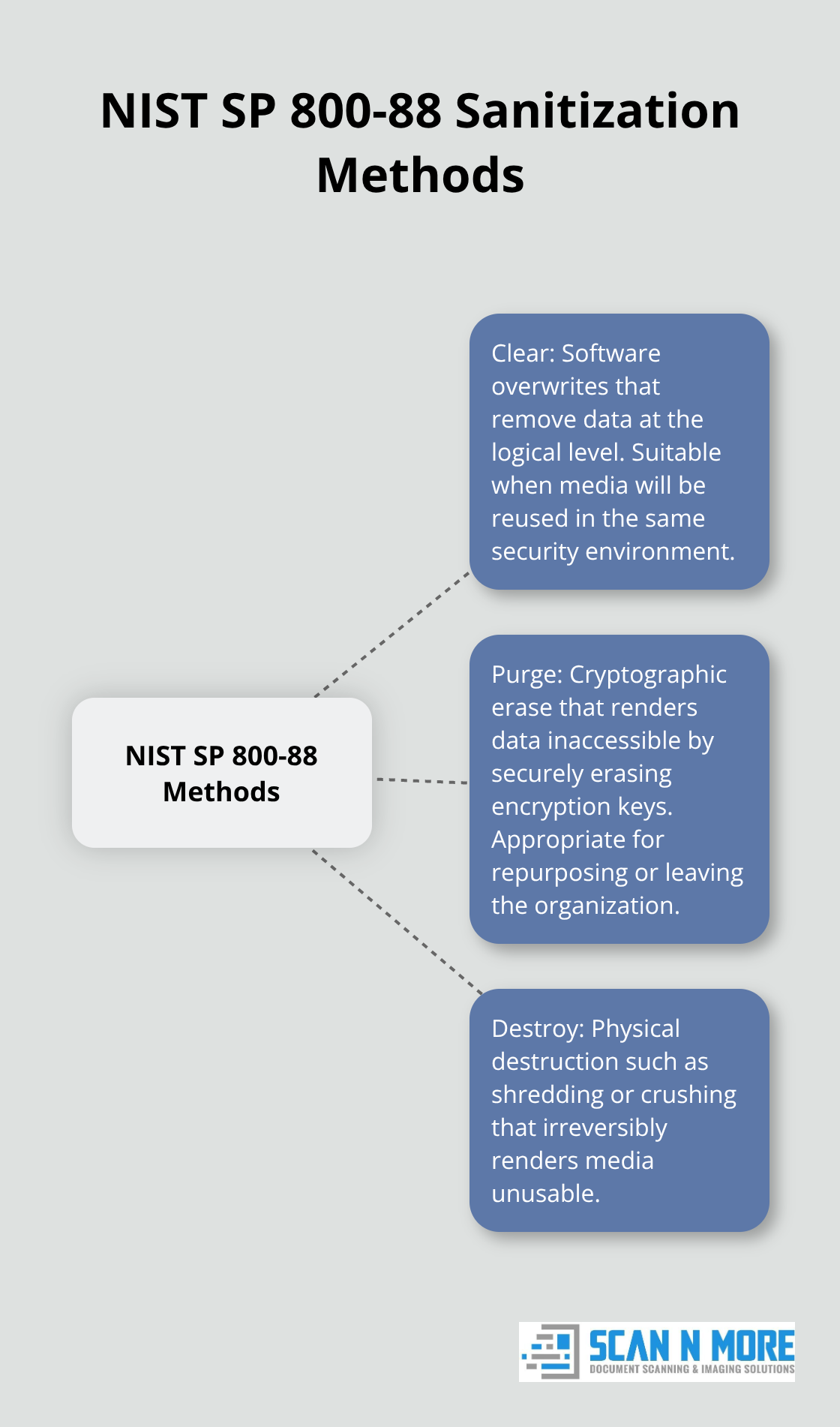
Hard drives contain rare earth magnets, aluminum, and precious metals worth recovering, but they also contain hazardous materials that contaminate landfills when discarded improperly. The EPA recognizes certified e-waste recyclers, and choosing an uncertified facility exposes your organization to environmental liability. Federal regulations like FCRA and state-level laws mandate secure data destruction before any recycling occurs. NIST SP 800-88 Rev. 1 provides the standard framework for sanitization methods-Clear (software overwrites), Purge (cryptographic erase), and Destroy (physical destruction)-and regulators increasingly expect organizations to follow these guidelines.
Your disposal method directly affects your legal standing if a breach occurs; courts view professional certified destruction as evidence of reasonable care, while DIY methods or unverified recyclers signal negligence.
What Happens When You Choose Wrong
Organizations that skip professional destruction face compounding risks. An unverified recycler may shred drives without confirming data removal, leaving fragments recoverable by determined attackers. Storing old drives onsite without a formal destruction policy increases the risk of unauthorized access and data breaches. The cost of certified destruction pales against potential data breach penalties and regulatory fines-a single HIPAA violation can exceed $2,190,294, while GDPR penalties reach millions for larger organizations. Selecting the right disposal partner eliminates these exposure points and creates documented proof of compliance for audits and investigations.
Understanding the risks clarifies why your next decision matters: choosing a disposal method that actually works.
Destruction Methods That Actually Work
Physical Destruction Delivers Immediate Results
Physical destruction stands as the most reliable approach for organizations handling sensitive data. Shredding destroys hard drives by cutting them into tiny, unrecoverable pieces, rendering data unrecoverable across all drive types including SSDs where other methods fail. Industrial shredding applies approximately 40,000 pounds of force to break drives into pieces, and the process takes minutes rather than hours. Crushing applies about 7,500 pounds of pressure and physically damages internal platters, making data retrieval impossible. Both methods provide immediate, verifiable results with documented proof of destruction-critical for compliance audits and regulatory investigations.
The cost difference between shredding and other methods is minimal when you calculate the expense of a single data breach. A healthcare organization facing HIPAA violations pays far more than any destruction service charges. Physical destruction eliminates guesswork and provides the certainty that regulators expect when reviewing your compliance practices.
Why Degaussing Falls Short for Modern Drives
Degaussing uses strong magnetic fields to erase data, and it works on many magnetic hard disk drives but fails entirely on SSDs and encrypted drives where the encryption keys remain intact even after the magnetic field destroys the platter. Modern high-density drives also resist degaussing more effectively than older equipment, making this method increasingly unreliable. Additionally, degaussing renders drives inoperable, eliminating any possibility of reuse or component recovery, while verification of successful erasure proves difficult without specialized testing.
Organizations that invest in degaussing equipment often discover too late that their drive inventory includes SSDs or encrypted systems that the method cannot handle. This limitation makes degaussing a poor choice for mixed environments where you cannot guarantee uniform drive types across your entire fleet.
Certified Services Provide Legal Protection
Certified destruction services provide chain-of-custody documentation that proves your organization exercised reasonable care, protecting you legally if a breach occurs months or years later. Look for providers holding NAID AAA certification or R2v3 certification from Sustainable Electronics Recycling International, which verify proper data destruction, worker safety, and environmental compliance. Request a Certificate of Destruction detailing equipment serial numbers, media types, and the specific destruction method used-this document becomes your evidence of compliance.
For organizations with large backlogs of drives, on-site destruction minimizes data exposure during transit and simplifies documentation. A professional service processes 70 drives faster and more safely than any internal effort, and the documented destruction record satisfies auditors and regulators far better than DIY methods.
Environmental Responsibility Meets Security
Seagate’s Circular Drive Initiative demonstrates that recovered components from responsibly destroyed drives can be refurbished and redeployed, preventing over 533 metric tons of e-waste in their fiscal 2023 alone. This approach recovers rare earth magnets and aluminum while guaranteeing data obliteration, combining security with environmental responsibility that DIY destruction cannot match. Professional destruction partners increasingly integrate component recovery into their processes, transforming what would become landfill waste into valuable materials for new manufacturing.
Selecting a certified partner means your organization supports circular economy practices while meeting the strictest data security standards. This dual benefit-compliance plus sustainability-positions your business as responsible steward of both data and resources, a distinction that matters to regulators, customers, and your own operational integrity.
Selecting a Destruction Partner That Protects Your Business
Certifications That Matter in Audits
The difference between a legitimate destruction service and one that cuts corners shows up in certifications, documentation, and their willingness to prove what they’ve done. NAID AAA certification verifies secure data destruction companies’ compliance with all known data protection laws through scheduled and surprise audits-this certification matters because auditors and regulators recognize it as evidence of serious security practices. R2v3 certification from Sustainable Electronics Recycling International reflects today’s industry dynamics and works to protect data, people, and the planet. When you contact a potential service, ask directly whether they hold these certifications and request to see the actual certificates rather than trusting verbal assurances. A provider worth hiring responds immediately with documentation and explains what each certification covers. If they hesitate or claim certifications don’t matter, that reluctance signals they cut corners elsewhere.
What Your Destruction Certificate Must Include
The Certificate of Destruction becomes your legal shield, so examine what it includes before signing any agreement. The certificate must list specific equipment serial numbers, the exact destruction method used, the date of destruction, and ideally a photograph or video evidence of the process. Generic certificates that simply state drives were destroyed without detail provide minimal protection if regulators later question your compliance.
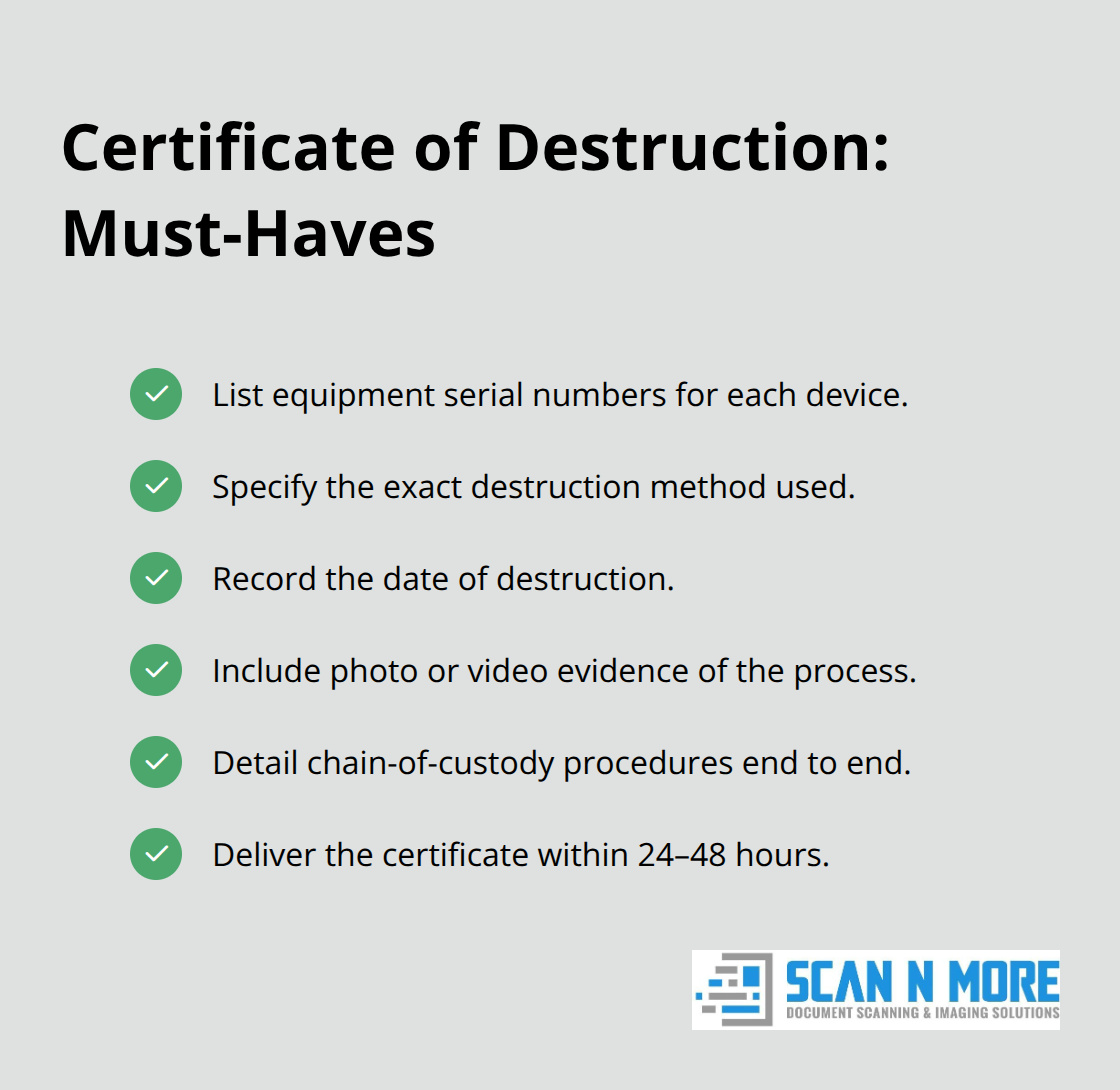
Request that the provider detail their chain-of-custody procedures-how drives move from your facility through their operation to final destruction, and who verifies each step. Professional services typically deliver certificates within 24 to 48 hours of destruction.
On-Site Versus Off-Site Destruction
On-site destruction eliminates transit risk entirely and lets you witness the process, though off-site services with documented pickup and secure transport offer practical advantages for organizations with large volumes. Ask whether the provider offers real-time tracking of your drives and when you can expect the destruction certificate. Check their insurance coverage specifically for data breaches during transport and storage-this detail matters because it reveals whether they’ve thought through liability scenarios.
Verifying Provider Reliability Through References
Reference checks matter more than you’d expect; contact at least two existing clients in your industry and ask whether destruction actually occurred when promised and whether the documentation satisfied their auditors. Services that refuse to provide references or offer only generic testimonials lack confidence in their own work. Ask potential providers about their experience with your industry’s specific compliance requirements (HIPAA, PCI DSS, GDPR) and request examples of how they’ve documented compliance for similar clients. Selecting a trustworthy partner for hard drive destruction is essential, and verifying their track record protects your business from future compliance issues.
Understanding Destruction Service Costs
The investment in a certified partner typically ranges from $25 to $100 per drive depending on volume and whether you choose on-site or off-site destruction, but this cost disappears when compared against a single data breach penalty or regulatory fine. Organizations with large backlogs benefit from volume pricing, and professional hard drive destruction services process drives faster and more safely than any internal effort. The documented destruction record satisfies auditors and regulators far better than DIY methods, transforming what appears as an operational expense into genuine risk mitigation that protects your organization’s reputation and financial standing.
Final Thoughts
Hard disk drive disposal done right protects your organization from data breaches, regulatory penalties, and environmental liability. Physical destruction through shredding or crushing delivers immediate, verifiable results that satisfy auditors and regulators, while certified destruction services provide the chain-of-custody documentation that proves your organization exercised reasonable care. The cost per drive ranges from $25 to $100 depending on volume-a fraction of what a single HIPAA violation or GDPR penalty costs.
Professional hard disk drive disposal eliminates the false economy of DIY approaches or unverified recyclers. Seagate’s Circular Drive Initiative shows that responsible destruction recovers valuable components while guaranteeing data obliteration, combining security with environmental responsibility that internal efforts cannot match. Organizations handling healthcare data, financial records, or customer information cannot afford the risk of improper disposal.
Your next step is straightforward: audit your current drive inventory, establish a formal disposal policy, and partner with a certified provider holding NAID AAA or R2v3 certification. We at Scan N More understand that secure data management extends beyond scanning and digitization-it includes responsible destruction of physical media that no longer serves your business. Contact Scan N More today to discuss professional hard drive destruction services alongside your document scanning solutions.