
Most businesses still waste thousands of dollars annually managing paper documents. Filing cabinets take up space, retrieval takes forever, and compliance risks multiply when records aren’t properly organized.
At Scan N More, we’ve seen firsthand why document scanning is important for companies that want to cut costs and operate efficiently. Digital documents eliminate the chaos of paper-based systems and give your team instant access to the information they need.
Why Paper Drains Your Bottom Line
The True Cost of Physical Storage and Lost Productivity
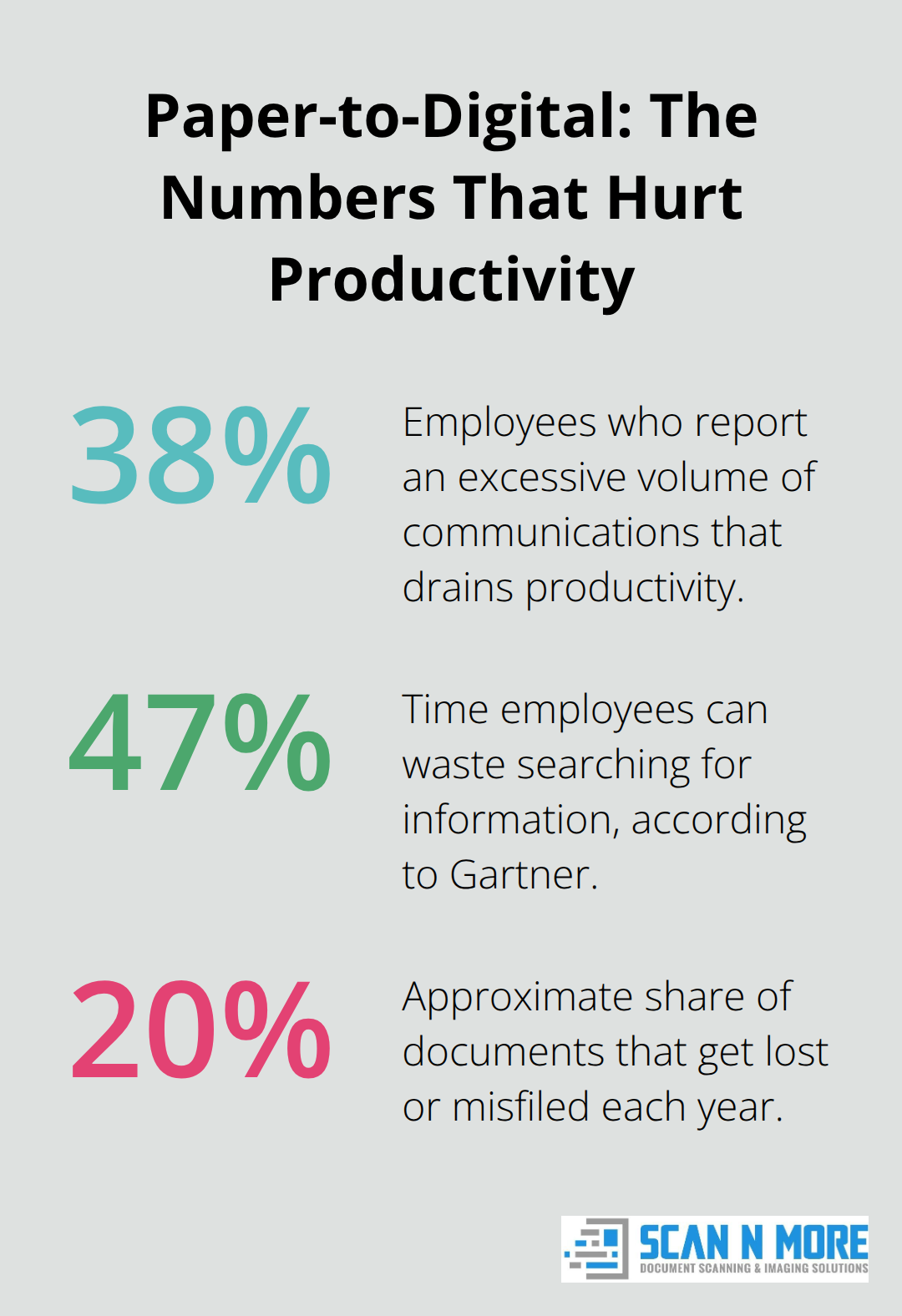
Paper-based document management costs far more than most businesses realize. 38% of employees say they receive an “excessive” volume of communications at their organization. That’s not a minor inconvenience-it’s a direct hit to productivity and profitability. A single filing cabinet occupies roughly 10 square feet of office space, and in high-rent markets, that space costs thousands annually. When you multiply this across multiple cabinets and storage rooms, the expense becomes staggering.
Businesses also spend considerable money on physical storage maintenance, retrieval delays, and the administrative overhead of managing paper workflows.
Compliance Risks That Paper Cannot Address
Regulatory requirements like HIPAA, SOX, and GDPR demand that businesses maintain secure, auditable records with clear access trails. Paper documents cannot provide this level of control. Once a document leaves a filing cabinet, there’s no way to know who accessed it, when, or what changes were made. Digital records, by contrast, create automatic audit logs that demonstrate compliance to regulators and auditors. The moment you scan a document and store it in a secure system with role-based access controls, you gain the traceability that regulators expect. This shift transforms your compliance posture from reactive to proactive.
Remote Work Exposes Paper’s Fatal Weakness
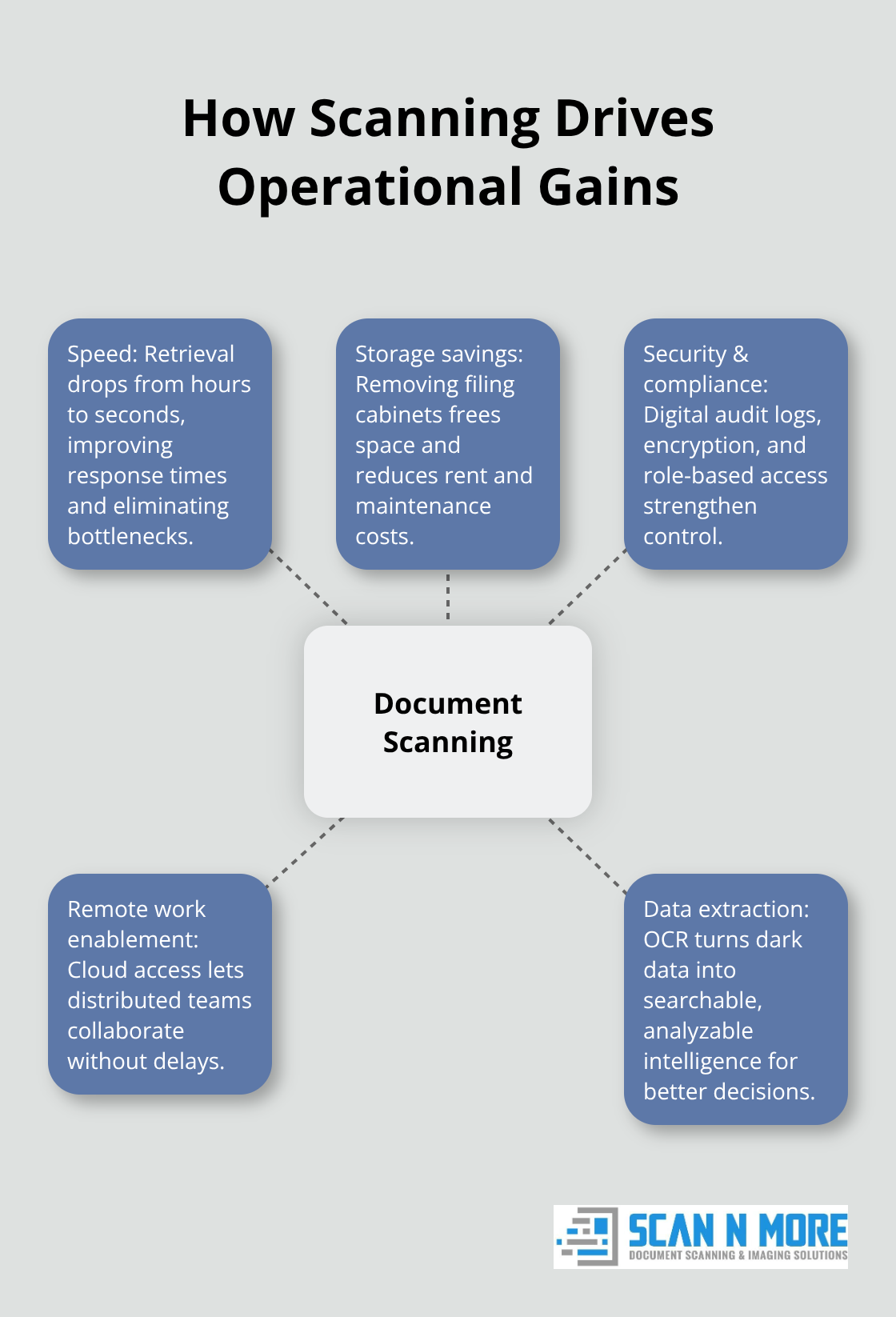
Remote and hybrid work environments have made paper documents a genuine liability rather than a business asset. Employees working from home or multiple locations cannot access physical files, forcing them to request documents from the office and creating delays and bottlenecks. Removing paper from workflows can improve customer response times, with faster turnaround to customers cited as a primary benefit. Digitized documents with proper indexing can be retrieved in seconds, enabling teams to serve clients faster and collaborate seamlessly across locations. When documents exist only in paper form, they become a barrier to productivity in distributed work environments.
Digital files stored in secure cloud repositories or on-premises systems eliminate this friction entirely. Your team accesses what they need instantly, without waiting for someone in the office to retrieve a physical file. This shift isn’t just about convenience-it’s about remaining competitive in a market where speed matters. The next section explores how document scanning transforms these operational challenges into competitive advantages.
How Document Scanning Delivers Real Operational Gains
Speed Transforms Information Access
Scanning converts how your business locates and uses information. Employees at companies using digitized records spend significantly less time hunting for files. According to Gartner’s 2023 research, employees waste up to 47% of their time searching for information, and approximately one in five documents gets lost or misfiled annually. When you scan documents and implement proper indexing, retrieval drops from hours to seconds. An invoice buried in a filing cabinet takes time to locate manually; the same invoice stored digitally with OCR text recognition appears in search results instantly.
This speed directly impacts customer service. AIIM research shows that removing paper from workflows improves customer response times by 200 to 300 percent. Your team responds faster to inquiries, quotes move through approval cycles quicker, and administrative bottlenecks disappear. The financial impact compounds quickly-reducing manual data entry through scanning lowers administrative costs while accelerating invoice processing, contract reviews, and compliance checks.
Storage Costs Plummet With Digital Files
Storage expenses drop substantially when you eliminate paper. A single filing cabinet occupies roughly ten square feet of office space; in expensive urban markets, this represents thousands of dollars annually in rent alone. Eliminating multiple cabinets and storage rooms frees valuable workspace while cutting physical storage maintenance expenses.
Your team gains usable office real estate instead of dedicating square footage to filing systems that slow down operations.
Security and Audit Trails Strengthen Dramatically
Security and data protection shift fundamentally when documents transition from paper to digital systems. Paper files offer zero audit trails; once removed from a cabinet, nobody knows who accessed them or what happened next. Digital documents create automatic access logs that track every interaction, satisfying regulatory demands from HIPAA and GDPR. Encryption, password protection, and role-based access controls transform your security posture from vulnerable to resilient.
Cloud-based repositories with off-site backups protect against physical disasters like fires or floods that destroy paper records permanently. Your team collaborates seamlessly across locations without waiting for physical files to be mailed or hand-delivered. Remote employees access documents instantly, departments share files without bottlenecks, and version control prevents confusion over which document is current.
Data Extraction Unlocks Hidden Business Intelligence
Digitization also enables meaningful data extraction. AI-powered OCR achieves text recognition accuracy above 99 percent, even for faded or aged documents, making every scanned file searchable and analyzable. This capability transforms dark data-information trapped in paper form-into intelligence your business can leverage for decision-making and process improvement. With searchable digital records, you identify patterns, track compliance metrics, and make faster operational decisions that paper-based systems simply cannot support.
These operational gains set the stage for addressing the mistakes that prevent many businesses from realizing the full potential of their document management strategies.
Where Document Management Goes Wrong
Mixing Paper and Digital Creates Chaos
Most businesses that attempt to digitize their records without a clear strategy end up worse off than when they started. The problem isn’t scanning itself-it’s what happens before, during, and after the scan. Businesses that maintain manual filing systems alongside partial digitization create duplicate records, confusion about which version is current, and massive inefficiency. A company might scan invoices but continue filing paper copies, forcing employees to check both locations. This redundancy wastes time and creates compliance gaps because nobody knows which record is the official source.
The real mistake is treating scanning as a one-time event rather than a systematic overhaul of how documents flow through your organization. Without a clear naming convention, folder structure, and retention policy beforehand, even digitized files become impossible to locate. One manufacturing company scanned 50,000 documents but named them generically-Invoice_001, Invoice_002-making retrieval as difficult as searching through paper. They wasted thousands on the scanning project before realizing their digital system was useless.
Security Failures Expose Sensitive Data
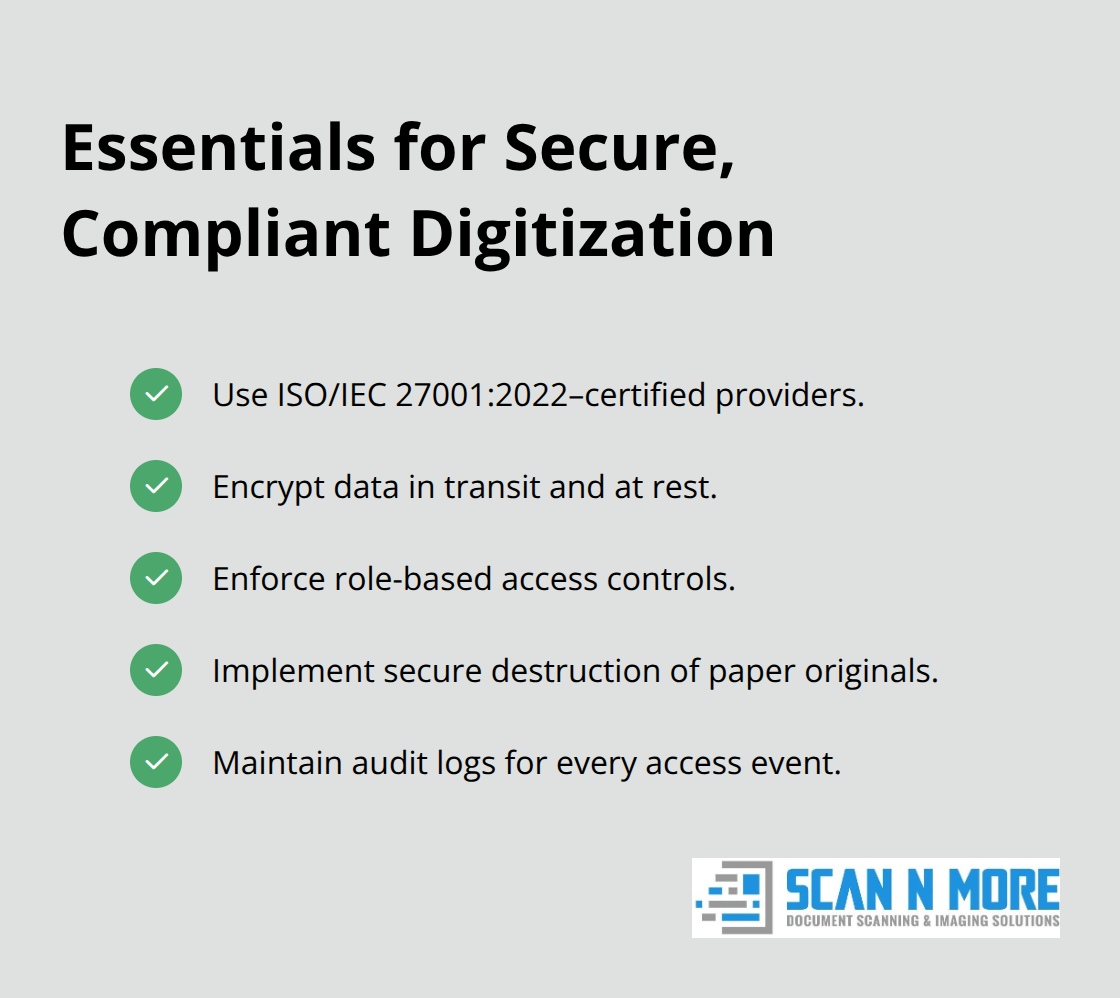
Data security during digitization represents another critical failure point that many businesses overlook entirely. Scanning services that lack proper security protocols expose sensitive documents to theft or breach during the transition from paper to digital. Your documents travel from your facility to a scanning center, get processed, and move into cloud storage or on-premises systems-each step presents risk if the provider doesn’t maintain certified security standards.
ISO/IEC 27001:2022 certification signals adherence to industry-standard information security practices, and you should verify that any scanning partner holds this credential before handing over confidential records. Encryption during transit and at rest, secure destruction of paper originals, and role-based access controls in your digital system are non-negotiable requirements, not optional upgrades. Some businesses digitize documents but fail to implement access restrictions, leaving sensitive files viewable by anyone with system access. A healthcare provider might scan patient records but grant all staff members read-and-write permissions, violating HIPAA requirements and creating liability.
Disorganized Digital Storage Destroys Value
The final mistake-disorganized digital storage-destroys the entire value proposition of scanning. Files scattered across multiple cloud accounts, inconsistent naming schemes, and no metadata indexing turn your digital archive into dark data that nobody can access efficiently. Set up your folder structure, naming conventions, and retention policies before you scan a single document. This preparation phase determines whether scanning saves your business thousands annually or becomes an expensive failed project.
Final Thoughts
Document scanning isn’t a luxury for large enterprises anymore-it’s a business necessity that separates companies operating efficiently from those drowning in paper-based chaos. Why document scanning is important comes down to three realities: your business loses money managing physical files, your team wastes time searching for information, and your compliance posture remains vulnerable without digital audit trails. The financial case is straightforward: eliminating filing cabinets reclaims thousands in annual rent, reduces administrative overhead, and accelerates workflows that directly impact revenue.
Professional scanning services deliver ROI that in-house efforts rarely match, commonly saving 30 to 50 percent compared to managing the process internally. Specialized providers maintain ISO/IEC 27001:2022 certification, implement proper encryption and access controls, and handle secure destruction of paper originals-eliminating the compliance risks that plague DIY scanning projects. We at Scan N More handle the technical complexity so your business captures the operational gains through professional document scanning services that transform paper-based processes into digital solutions that actually work.
Your documents form the foundation of operational efficiency, and digitizing them properly isn’t optional anymore. Set up your folder structure and naming conventions before scanning begins, define retention policies that align with regulatory requirements, and train your team on the new system. This commitment to a digital-first strategy positions your business to operate competitively in markets where speed and security matter.