

Financial data breaches cost businesses an average of $4.45 million per incident, according to IBM’s 2024 Cost of a Data Breach Report. At Scan N More, we know that protecting your financial information isn’t optional-it’s a business requirement.
This guide covers the threats you face, the defenses that work, and the compliance standards you need to meet. We’ll give you actionable steps to strengthen your security posture right now.
What Threats Target Your Financial Data
Ransomware attacks drain resources and operations
Ransomware attacks have become the financial sector’s most expensive headache. According to threat intelligence reports, ransomware complaints increased 9% year-over-year, making these attacks a persistent threat to financial institutions. When attackers encrypt your financial records, customer data, or transaction systems, you face operational shutdown, regulatory fines, and customer lawsuits. Financial institutions are prime targets because attackers know these businesses process high-value transactions daily.
The infection often enters through unpatched software vulnerabilities or compromised credentials. Your defense requires regular security patches applied within 48 hours of release, offline backups stored in separate locations, and a documented incident response plan that names a coordinator and outlines disconnection procedures. Malware operates differently-it quietly harvests data over weeks or months without triggering alarms. Endpoint protection software catches most variants, but you need to update definitions daily and scan systems weekly.
Phishing deceives your staff into becoming your weakest link
Phishing emails targeting finance departments pose a significant threat to financial institutions. These messages impersonate executives, vendors, or regulators to trick employees into revealing passwords or wire transfer authorization codes. A single successful phishing attack can drain accounts within hours.
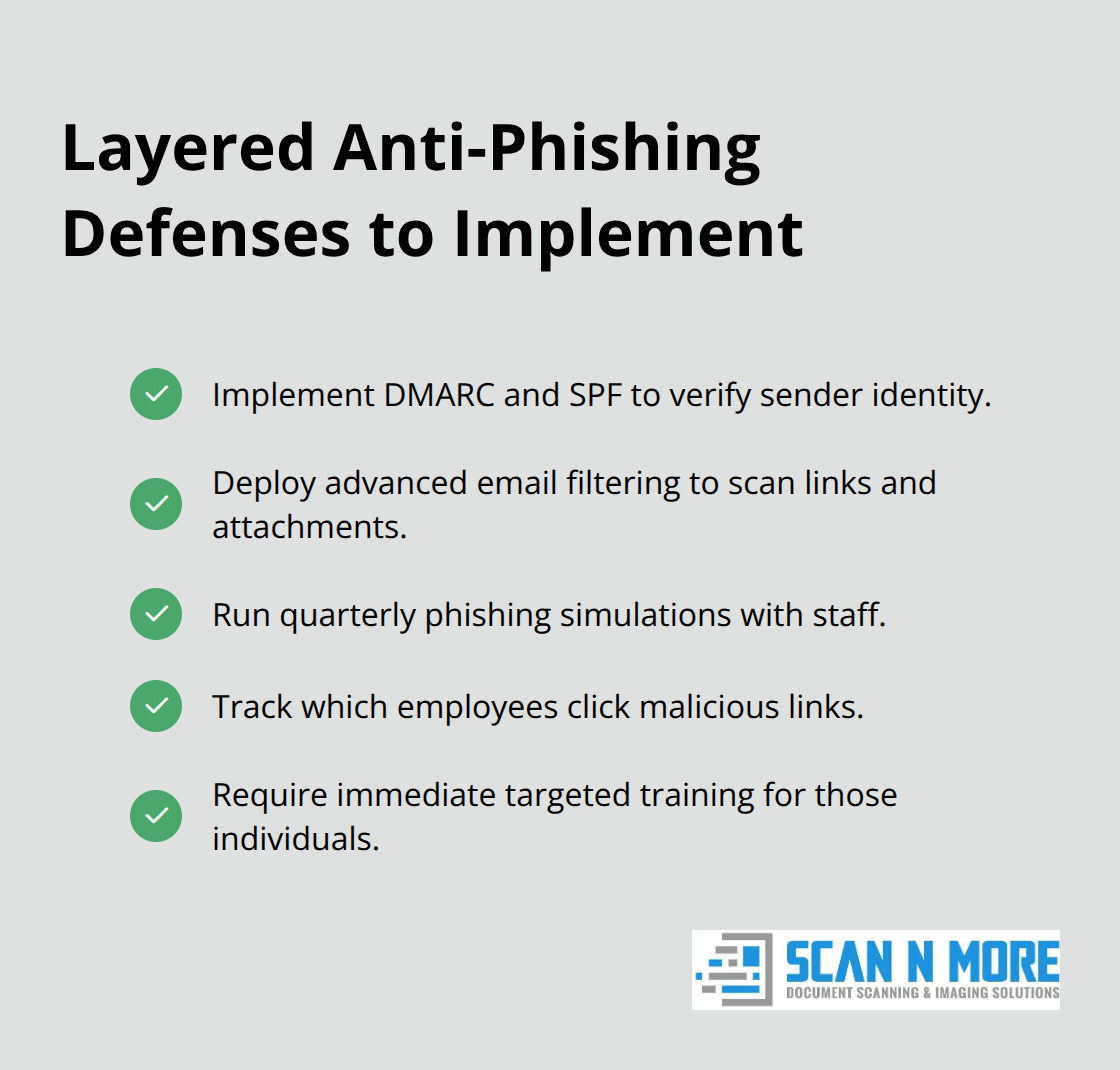
Traditional email filters catch only 80–85% of sophisticated phishing attempts, leaving significant exposure. You need layered defenses: implement email authentication protocols like DMARC and SPF to verify sender identity, deploy advanced email filtering that scans links and attachments, and conduct quarterly phishing simulations with your staff. Track which employees click malicious links and require those individuals to complete targeted training immediately.
Insider threats and unauthorized access bypass external defenses
Insider threats pose a different challenge because they bypass most external defenses. Employees with legitimate access to financial systems can transfer funds, steal customer records, or delete audit logs. Separation of duties prevents single individuals from authorizing and executing transactions. Role-based access controls limit each employee to only the data and systems they need. Monthly access reviews catch employees who retained permissions after changing roles.
Unauthorized access from external attackers exploiting weak passwords or stolen credentials causes rapid account compromise. Enforce complex passwords with minimum 16 characters, special characters, and numbers. Multi-factor authentication adds a second verification step that makes password theft insufficient for account takeover. Monitor login attempts for anomalies-multiple failed attempts, logins from unusual locations, or access during non-business hours indicate compromise. These monitoring practices form the foundation for detecting threats before they escalate into costly breaches, which leads directly into the protective measures your organization must implement.
How to Defend Financial Data Against Real Threats
Multi-factor authentication eliminates the weakest attack vector
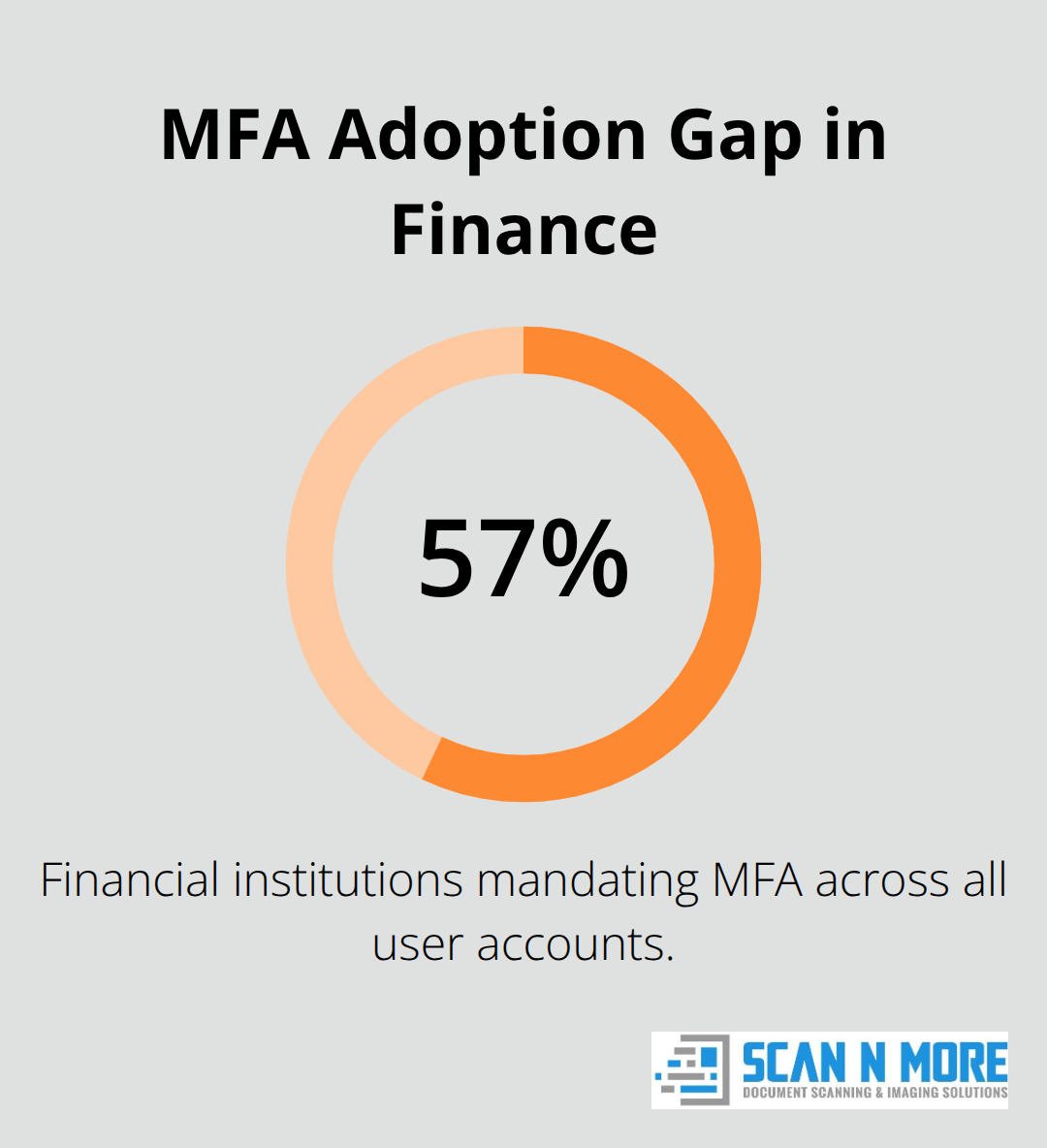
Multi-factor authentication stops 99.9% of account takeover attacks, according to Microsoft security research, yet only 57% of financial institutions mandate it across all user accounts. This gap represents massive vulnerability.
Enforce MFA for every employee accessing financial systems, not just administrators. Require a second verification factor beyond passwords-authenticator apps like Google Authenticator or hardware security keys work better than SMS codes because attackers can intercept text messages. Set password requirements at minimum 16 characters with uppercase, lowercase, numbers, and special characters. Rotate passwords every 90 days and prohibit reuse of previous 12 passwords.
Monitor login attempts in real time and flag suspicious activity like five failed attempts within 10 minutes or logins from unfamiliar geographic locations outside your business hours. These controls eliminate stolen or guessed credentials as viable attack paths.
Offline backups protect against ransomware destruction
Data backups separated from your main network are your only reliable defense against ransomware destruction. Organizations with tested backups recover from ransomware incidents in days rather than weeks. Create offline backups stored physically separate from your primary systems-never leave backups connected to your network where ransomware can encrypt them too. Test backup restoration quarterly by actually recovering data to verify backups work when you need them.
Document your incident response procedures with a named coordinator, specific disconnection steps for compromised systems, and predetermined communication plans for notifying customers and regulators. This preparation transforms chaos into controlled action when attacks occur.
Employee training prevents breaches before they start
Employee training prevents most breaches before they start. Conduct mandatory phishing simulations quarterly and track which staff members fall for fake emails impersonating executives requesting wire transfers. Individuals who click malicious links or enter credentials on fake login pages require immediate targeted training. Financial sector phishing attacks increased 36% in 2024, making ongoing awareness essential.
Train employees to verify unusual requests through secondary channels-call the executive directly using a known phone number rather than replying to suspicious emails. Teach staff to recognize red flags: urgent language, requests for wire transfers or password resets, sender addresses that look slightly wrong, and links that don’t match the stated destination. These awareness practices create a human firewall that catches threats email filters miss, which connects directly to the compliance requirements that govern how you handle financial data.
Regulations That Govern Financial Data Protection
The financial sector operates under strict regulatory frameworks that dictate how you collect, store, and protect customer data. The Gramm-Leach-Bliley Act (GLBA) requires all financial institutions to maintain safeguards protecting customer information and comply with the Financial Privacy Rule that governs data collection and disclosure. GLBA extends beyond traditional banks to securities firms, insurance companies, and any business that handles financial products or services. The FTC has levied significant penalties for violations-the 2018 PayPal and Venmo settlement demonstrated that even payment platforms face enforcement actions for improper privacy disclosures and inadequate data protection.
Credit card data requires encryption, tokenization, or masking
If your business processes credit card payments, PCI DSS compliance is non-negotiable. PCI DSS requires you to protect credit card data through encryption, tokenization, or masking before you share information with third-party providers. Masking replaces a Social Security Number like 123-45-6789 with *--6789, which limits exposure when third parties access data. Tokenization goes further by replacing sensitive payment data with unique, random tokens stored in secure environments-these tokens have zero intrinsic value, making them worthless if stolen.
Healthcare and public company data face additional requirements
Healthcare-related financial data falls under HIPAA, which mandates you encrypt protected health information both at rest and in transit using strong algorithms like AES-256. SOX compliance applies to publicly traded companies and requires strict controls over financial reporting systems and audit trails. These aren’t theoretical requirements-IBM’s global Cost of a Data Breach Report 2025 provides up-to-date insights into cybersecurity threats and their financial impacts on organizations, and regulatory fines compound those losses significantly.
Translate compliance into operational controls
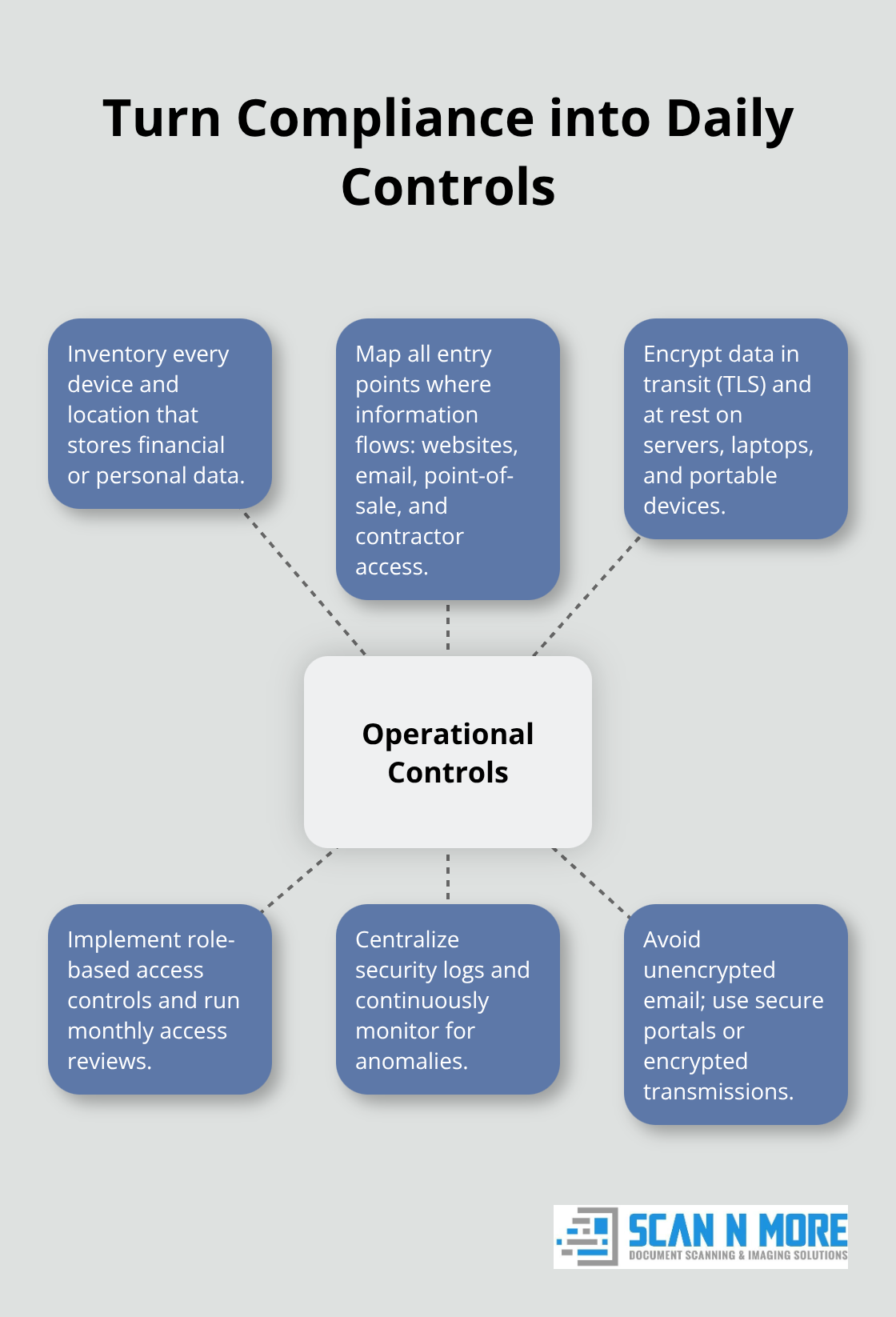
Compliance frameworks only protect you when you translate them into actual business practices. Start with a comprehensive inventory of all devices and locations that store financial or personal data, then map every entry point where information flows-websites, email systems, point-of-sale terminals, and contractor access. This inventory identifies which systems require encryption, tokenization, or masking.
Document a formal data retention policy that specifies how long you keep sensitive information and how you securely dispose of it when no longer needed.
Encrypt data in transit using TLS protocols and encrypt data at rest on servers, laptops, and portable devices. Avoid sending sensitive information through unencrypted email-instead use secure portals or encrypted transmissions. Implement role-based access controls that limit each employee to only the financial data they genuinely need, then conduct monthly access reviews to catch permission creep. Centralize security logs from all financial systems and monitor them continuously for unauthorized access attempts or unusual data downloads.
Establish incident response procedures before breaches occur
Establish incident response procedures with a designated senior coordinator, specific steps for disconnecting compromised systems, and predetermined notification protocols for customers and regulators. Test your incident response plan annually through tabletop exercises where your team practices response steps without an actual breach occurring. These operational controls transform compliance requirements from checkbox exercises into real protection for your financial data.
Final Thoughts
Financial data security demands constant attention because threats evolve faster than most businesses can respond. Implement multi-factor authentication across all financial systems immediately-this single control stops 99.9% of account takeover attacks and costs almost nothing compared to breach recovery. Create offline backups stored physically separate from your network, test them quarterly to confirm they work, and establish a formal incident response plan with a named coordinator so your team responds to breaches with speed rather than panic.
Employee training prevents most breaches before attackers strike. Conduct quarterly phishing simulations, track which staff members fall for fake emails, and require immediate targeted training for anyone who clicks malicious links. Security patches close known vulnerabilities, so apply them within 48 hours of release, monitor login attempts for suspicious activity, and review access permissions monthly-these continuous practices catch threats before they escalate into costly incidents.
We at Scan N More understand that protecting financial data requires managing both digital systems and physical documents. Our professional document scanning services help you transition paper-based financial records into secure digital environments while maintaining compliance with data protection regulations. The time to strengthen your financial data security is now.