
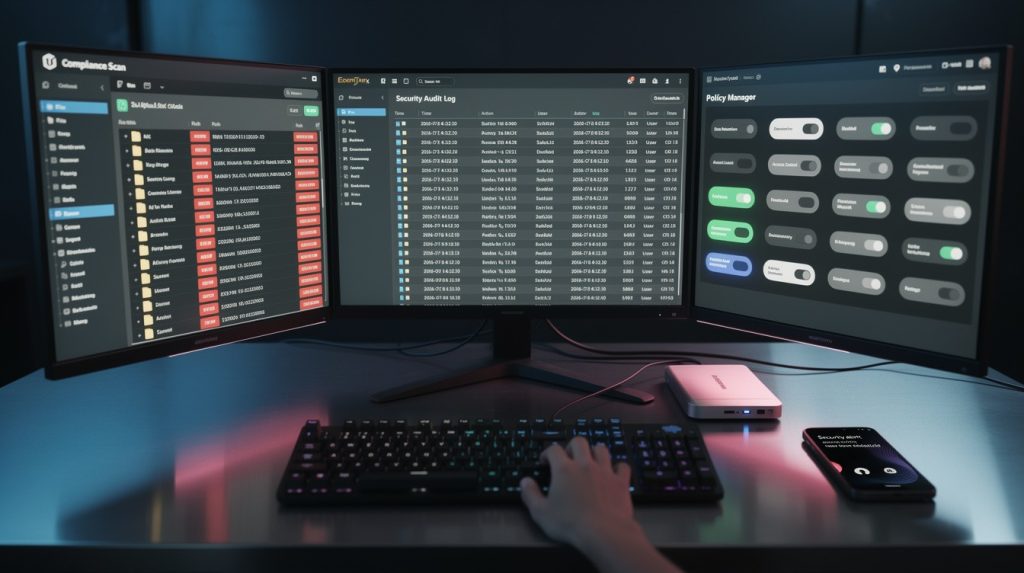
Data breaches cost companies an average of $4.45 million per incident, according to IBM’s 2024 report. Most of these incidents stem from compliance gaps and unmonitored data exposure.
At Scan N More, we’ve seen firsthand how data compliance scanning transforms the way organizations handle their most sensitive information. Automated audits and policy-driven controls aren’t luxuries anymore-they’re essential defenses against regulatory fines and operational chaos.
What Data Compliance Scanning Actually Does
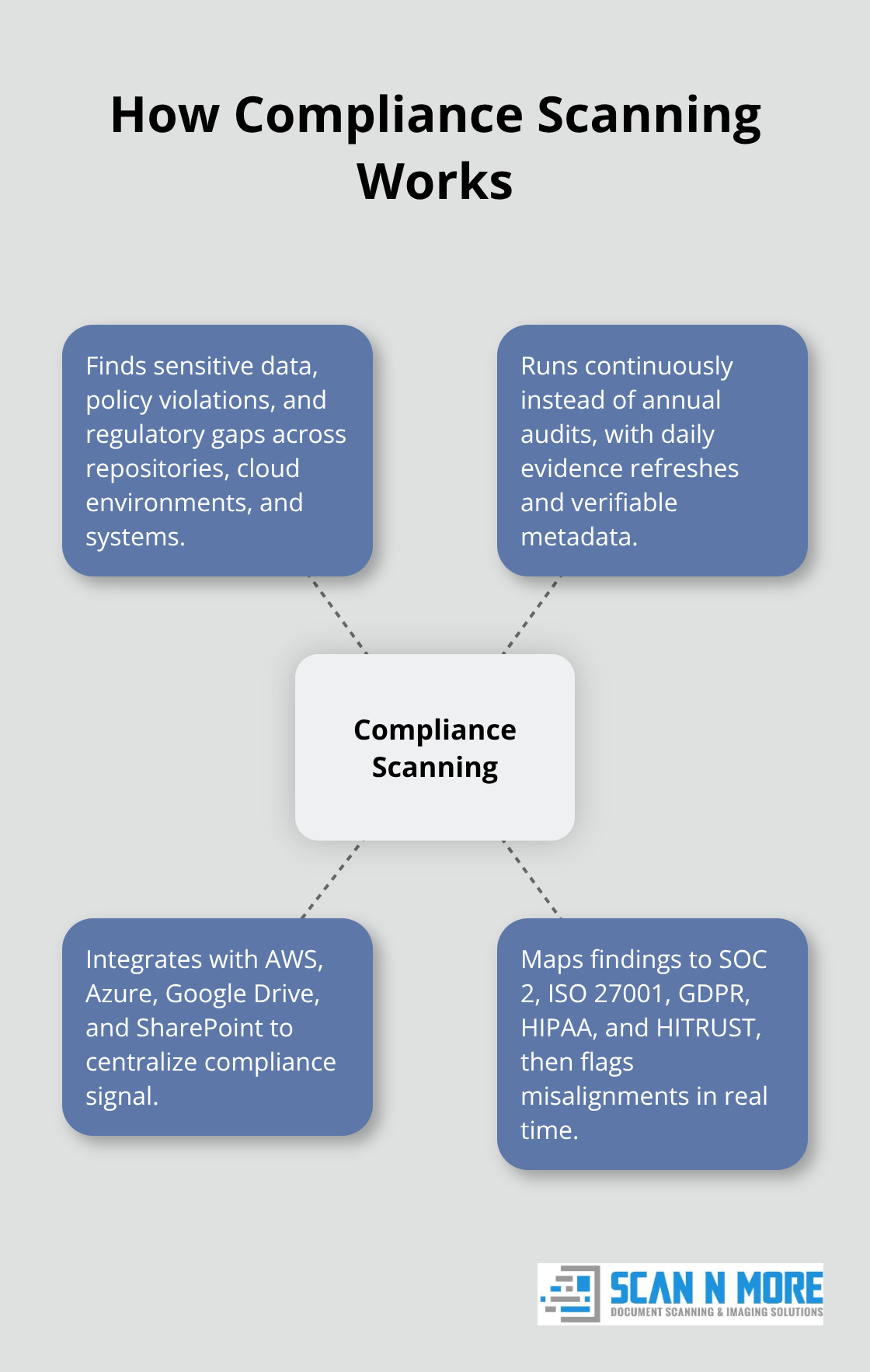
Data compliance scanning automatically examines your organization’s data repositories, cloud environments, and systems to identify sensitive information, policy violations, and regulatory gaps. It works continuously rather than waiting for annual audits, pulling evidence from AWS, Azure, Google Drive, SharePoint, and other platforms with daily refreshes and verifiable metadata. The system maps what you find against frameworks like SOC 2, ISO 27001, GDPR, HIPAA, and HITRUST, then flags misalignments in real time.
Automated audits eliminate the manual chasing that consumes significant time for security teams, according to the Hyperproof 2025 IT Compliance Benchmark Report. Instead of spending weeks to gather documents before an audit, your team receives hourly automated tests that verify control health continuously. This matters because organizations using integrated automated GRC platforms experience fewer breaches, per research on GRC tool effectiveness.
How Policy-Driven Controls Work
Policy-driven controls form the backbone of this automation. You define rules once-such as encryption requirements for data at rest, role-based access controls limiting who views what, or retention policies specifying that transactional data deletes after seven years-and the system enforces them across your entire data landscape. When a control fails or data doesn’t meet your standards, the platform flags it immediately rather than waiting for someone to notice.
Real-time dashboards show which controls pass and which need attention, enabling rapid remediation before auditors arrive. This continuous approach saves hundreds of hours per audit cycle because your evidence already sits collected, organized, and audit-ready. Organizations report six-figure savings in headcount costs and avoided lost-deal expenses when automation handles the administrative burden that previously demanded dedicated staff.
Moving From Reactive to Continuous Compliance
The shift from annual audits to continuous monitoring transforms how your organization manages risk. Instead of scrambling to compile evidence once yearly, you maintain an always-ready compliance posture that responds to changes in real time. This readiness matters when regulators request documentation or customers demand proof of your security controls-you provide answers immediately rather than weeks later.
Why Data Compliance Scanning Protects Your Bottom Line
Regulatory fines represent real financial consequences that compound quickly. GDPR violations reach 20 million euros or 4% of global annual revenue, whichever is higher. These aren’t theoretical numbers-they reflect actual enforcement actions against organizations that lacked continuous monitoring. Data breaches cost an average of $4.45 million, but regulatory penalties stack on top of that figure.
Automated Systems Reduce Breach Risk
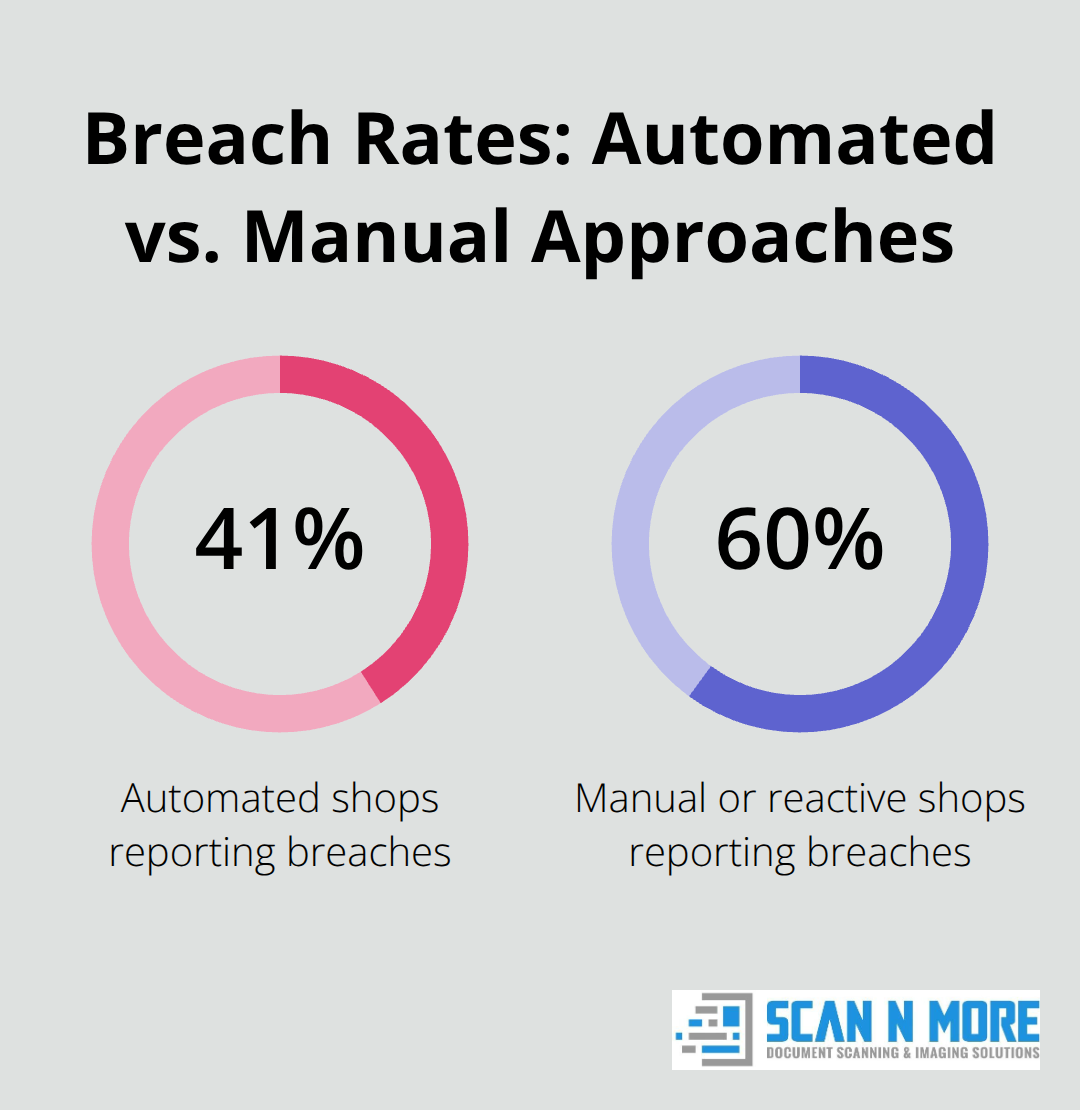
Organizations using integrated automated GRC platforms experience fewer breaches overall. The Hyperproof 2025 IT Risk and Compliance Benchmark Report shows 41% of automated shops report breaches versus 60% for those relying on manual or reactive approaches. The difference matters because a single prevented breach justifies years of compliance automation investment.
Continuous monitoring catches vulnerabilities before attackers exploit them, transforming compliance from a liability center into a security asset.
Compliance Gaps Create Regulatory Exposure
Regulatory bodies don’t accept ignorance as a defense. When your organization processes customer data under GDPR, HIPAA, or PCI DSS, regulators expect continuous evidence that controls work-not annual proof gathered frantically before audits. Compliance scanning eliminates the dangerous gap between your actual security posture and what auditors can verify. Real-time dashboards show control health, allowing you to identify failures in hours rather than discovering them during an audit.
Most enforcement actions target organizations that knew about problems but failed to document remediation efforts. Automated evidence collection pulls verifiable metadata daily from your cloud environments, creating an audit trail that demonstrates good faith compliance efforts even when isolated issues occur. Insurance carriers increasingly demand this level of documented control health before issuing cyber liability coverage, making compliance automation a prerequisite for obtaining adequate protection rather than merely a compliance checkbox.
Administrative Burden Consumes Significant Resources
Security teams at 52% of organizations spend 30 to 50% of their time on administrative compliance tasks, according to Hyperproof’s benchmark data. That translates to thousands of hours annually spent compiling evidence, tracking control status, and responding to auditor requests rather than improving actual security. Automation reclaims these hours immediately. Organizations report saving hundreds of hours per audit cycle when evidence collection happens continuously rather than reactively. Some report six-figure savings in headcount costs by eliminating the need for dedicated compliance staff who previously managed manual processes.
These represent concrete budget improvements that directly impact hiring capacity and project funding. When compliance automation handles administrative burden, your security team focuses on improving controls rather than proving they exist, creating a measurable security uplift alongside cost reduction. This shift allows your organization to allocate resources toward strategic security initiatives rather than reactive documentation.
Getting Your Data Compliance Program Started
Implementing data compliance scanning requires a structured approach that starts with understanding what data you actually have and where it lives. Most organizations dramatically underestimate their data sprawl-shadow IT applications, abandoned cloud storage accounts, and departmental databases create blind spots that compliance scanning must address first. Start a data discovery audit across your entire infrastructure, including AWS, Azure, on-premises systems, and third-party applications your teams use without formal approval. This audit identifies sensitive data locations, access patterns, and potential compliance gaps before you select a scanning solution. Organizations that skip this step waste months trying to retrofit compliance controls onto systems they don’t fully understand, then discover critical data sources weren’t monitored at all.
Map Your Current Control Gaps
Your assessment should document which regulatory frameworks apply to your business-GDPR if you process EU customer data, HIPAA if you handle health information, PCI DSS if you touch payment data, or SOC 2 if you serve enterprise customers who demand security audits. Each framework requires different controls, and compliance scanning solutions vary dramatically in their framework coverage and automation depth. Identify which controls you currently have in place and which ones exist only on paper. The gap between documented controls and actual implementation is where most compliance failures hide. Record your current evidence collection process-if you still email spreadsheets to auditors or manually search for logs to prove compliance, you’ve found your biggest efficiency problem. This baseline assessment becomes your justification for investing in automation and your measurement tool for calculating ROI once scanning goes live.
Choose a Solution That Integrates With Your Stack
Compliance scanning solutions vary wildly in capability and integration breadth. Some platforms integrate with 400 or more tools including Jira, Slack, and Microsoft Teams, automatically pulling evidence from your cloud environments with daily refreshes. Others require manual data entry or support only a handful of integrations, creating bottlenecks that defeat the automation purpose. When you evaluate solutions, demand integration demonstrations with your specific tech stack rather than accepting generic product tour promises. Test how the platform handles your most complex compliance requirement-if you need to map controls across multiple frameworks simultaneously, verify the solution actually deduplicates evidence instead of forcing you to prove the same control multiple times for different audits. Ask for references from organizations in your industry; a healthcare company’s compliance needs differ significantly from a fintech firm’s requirements, and vendors often optimize for specific sectors.
Plan for Continuous Monitoring From Day One
Implementation success depends on treating compliance scanning as an ongoing operation rather than a one-time project. Establish clear ownership-designate a compliance owner, data stewards, and audit coordinators before you activate scanning. Real-time dashboards mean nothing if no one monitors them or acts on alerts. Set specific remediation timelines: when a control fails, how many hours do you have to fix it before escalating? When sensitive data appears in unauthorized locations, who gets notified and what’s their response procedure? Organizations that define these workflows upfront complete implementations in weeks; those that figure it out during the first audit crisis take months and generate far more friction. Configure automated alerts to notify relevant teams immediately when controls drift or policy violations occur, then track remediation progress in your existing project management systems rather than creating separate compliance-only workflows that no one integrates into their daily work.
Final Thoughts
Data compliance scanning transforms how organizations manage regulatory risk and operational burden. Preventing a single data breach saves millions in incident response, regulatory fines, and reputational damage. Organizations using automated compliance controls report 41% breach rates compared to 60% for those relying on manual approaches, according to Hyperproof’s 2025 benchmark data, and automation reclaims hundreds of hours annually that your team previously spent gathering evidence and responding to auditor requests.
The transition from annual audits to continuous monitoring represents a fundamental shift in how your organization operates. Real-time dashboards replace scrambling before audit deadlines, hourly automated tests replace manual control verification, and daily evidence collection from your cloud environments replaces frantic document gathering. This continuous posture means you remain always audit-ready, always compliant, and always prepared to demonstrate control health to regulators or customers on demand.
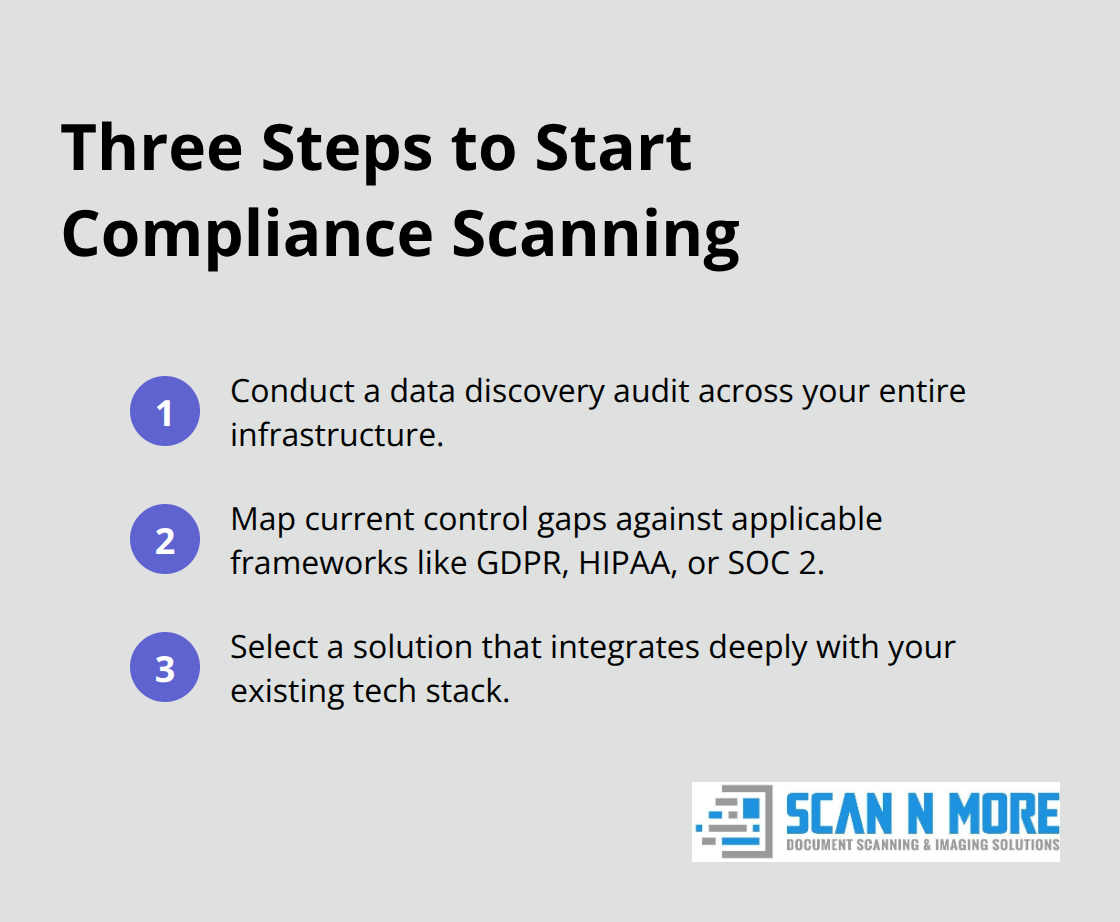
Starting your data compliance scanning program requires three concrete steps: conduct a data discovery audit across your entire infrastructure to identify what sensitive information you actually have and where it lives, map your current control gaps against applicable frameworks like GDPR, HIPAA, or SOC 2 to understand what automation must address, and select a solution that integrates deeply with your existing tech stack rather than forcing manual workarounds that defeat automation’s purpose. Organizations that implement continuous monitoring reduce their breach risk, lower their administrative costs, and free their security teams to focus on actual security improvements rather than documentation.
We at Scan N More understand that digital transformation requires secure data handling at every stage, and we help you start your compliance scanning journey today.