
Paper files are slowing your litigation prep down. Lawyers waste hours hunting through cabinets for a single document, and critical materials get lost or damaged in the process.
Case file digitization changes this. At Scan N More, we’ve seen firsthand how digital case files cut retrieval time from hours to seconds, letting your team focus on strategy instead of searching.
Why Paper Files Cost Law Firms Time and Money
Attorneys Lose Hours to Document Searches
The average attorney spends 40% of their workday searching for information rather than practicing law. When case files live in filing cabinets across multiple offices or storage facilities, that percentage climbs higher.
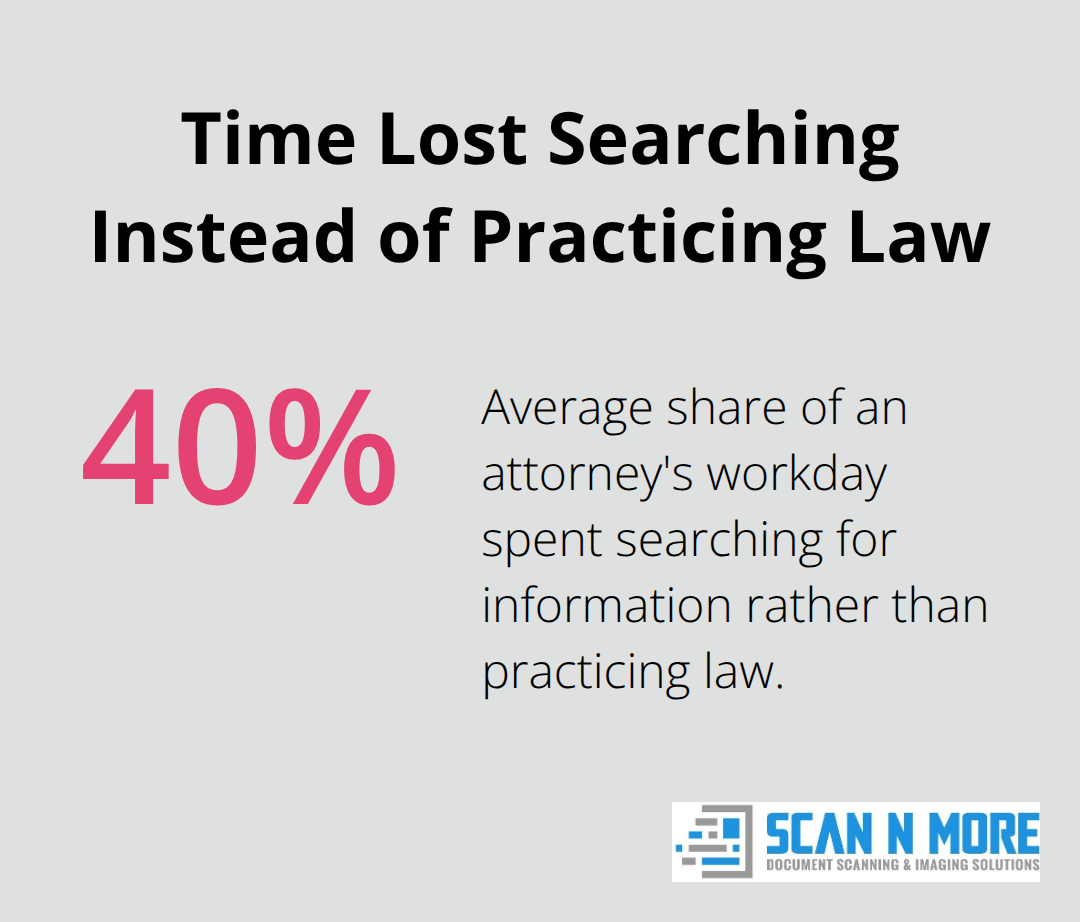
A partner looking for a specific deposition exhibit might spend 30 minutes or more locating it physically, then another 15 minutes copying and distributing it to the team. Multiply that across dozens of active cases and hundreds of documents per case, and you’re looking at thousands of wasted billable hours annually.
The Federal Rules of Civil Procedure require parties to produce electronically stored information in its native format, yet many firms still treat their paper archives as the source of truth. This forces manual conversion and re-entry work that delays responses to opposing counsel and clients. Your team spends time on administrative tasks instead of case strategy.
Physical Documents Expose Your Firm to Risk
Water damage, fire, mold, and simple misplacement destroy case files every year. A single lost document can trigger court sanctions, damage client relationships, and expose your firm to malpractice claims. The American Bar Association Model Rules of Professional Conduct require lawyers to maintain client confidentiality and protect work product, but paper stored in unsecured cabinets or off-site warehouses creates compliance gaps that digital systems with encryption, access controls, and audit trails eliminate entirely.
Document retention policies become impossible to enforce when files scatter across locations. You cannot quickly verify what you’re keeping, what you should destroy, or whether sensitive materials are properly segregated. Professional document scanning services handle high-volume digitization with secure transport, controlled-access facilities, and certified destruction protocols, transforming chaotic paper systems into defensible digital records. The cost of defending a discovery dispute or malpractice claim far exceeds the investment in digitization.
Digital Systems Deliver What Paper Cannot
Moving to digital case files solves these problems at their root. Your team accesses documents in seconds instead of hours, compliance becomes automatic through audit trails and access controls, and your firm protects itself against loss and liability. The shift from paper to digital isn’t optional anymore-it’s how modern law firms operate efficiently and defensibly. Understanding how digital systems actually speed up litigation preparation shows why this transition matters for your bottom line and your clients.
How Digital Case Files Transform Litigation Speed
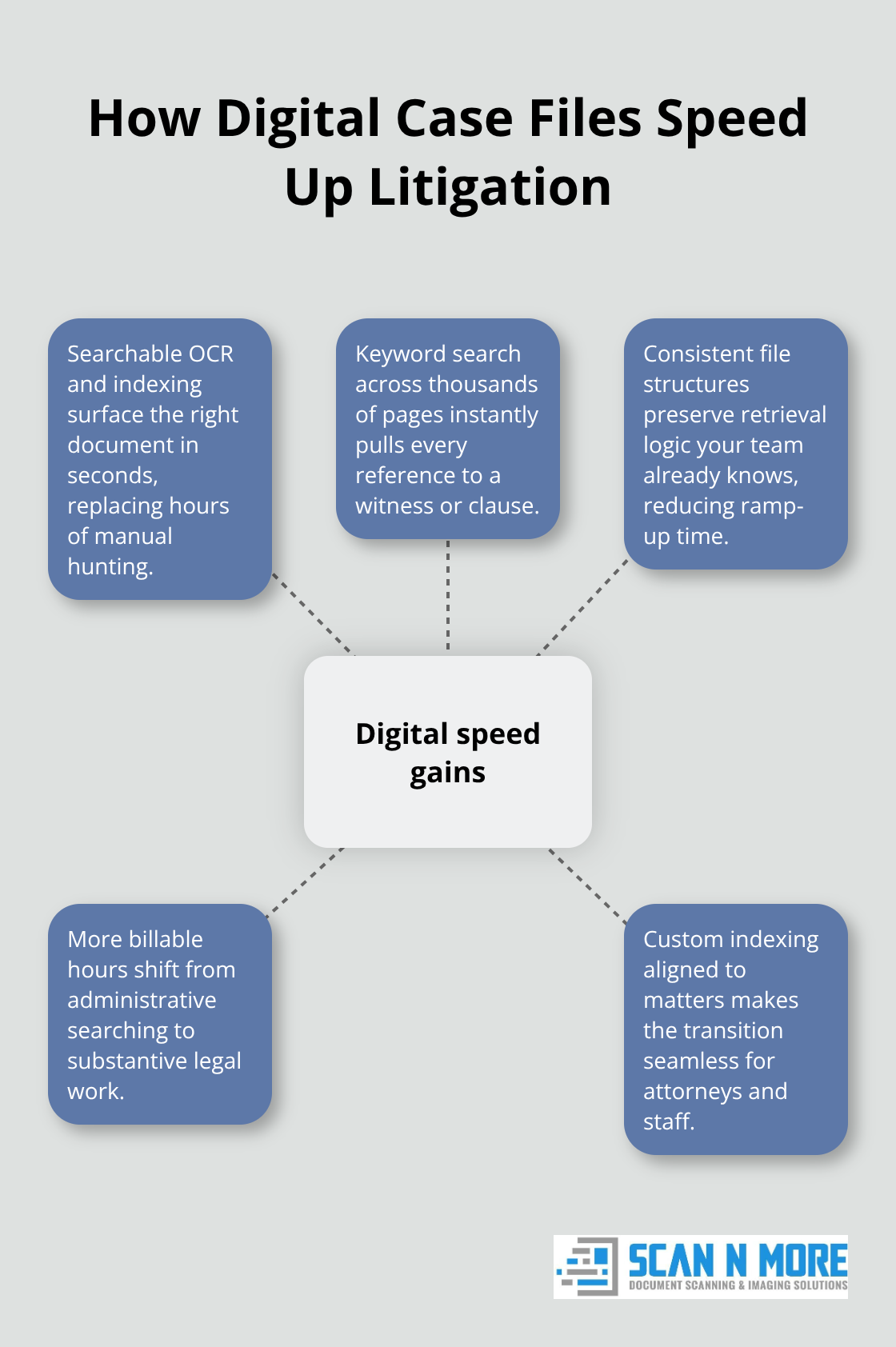
Digitized case files eliminate the retrieval bottleneck that consumes attorney time and delays case strategy. When documents live in a searchable database with OCR-enabled indexing, your team locates specific exhibits, deposition transcripts, or motions in seconds rather than hours. A partner preparing for trial can run a keyword search across thousands of pages and instantly pull every reference to a particular witness or contract clause. This speed directly translates to more billable hours spent on substantive work instead of administrative hunting. Professional document scanning services process case files with full OCR and custom indexing schemes that align with your firm’s existing file structure, making the transition seamless and preserving the retrieval logic your attorneys already understand.
Organization That Eliminates Duplicate Searches
Digital case files force your team to establish a consistent filing architecture, which eliminates the chaos of physical cabinets where documents scatter across multiple locations. Matter-based folder naming, hierarchical organization by case number and client, and standardized document naming conventions mean every attorney on your team accesses the same file structure. When a new associate joins a case, they navigate the digital archive the same way every other team member does, rather than hunting for files stored under someone’s personal system. Cross-referencing becomes automatic: exhibits link to depositions, motions reference pleadings, and evidence connects to investigative notes. This structured approach reduces redundant searches and prevents the costly errors that occur when team members work from outdated or duplicate versions of documents.
Simultaneous Access Accelerates Collaboration
Multiple attorneys and paralegals now work on the same case file simultaneously from different offices or remotely, without the delays of passing physical files between desks or locations. A litigation team preparing for trial can have the lead counsel, two associates, and a paralegal reviewing different sections of the discovery simultaneously, annotating exhibits in real time, and building trial exhibits without waiting for anyone to finish. This parallel workflow compresses trial preparation timelines substantially. Secure encryption, role-based access controls, and audit trails protect confidential materials while multiple team members access them, and your firm maintains a complete record of who viewed or modified which documents. The speed advantage proves undeniable: firms that digitize case files report faster case resolution and higher client satisfaction because responses to opposing counsel arrive faster and trial preparation happens in weeks rather than months.
Speed Meets Security in Digital Systems
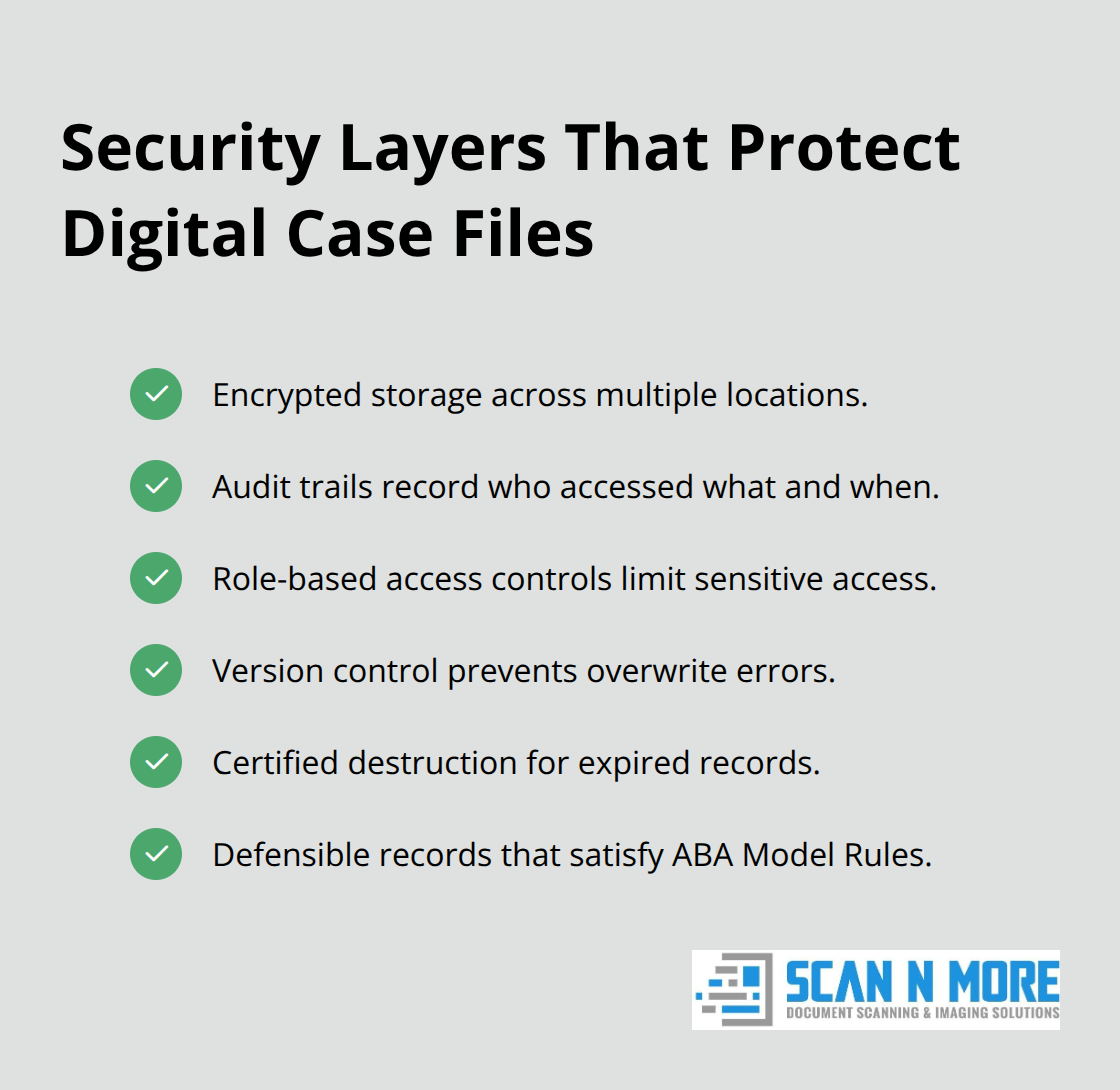
Digital storage protects your case files against the physical threats that plague paper archives. Water damage, fire, mold, and misplacement destroy critical documents every year, but encrypted digital backups across multiple locations eliminate these risks entirely. Your firm maintains defensible records with audit trails showing exactly who accessed what and when, satisfying professional conduct requirements without the compliance gaps that paper systems create. Access controls ensure that sensitive materials reach only the attorneys and staff who need them, and certified destruction protocols handle archived files securely when retention periods expire. This combination of speed and protection transforms how your firm manages litigation risk while accelerating case preparation.
The next step involves selecting the right scanning partner and establishing the digital workflows that turn these speed advantages into measurable results for your team and clients.
What Makes Professional Document Scanning Essential for Law Firms
High-Quality Scanning Prevents Case File Errors
Legal documents require precision because a scanning error-misaligned pages, skipped exhibits, or poor OCR quality-creates gaps in your case file that surface during discovery or trial. Professional scanning services operate specialized equipment that handles oversized drawings, color photographs, fragile originals, and mixed media without damage, then applies OCR technology to make every page searchable by text content. The scanning process should also include document cleaning to remove staples and tape, page rotation to correct orientation, and indexing that aligns with your firm’s matter numbering system so retrieved files integrate seamlessly into your case management software. When you select a scanning partner, verify their experience with legal documents specifically, their quality control procedures, and their ability to handle high-volume projects on tight deadlines.
Encryption and Access Controls Protect Sensitive Materials
Encrypted digital storage across multiple locations eliminates the single-point-of-failure risk that plagues paper records stored in one warehouse or office, and audit trails document exactly who accessed which files and when, creating the defensible record the American Bar Association Model Rules demand. Role-based access controls prevent paralegals from viewing attorney work product or confidential client communications, and version control prevents team members from accidentally overwriting current versions with outdated drafts. This layered security approach transforms scanned files from static archives into protected assets that satisfy professional conduct requirements without exposing your firm to data breach liability.
Integration Connects Scanning to Your Existing Systems
Professional document scanning with your case management system means scanned documents land directly into the correct matter folder with proper metadata tagging, eliminating manual filing steps that introduce errors and delays. This integration also enables keyword searches across your entire digital archive, allowing associates to locate every reference to a witness or contract term across multiple cases without opening individual files. The result is a system where security and speed reinforce each other: access controls protect sensitive materials while encryption and backups protect against loss, and simultaneous search and retrieval capabilities accelerate litigation prep without exposing your firm to compliance risk.
Final Thoughts
Case file digitization transforms how your firm operates by eliminating hours of wasted retrieval time, protecting your case materials against loss and damage, and creating the defensible records your professional obligations demand. Your team gains the speed advantage that modern litigation requires, and your firm reduces the operational costs that drain profitability year after year. The financial case for digitization is straightforward: eliminating filing cabinets and off-site storage facilities frees physical space that costs money to maintain and secure, while reducing non-billable hours spent searching for documents means more time available for substantive legal work that generates revenue.
Protecting case files against fire, water damage, and misplacement prevents the catastrophic costs of lost evidence and malpractice claims, and these savings compound over time, making digitization one of the highest-return investments a law firm can make. Getting started requires selecting a scanning partner who understands legal document requirements and can handle your firm’s volume without compromising quality or security. The right partner manages high-volume scanning with precision, applies OCR technology to make every page searchable, and integrates scanned files directly into your case management system so your team accesses them immediately.
We at Scan N More transform paper-based processes into digital solutions that accelerate litigation prep and protect your firm through professional document scanning services that handle all formats with the security and compliance standards your practice demands. Contact Scan N More to discuss how case file digitization can streamline your litigation workflows and strengthen your competitive position.