
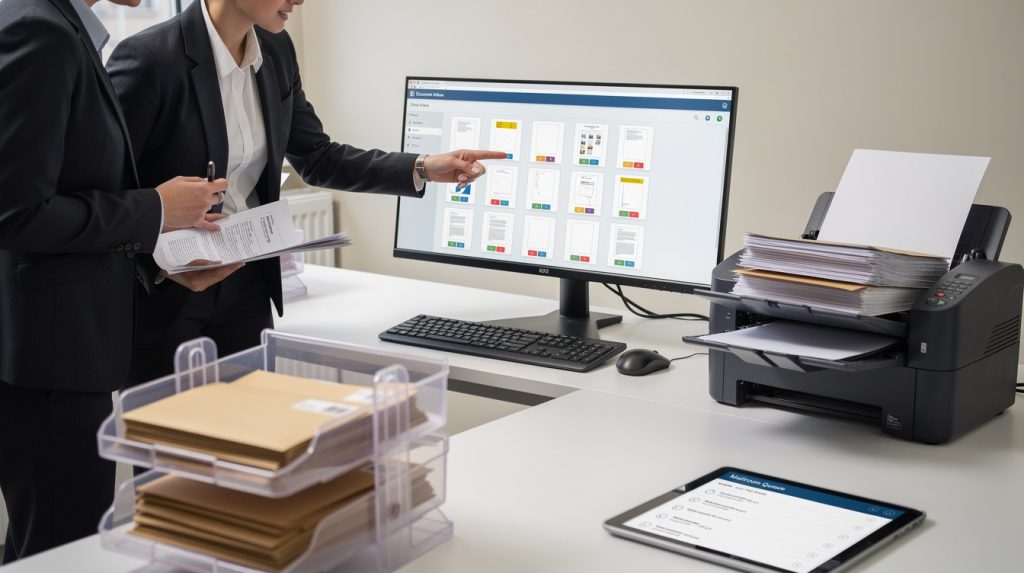
Most teams still process inbound mail the way they did twenty years ago. Sorting by hand, storing boxes of documents, and manually routing letters to the right person wastes hours every week and creates security gaps.
We at Scan N More know that digital mailroom solutions change this entirely. Automated capture, intelligent routing, and instant access across your team eliminate the bottlenecks that slow you down.
Why Your Mailroom Is Still Costing You Money
Manual mail sorting inflicts real financial and operational damage that most organizations underestimate. Companies processing mail manually face manual processing error rates of 1-3%, with each error costing $25-$150 to remediate. When a single misdirected invoice or contract sits in the wrong department for days, late payment penalties and missed deadlines follow. Teams handling physical mail also face significant compliance exposure. Documents containing sensitive financial data, healthcare information, or legal records stored in unsecured mailroom areas violate HIPAA, GDPR, and SOX requirements. A data breach involving physical documents causes just as much damage as a digital one, yet traditional mailrooms often lack audit trails showing who accessed what and when.
Physical Storage Drains Your Budget
Physical storage compounds these problems significantly. The average organization maintains 300 million filing cabinets in the United States, according to the Association for Information and Image Management. Each cabinet occupies roughly 9 square feet of office space. Commercial real estate costs vary significantly by location, with prices ranging from $359 to $660 per square foot annually depending on your market. Scale that across a mailroom with dozens of cabinets, and you’re spending thousands monthly on storage that produces zero revenue.
Staffing Costs Mount Quickly
Dedicated mailroom staff spend 60 to 70 percent of their time on repetitive sorting and routing tasks that add minimal value. This means a full-time mailroom employee earning 35,000 dollars annually costs you roughly 21,000 to 24,500 dollars per year in pure sorting labor. If your organization receives 500 pieces of mail daily across multiple locations, you need at least one full-time employee managing this workflow, often two or three in larger organizations.
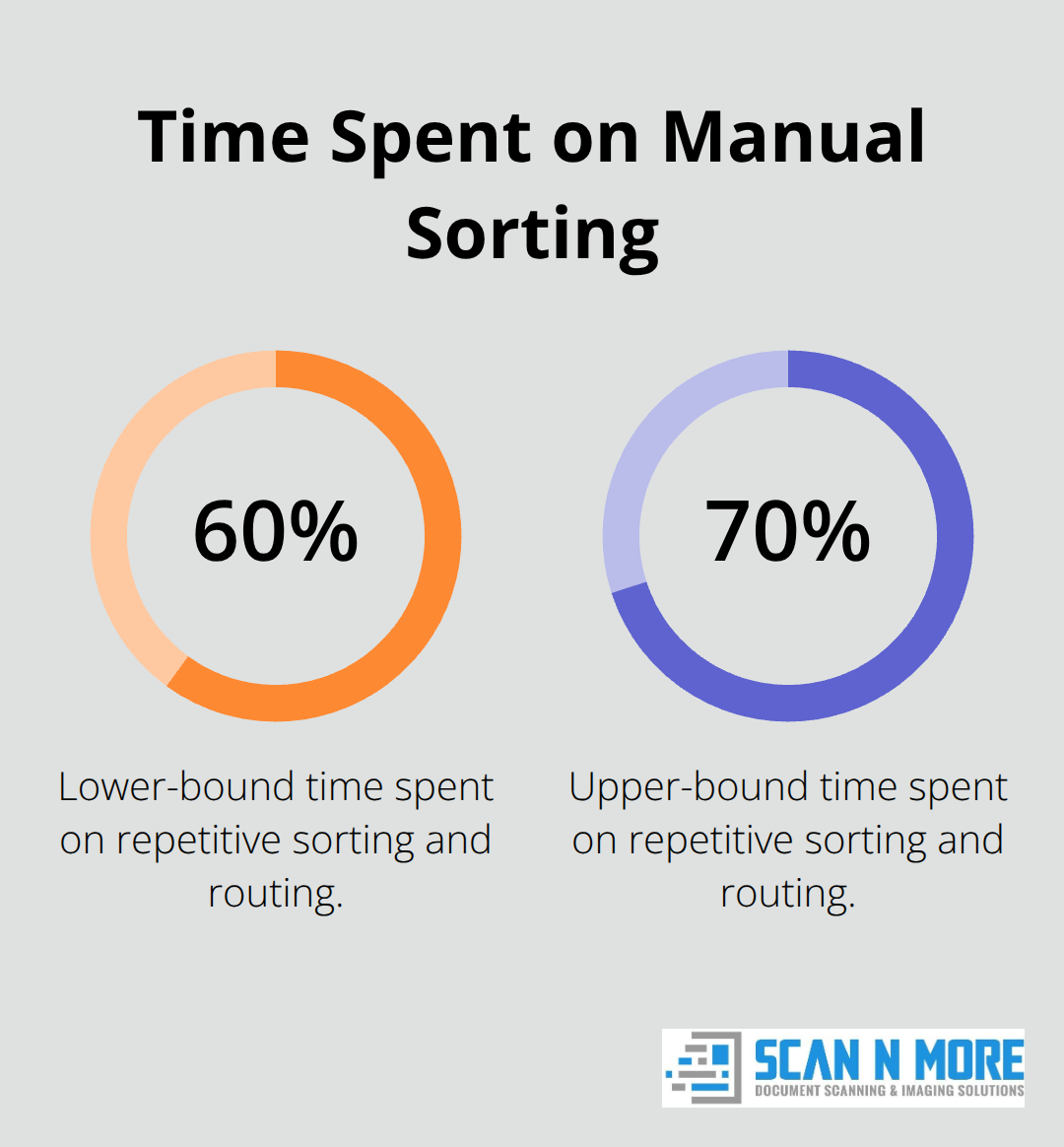
Organizations switching to digital mailroom solutions typically reassign staff to higher-value work like vendor management, invoice processing, or customer service rather than eliminating positions entirely.
Security Vulnerabilities Multiply With Every Touchpoint
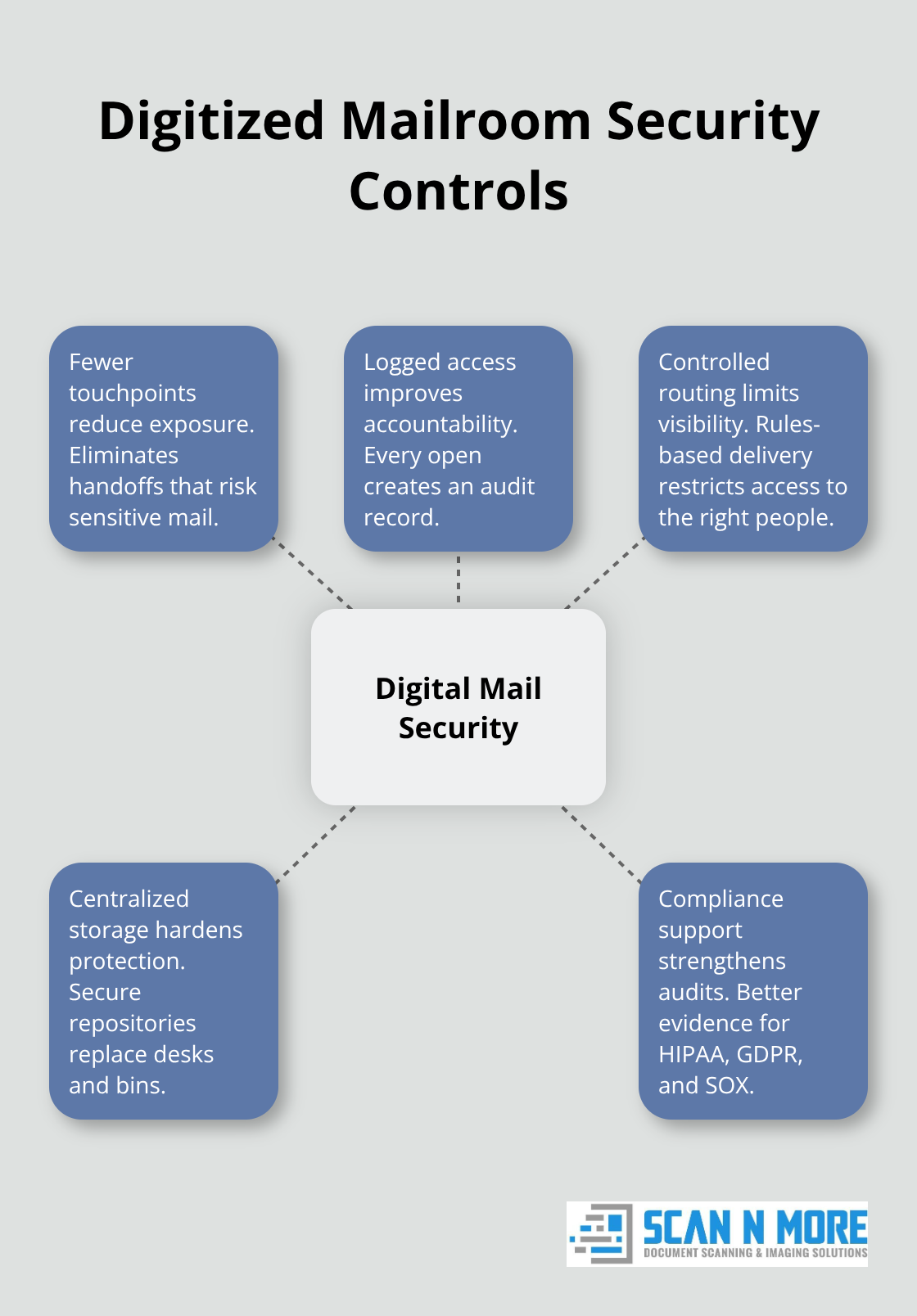
The physical handling of mail introduces security vulnerabilities that auditors flag consistently. Documents travel through multiple hands, get left on desks overnight, and sometimes end up in recycling bins without proper destruction. Each handoff creates risk. Digitizing inbound mail eliminates these touchpoints entirely, replacing physical routing with controlled, logged digital workflows where every access creates an audit record. This shift transforms how your organization manages sensitive information and compliance obligations.
How Digital Mailroom Solutions Transform Your Workflows
Automated Capture Eliminates Sorting Errors
High-speed scanners process incoming mail at 200-300 pages per minute, converting physical paper into searchable digital files with optical character recognition that identifies sender information, invoice numbers, and key data points automatically. Intelligent routing rules then direct each document to the correct department or person based on content analysis, without human intervention. This eliminates the 1-3% error rate that plagues manual sorting.
A financial services company processing 2,000 invoices monthly through manual routing experienced 20-30 misdirected documents each month, causing payment delays and vendor disputes. After implementing automated capture and routing, misdirection dropped to nearly zero. The system learns your organization’s routing patterns and improves accuracy over time, meaning documents reach their destination in minutes rather than days.
Real-Time Access Solves Remote Work Bottlenecks
When your team works across multiple locations or operates fully remote, physical mail sitting in a central mailroom becomes a bottleneck. Digital mailroom solutions store scanned documents in cloud-based repositories accessible instantly from any device, anywhere. Your accounts payable team in New York accesses an invoice simultaneously with your procurement team in Denver. Search functionality means finding a specific contract takes seconds instead of walking to a filing cabinet and searching through dozens of boxes.
Integration Connects Mail to Your Existing Systems
Integration with ERP systems and CRM platforms ensures mail data flows directly into the systems your teams already use daily. Rather than creating another tool employees must check separately, incoming documents populate your accounting software, workflow automation platform, or customer service system automatically. This eliminates the data entry work that typically consumes 15-20 hours weekly in mid-sized organizations.
Seamless integration determines whether your team actually adopts the new system or abandons it for familiar paper processes. When documents arrive in the tools your staff uses every day (not in a separate portal), adoption rates climb dramatically and resistance disappears. This shift from isolated mailroom operations to integrated document workflows creates the foundation for measuring real results.
What Results Should You Expect From Going Digital
Processing Time Drops Dramatically
Organizations switching to digital mailroom operations see processing time drops from weeks to days almost immediately. A mid-sized insurance company receiving 3,000 pieces of mail monthly cut document routing time from 5-7 business days to 24 hours after implementing automated scanning and intelligent routing. Processing delays that once caused missed payment deadlines, delayed claims processing, and frustrated vendors disappeared entirely. The reduction in processing time that industry reports cite reflects this dramatic shift, not incremental improvement. Your team stops waiting for physical mail to travel through sorting queues and instead accesses documents the moment they arrive in your system.
Financial Gains Appear Within Months
Financial improvements surface faster than most organizations expect. A manufacturing company spending $4,200 monthly on physical storage across three locations eliminated those costs entirely within six months of digitization, freeing up 180 square feet of office space that management repurposed for production planning. Staff previously buried in sorting work shifted to invoice analysis and vendor negotiation, roles that directly impact your bottom line. One accounts payable department reduced payment processing time from 12 days to 4 days, enabling the company to capture early-payment discounts worth $18,000 annually on vendor invoices.
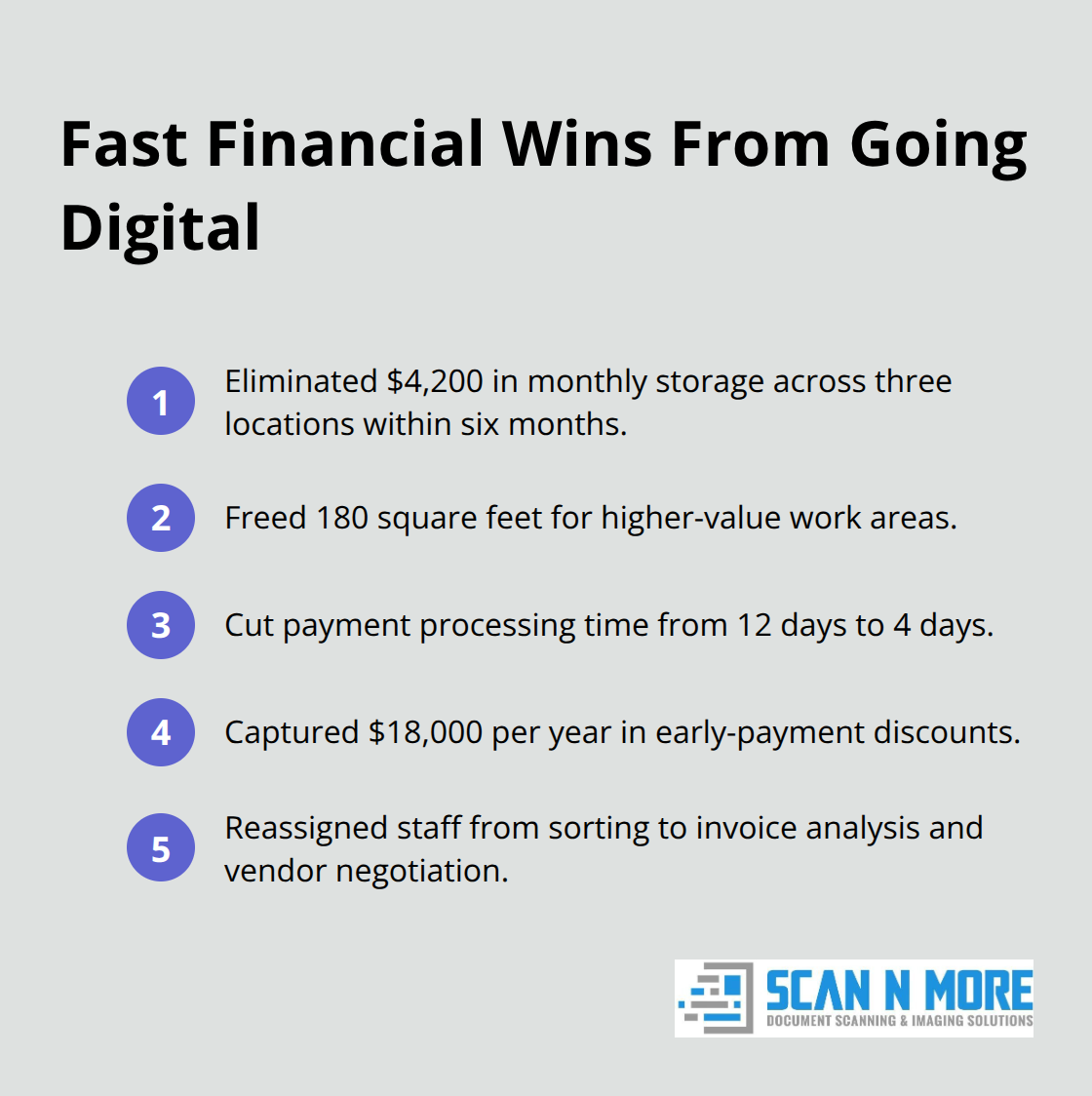
These aren’t theoretical gains; they’re concrete financial improvements that appear within the first quarter of implementation.
Systematic Implementation Minimizes Disruption
The transition itself requires planning, but organizations that approach it systematically experience minimal disruption. Start with a single high-volume mail stream like invoices or customer correspondence rather than attempting to digitize everything simultaneously. This limited scope lets your team learn the system, identify workflow adjustments, and prove value before expanding to other document types. Establish clear ownership of the project with someone responsible for timeline, vendor coordination, and staff training. Most organizations need 4-8 weeks to scan existing backlogs while simultaneously processing new mail, with the process accelerating as your team develops efficiency.
Training and Adoption Drive Success
Plan for 2-3 hours of staff training per department that handles scanned documents, focusing on search functionality and integration with their existing systems rather than technical details. The biggest implementation mistake organizations make is treating digitization as a business process redesign instead of an IT project (your success depends entirely on whether your team actually uses the new system, which happens only when documents appear where staff expects them and search works faster than asking a colleague). Your adoption rates climb when documents arrive in the tools your staff uses every day, not in a separate portal that requires additional steps.
Final Thoughts
Digital mailroom solutions address the core inefficiencies that drain your organization’s time and money. Manual sorting creates errors, physical storage consumes expensive office space, and security vulnerabilities expose your company to compliance violations. Automated capture, intelligent routing, and cloud-based access eliminate these problems entirely.
The financial case becomes clear within months. Organizations reduce processing time from weeks to days, eliminate storage costs, and capture early-payment discounts that offset implementation expenses quickly (a manufacturing company freed up 180 square feet of office space and saved $18,000 annually on vendor discounts alone). These aren’t projections; they’re results that organizations achieve consistently after going digital.
We at Scan N More help organizations transform paper-based workflows into efficient digital operations through professional document scanning services that handle high-quality scanning, secure data management, and compliance requirements. Contact Scan N More to discuss how digital mailroom solutions fit your specific needs and timeline.