

Most businesses are stuck between their old systems and the digital future they need to reach. The gap costs money, slows growth, and puts you behind competitors who’ve already moved.
At Scan N More, we’ve seen firsthand how the right digital transformation strategies turn this around. This guide walks you through building a roadmap, avoiding common mistakes, and capturing real competitive advantage.
Why Digital Transformation Matters Now
Customer Expectations Have Shifted-And They Won’t Wait
Customers now expect companies to respond to inquiries within 24 hours, according to McKinsey research. Yet many businesses still rely on paper-based processes that make this impossible. When competitors offer seamless digital experiences and you’re still manually processing documents, customers leave. This isn’t a future problem-it’s happening now. Companies that haven’t digitized customer-facing operations lose market share to those that have. The cost of staying analog compounds every quarter as customer acquisition becomes harder and retention rates drop.
Process Automation Delivers Real Cost Reductions
Process automation cuts operational costs faster than any other digital initiative. Forrester research shows that companies automating document-heavy workflows reduce processing time by 60-80%. If your team spends 10 hours weekly on manual document tasks, automation eliminates that work entirely. That amounts to roughly 500 hours per employee annually-time your team redirects toward revenue-generating work instead of administrative tasks. The mathematics is straightforward: fewer manual processes means lower labor costs, fewer errors, and faster turnaround times on client deliverables.
Your Competitors Have Already Made the Move
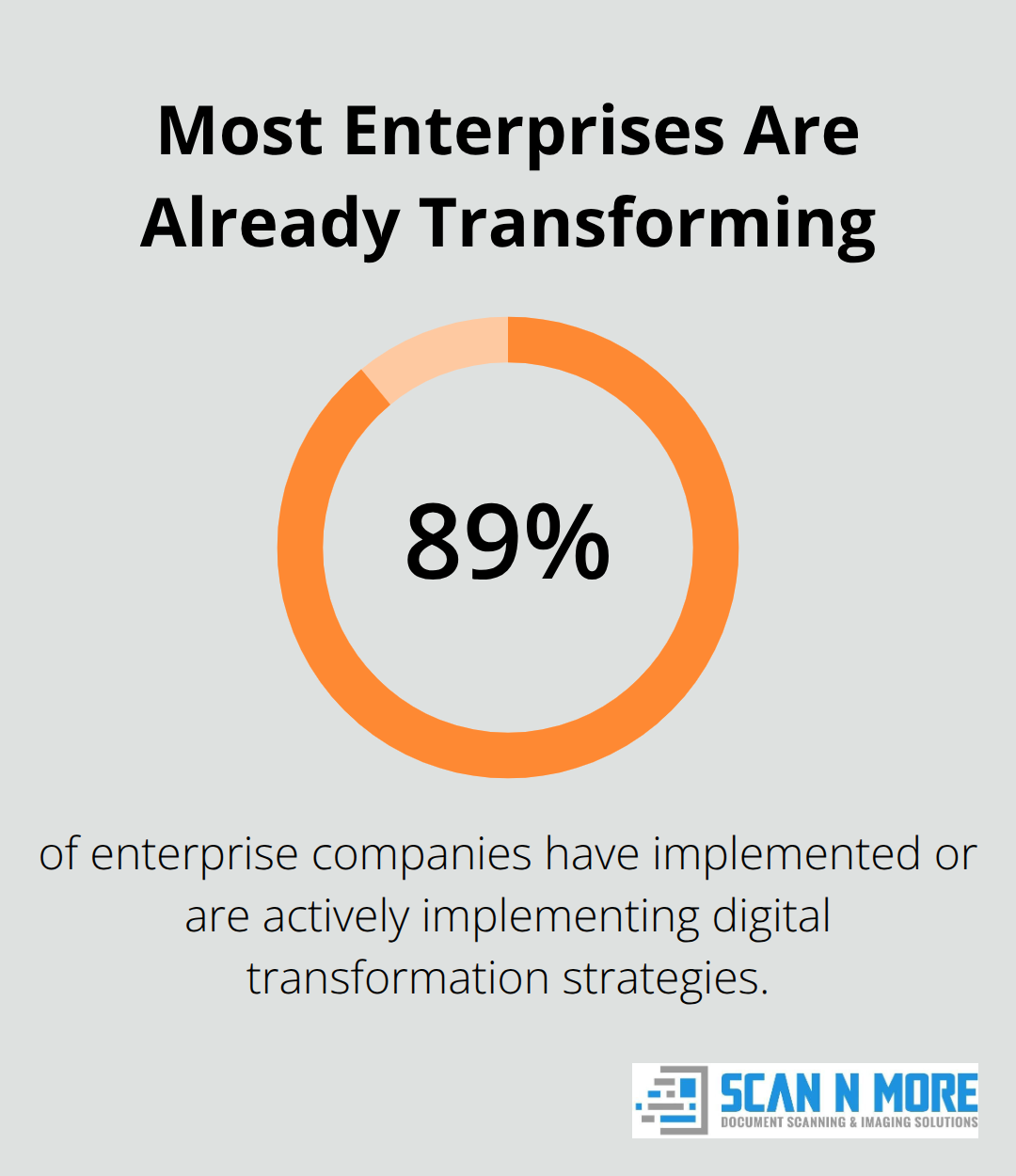
Industry data reveals that 89% of enterprise companies have already implemented or are actively implementing digital transformation strategies, according to Statista. If you haven’t started, you’re in the minority-and that minority is losing ground. Digital-first competitors respond faster to market changes, launch new services quicker, and adapt their operations without the friction of legacy systems.
They also attract better talent because employees prefer working with modern tools rather than outdated infrastructure. Your industry likely has at least one competitor who’s already digitized their core operations. That competitor handles client requests faster, maintains better compliance records, and operates with lower overhead.
The gap between you and your digitized competitors widens every month you wait. The question isn’t whether to transform-it’s how to build a roadmap that actually works.
Building Your Digital Transformation Roadmap
Audit Your Systems Before You Plan Anything
Start with a complete audit of what you actually have, not what you think you have. Most businesses find their systems far more fragmented than leadership realizes. You likely operate multiple databases that don’t communicate, manage critical processes through spreadsheets, and store documents across different platforms with no standardized naming conventions. Schedule a full week to map your current environment. Document every system your team uses, who owns it, what data flows through it, and how it connects to other systems.
This audit reveals gaps immediately. You’ll find processes that could be automated, data silos that slow decision-making, and compliance risks hiding in legacy systems. Many businesses discover during this phase that their paper-based document workflows cost far more than they realized in storage, retrieval time, and error rates. The audit forces you to confront reality rather than operate on assumptions.
Define Success With Measurable Targets
Once you understand where you are, define what success actually looks like with specific, measurable targets. Vague goals like “become more digital” waste time and money. Instead, set concrete outcomes: reduce document processing time from 48 hours to 4 hours, cut manual data entry errors by 90%, or decrease customer response time to under 2 hours.
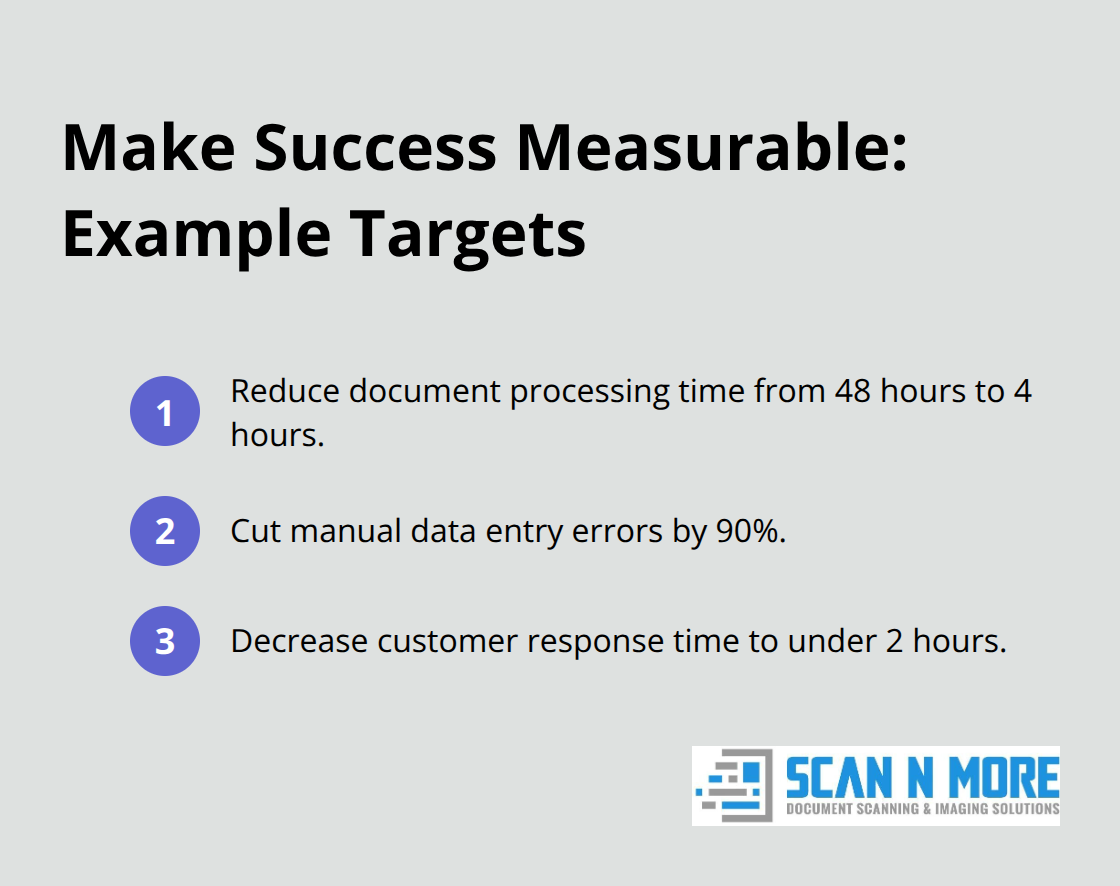
These metrics guide every decision afterward.
Your team needs numbers to track progress and justify continued investment. Without measurable targets, you lose momentum when obstacles appear.
Select Technology Partners With Industry Experience
When selecting technology partners, prioritize those with proven experience in your industry and clear implementation timelines. Avoid vendors who oversell capabilities or demand long-term commitments before proving results. Request references from companies similar to yours in size and complexity (the wrong partner locks you into inefficient processes for years). The right partner understands your specific workflow challenges and delivers solutions that integrate with your existing infrastructure rather than forcing you to rebuild everything from scratch.
Your technology choices determine whether transformation succeeds or stalls. Partners who understand your industry know which processes matter most and which integrations prevent costly mistakes. This foundation positions you to address the obstacles that derail most transformation efforts.
Common Pitfalls and How to Avoid Them
Organizational Resistance Stops Most Transformations
Most transformation projects fail not because the technology is wrong, but because leadership underestimates what happens after implementation. Gartner research shows that 60% of digital transformation initiatives fall short of their objectives, and the primary reason isn’t technical-it’s organizational resistance and inadequate preparation. Your team has spent years working a certain way. They know the workarounds, they understand the old systems, and suddenly you’re asking them to abandon that knowledge for something completely new.
Without deliberate change management, your most experienced employees become your biggest obstacles. They slow adoption, find reasons why the new system won’t work, and subtly encourage colleagues to stick with familiar processes. This resistance costs time and money far beyond what most businesses budget for.
Structure Change Management Before Go-Live
You need a structured change management plan at least 60 days before any new system goes live. Assign a change champion in every department-someone respected who understands both the old and new workflows. Have them train their peers hands-on, not through generic vendor webinars. Document exactly how each role changes.
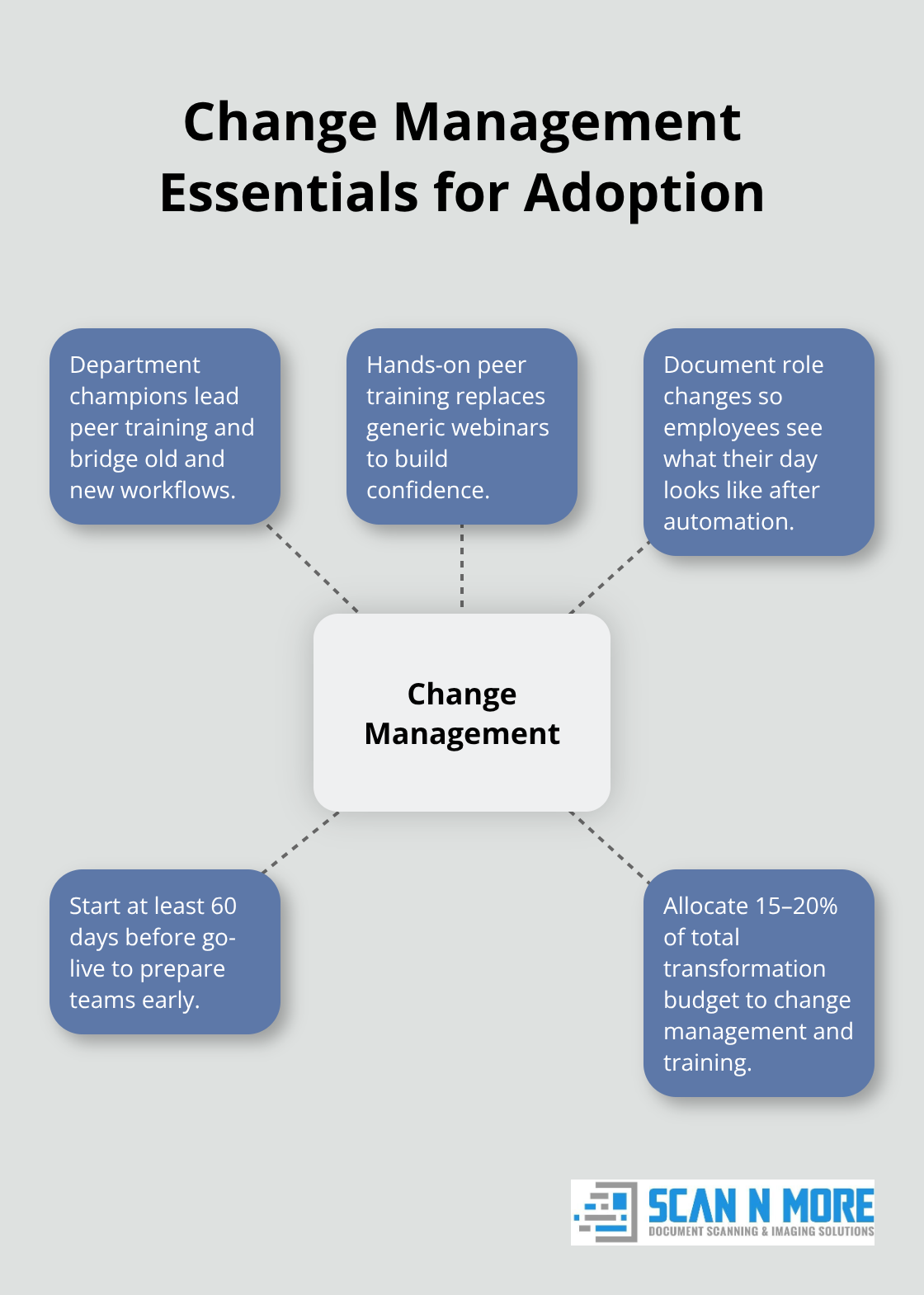
If someone previously spent 3 hours daily on manual tasks, show them specifically what their day looks like after automation. This specificity removes fear and builds confidence.
Budget 15-20% of your total transformation cost for change management and training alone. Companies that skip this spend double trying to fix adoption problems months later.
Rushing Implementation Creates Cascading Failures
Speed kills transformation projects. The temptation to move fast is overwhelming, especially when you see competitors ahead of you, but rushing implementation creates cascading failures that halt progress entirely. Data security and compliance violations become catastrophic when systems aren’t properly configured before going live. If you move documents to a digital system without verifying encryption, access controls, and audit trails first, you’ve created a compliance nightmare.
Healthcare organizations handling patient data and financial firms managing sensitive records cannot afford mistakes here. HIPAA violations alone cost $100 to $50,000 per record breached according to the U.S. Department of Health and Human Services. PCI compliance failures for payment data cost companies millions in fines and reputation damage.
Test Everything Before Your Data Enters the System
Before any system touches your actual data, run it in a test environment with dummy data for at least 30 days. Verify every security setting. Test every access restriction. Confirm that your audit logs capture exactly what you need. Map your specific compliance requirements to system capabilities before deployment. If you handle regulated data, involve your compliance officer in the planning phase, not after problems emerge.
The businesses that succeed take 90-120 days to plan implementation properly, then execute in phases rather than one massive cutover. Phase one handles low-risk processes with minimal regulatory exposure. Phase two addresses higher-stakes workflows only after you’ve confirmed phase one works flawlessly. This methodical approach feels slow compared to competitors moving fast, but you’ll be operational and compliant while rushed implementations are still fighting fires and managing audit failures.
Final Thoughts
Digital transformation strategies work when you stop treating them as technology projects and start treating them as business restructuring. The businesses winning right now aren’t the ones with the fanciest software-they’re the ones who planned carefully, managed change deliberately, and moved methodically through implementation. Your transformation starts with honest assessment: audit what you have, identify the gaps that cost you money and customers, and set measurable targets so you know whether you’re actually winning.
The common mistakes we outlined-rushing implementation, skipping change management, ignoring compliance-aren’t theoretical risks. They derail most transformation efforts because organizations underestimate the human side of change. Your team needs training, clear communication about how their work changes, and time to adapt. Start with your highest-impact, lowest-risk processes, document workflows, test everything with dummy data before touching your actual records, and verify security settings and compliance controls before go-live.
Many businesses begin their transformation by converting paper-based document workflows into digital solutions. Scan N More specializes in transforming paper processes into digital operations through professional document scanning services, handling on-site and off-site scanning for all document formats while maintaining data security and compliance standards.