

Your data faces threats at every stage of its journey. Whether information sits in storage or travels across networks, attackers actively target both states.
At Scan N More, we’ve seen how organizations often protect one while neglecting the other. This blog post covers the data protection strategies you need to secure information in both scenarios.
What Separates Data in Transit From Data at Rest
Data in transit and data at rest operate in fundamentally different threat environments, which means they demand completely separate defense strategies. Data in transit refers to information moving across networks-emails traveling through servers, files uploading to cloud storage, or API requests between applications. Data at rest sits stationary in databases, filing cabinets, hard drives, or backup systems. The distinction matters because attackers exploit different vulnerabilities depending on where your data sits. Organizations that treat these two states identically waste resources and leave critical gaps.
How Network Attacks Target Data in Motion
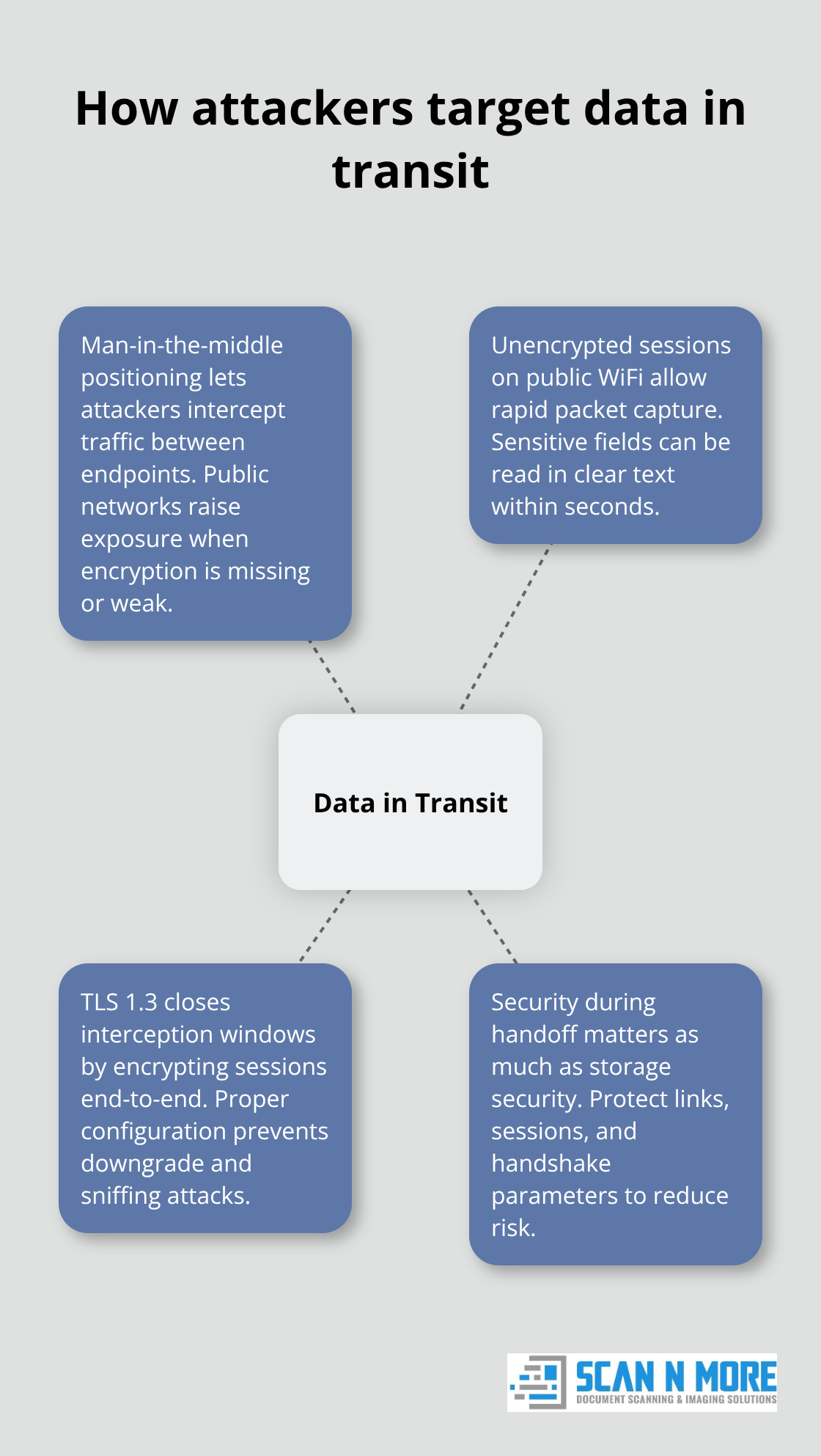
Data in transit faces network-based attacks where hackers position themselves between sender and receiver. Unencrypted connections make interception trivial-attackers on public WiFi networks can capture unprotected data packets within seconds. Data in transit requires protection during movement-think of it as security during the handoff. Organizations must address encryption in transit through protocols like TLS 1.3 to prevent these network-based interceptions.
Storage-Based Threats Operate Through Different Pathways
Storage-based threats operate differently than network attacks. Attackers target data at rest through credential compromise, insider threats, ransomware, or physical theft. A stolen laptop containing unencrypted customer records poses a completely different risk profile than an intercepted email. At rest, data vulnerability depends on access controls, encryption strength, and physical security measures rather than network monitoring. Full-disk encryption, database-level encryption, and granular access restrictions form the foundation of storage protection. These mechanisms address threats that network security alone cannot stop.
Why Organizations Fail to Protect Both States
Most organizations fixate on one state while ignoring the other. IT teams often see transit protection as someone else’s responsibility-network administrators handle that-while storage security falls to database teams or facilities. This fragmentation creates blind spots. Organizations must protect data across its entire lifecycle, not just during specific phases. A comprehensive strategy requires both encryption mechanisms working simultaneously (transit and storage). Your team needs to identify exactly where sensitive data travels and where it rests, then apply appropriate controls to each scenario. Skipping either one guarantees that attackers will find the undefended pathway.
Moving From Theory to Implementation
The technical differences between these two states demand different tools and approaches. Transit protection focuses on encryption protocols and secure channels, while storage protection emphasizes access controls and encryption at rest. Understanding these distinctions sets the foundation for selecting the right security protocols and technologies that actually address your specific vulnerabilities.
How to Encrypt Data Across Every Stage
TLS 1.3 represents the standard for protecting data in transit, and organizations should refuse to accept anything less. This protocol encrypts all communication between sender and receiver, making interception worthless to attackers even on compromised networks. When you transmit sensitive information without TLS 1.3 encryption, you operate in the same security posture as sending postcards through the mail. Financial institutions and healthcare providers mandate TLS 1.3 for this exact reason-the protocol has been audited extensively since its release in 2018, and no practical attacks have surfaced against properly implemented versions.
Verify Your Transit Encryption Standards
Your organization needs to verify that all cloud services, email systems, and APIs use TLS 1.3 minimum, not older versions like TLS 1.2. Check your infrastructure immediately through port scans or SSL tests on your domains. Services like SSL Labs provide free analysis showing exactly which TLS versions your systems support.
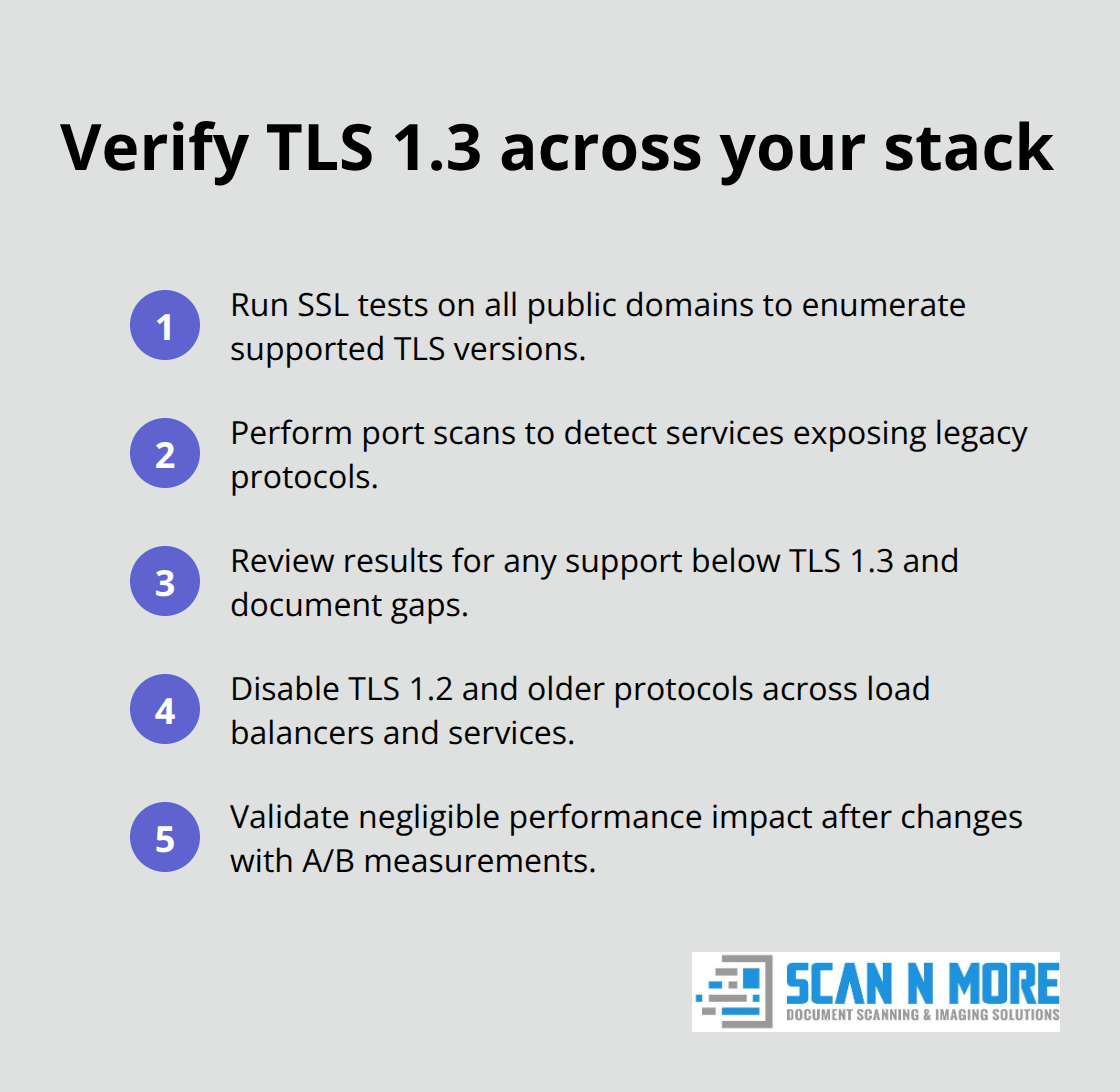
If your website or application still accepts connections below TLS 1.3, disable those older protocols today. The performance impact remains negligible-modern processors handle TLS 1.3 encryption with minimal overhead compared to unencrypted connections.
Storage Encryption Requires Different Technical Approaches
Storage encryption demands a different technical approach than transit protection because stationary data faces threats from credential compromise and physical access rather than network interception. AES-256 encryption represents the only acceptable standard for sensitive data at rest-government agencies, financial institutions, and healthcare organizations mandate it for classified or regulated information. Full-disk encryption covers everything stored on a device, but it fails if an attacker gains access to the running system or the encryption keys remain in memory. Database-level encryption provides stronger protection by encrypting individual records or columns, meaning attackers who compromise database access still cannot read the actual data without the encryption keys.
Manage Encryption Keys With Dedicated Systems
Organizations must store encryption keys separately from encrypted data, using dedicated key management systems rather than embedding keys in source code or configuration files. Many breaches occur because developers hardcoded encryption keys into applications, making the encryption useless once the code was exposed. Regular key rotation is recommended for highly sensitive data, though this depends on your specific threat model and compliance requirements.
Combine Encryption With Access Controls
Access control mechanisms must work alongside encryption-even with strong encryption, excessive user permissions create vulnerability. Implement role-based access control where employees only access data required for their specific job functions. Monitor access logs continuously because encryption alone cannot detect unauthorized access patterns. Organizations handling payment card data under PCI DSS standards must implement both encryption and multi-factor authentication for any access to unencrypted data or encryption keys. These layered defenses transform encryption from a single point of failure into a comprehensive protection system that addresses both the data itself and who can reach it.
Implementing Protection Standards That Actually Work
Compliance frameworks exist for a reason, and ignoring them costs organizations millions in fines and remediation. The Payment Card Industry Data Security Standard mandates AES-256 encryption for cardholder data, while HIPAA requires encryption for all patient health information both in transit and at rest. These aren’t suggestions-they’re legal requirements with enforcement teeth. Organizations often treat compliance as a checkbox exercise rather than a foundation for actual security. This approach fails because compliance standards address the exact vulnerabilities that attackers exploit. Your organization must map every piece of sensitive data to its applicable regulations, then implement controls that exceed minimum requirements rather than merely meeting them.
Standards That Drive Real Security
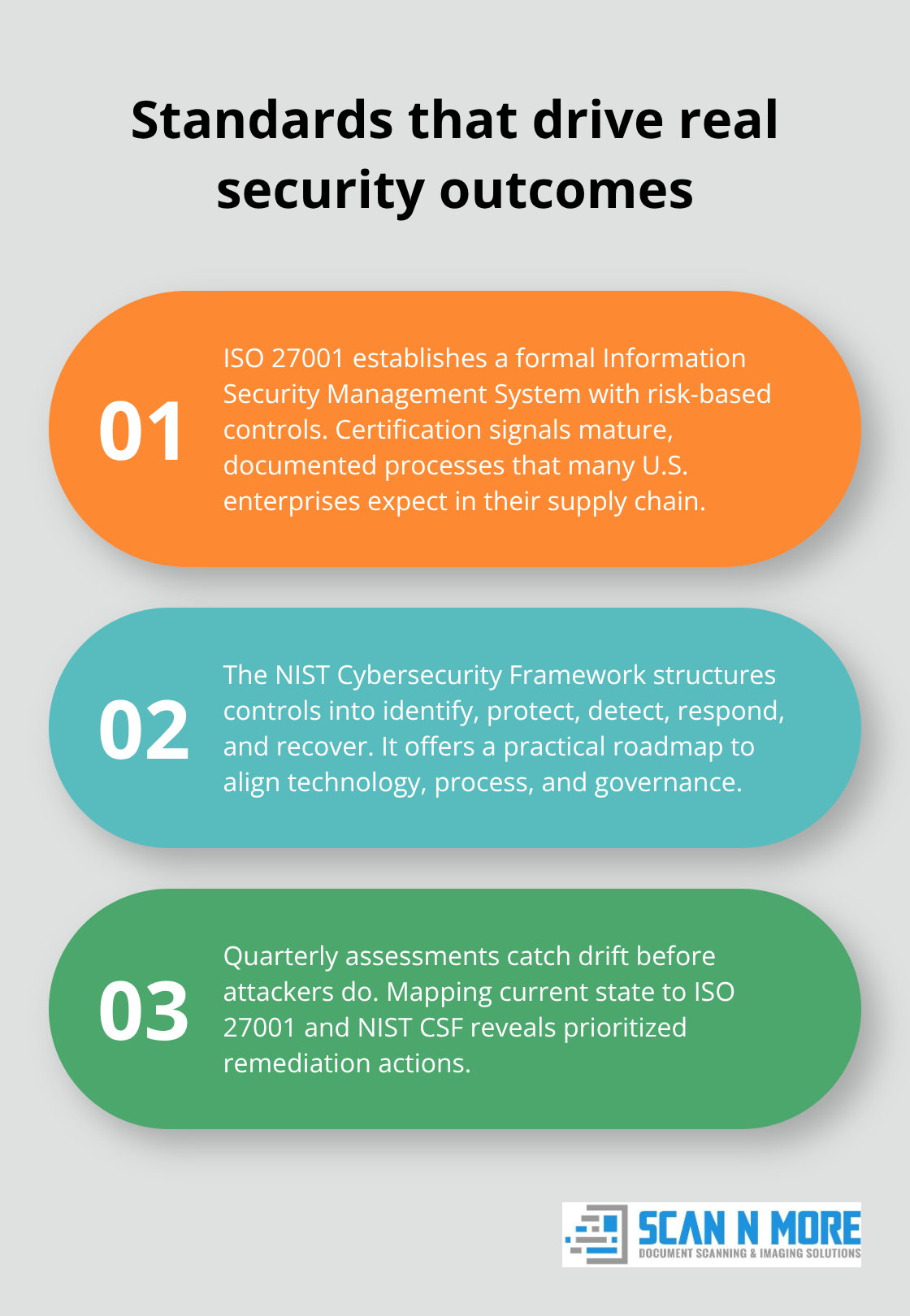
Industry standards like ISO 27001 provide a structured framework for information security management, and certification demonstrates that your organization has implemented documented security processes. Many enterprise clients now require ISO 27001 certification before signing contracts, making it a competitive advantage rather than optional overhead. The National Institute of Standards and Technology Cybersecurity Framework offers another practical approach, organizing security controls into five functions: identify, protect, detect, respond, and recover. Organizations should assess their current state against these frameworks quarterly, identifying gaps before attackers find them.
Technology Solutions for Encryption and Key Management
Technology selection determines whether your encryption strategy actually protects data or becomes security theater. Hardware security modules provide dedicated devices for storing encryption keys, isolating them from systems that could be compromised. Solutions like Thales Luna and YubiKey offer hardware-based key management that prevents keys from ever existing in software or memory. Database-level encryption through solutions like Oracle Transparent Data Encryption or SQL Server Transparent Data Encryption encrypts data at the column or table level while maintaining application functionality. Continuous monitoring tools such as Splunk or Datadog track access patterns to encrypted data, alerting when unusual access occurs.
Monitoring and Audit Processes
Security audits must move beyond annual penetration testing and become ongoing processes. Quarterly vulnerability scans using tools like Nessus or Qualys identify configuration drifts where encryption settings get accidentally downgraded or access controls weaken over time. Organizations should implement continuous monitoring that alerts security teams immediately when encryption is disabled, when TLS versions downgrade, or when access patterns deviate from normal baselines. Real-time alerting prevents breaches from sitting undetected for months. This speed difference determines whether your team contains an incident or watches it spread across your entire network.
Secure Document Management and Data Destruction
Organizations handling sensitive documents benefit from secure document management platforms that combine encryption with audit trails (these systems log every access attempt, modification, and deletion). When you decommission storage devices, professional destruction services eliminate another vector by preventing data recovery through advanced techniques. This comprehensive approach addresses both active data protection and the end-of-life phase of sensitive information.
Final Thoughts
Data protection strategies require commitment across your entire organization, not just isolated security teams. The distinction between protecting data in transit and data at rest forms the foundation of any serious security program. Organizations that implement both encryption mechanisms simultaneously, enforce strict access controls, and monitor continuously reduce their breach risk dramatically compared to those treating these states as separate concerns.
Your data protection framework must evolve as threats change. Quarterly security audits using tools like Nessus or Qualys catch configuration drifts before attackers exploit them. Real-time monitoring through platforms like Splunk alerts your team immediately when encryption settings weaken or access patterns deviate from normal baselines. This speed determines whether incidents get contained or spread across your network.
Verify your infrastructure today through SSL tests on your domains and port scans of your systems. Disable any protocols below TLS 1.3 immediately, and implement AES-256 encryption for sensitive data at rest using dedicated key management systems that store encryption keys separately from encrypted data. Professional scanning and destruction services eliminate paper-based vulnerabilities while maintaining compliance, and Scan N More provides both on-site and off-site scanning for all document formats combined with secure destruction services that strengthen your overall data protection strategies.