
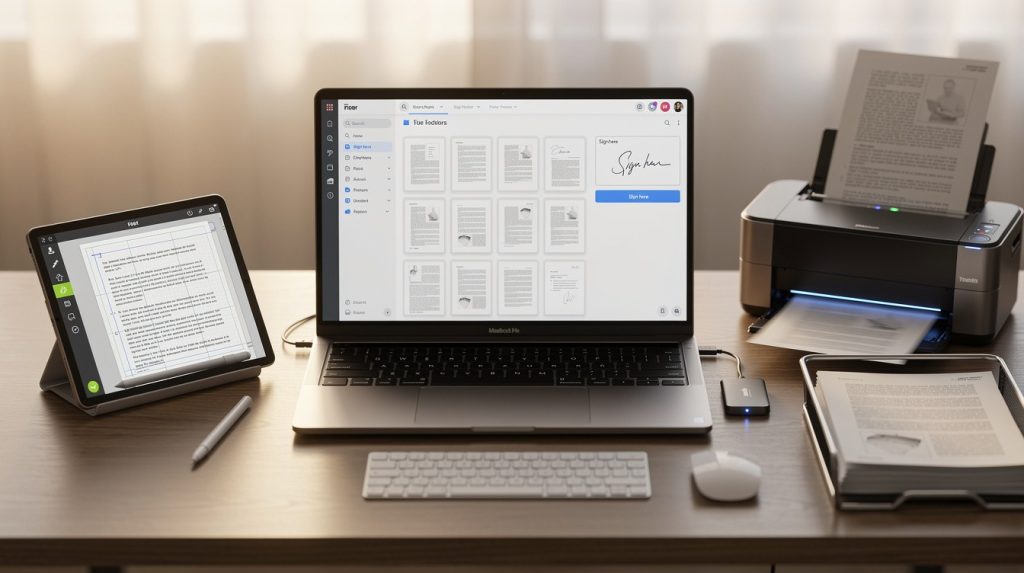
Paper still dominates most business operations, costing companies thousands in wasted time and hidden expenses. At Scan N More, we’ve seen firsthand how digital document solutions eliminate these inefficiencies and transform how teams work.
This guide shows you exactly how to modernize your paperwork, what to look for in a scanning partner, and why the shift pays off immediately.
Why Paper Still Costs You More Than You Think
Paper-based workflows drain resources in ways most businesses never fully calculate. Employees spend roughly 2 hours per day searching for documents according to Glean research, which adds up to approximately 25% of a standard 40-hour workweek hunting through filing cabinets and email chains instead of doing productive work. That’s not a minor inefficiency-it’s a structural problem built into how most companies still operate.
The Financial Drain of Outdated Systems
The financial damage extends beyond lost time. Digital document management reduces per-document costs by up to $6 when you factor in paper, ink, faxing, mailing, and printing equipment. For a mid-sized organization processing thousands of documents annually, that’s tens of thousands of dollars disappearing into a system designed for the 1980s. Compliance becomes another hidden drain. Paper documents create audit trails that are nearly impossible to verify, version control becomes a nightmare of conflicting copies, and regulatory requirements around data retention and access logs go largely unaddressed. When regulators like GDPR or CCPA come knocking, companies discover they cannot prove who accessed what information or when, turning a routine compliance check into a serious liability.
The Real Cost of Lost and Recreated Documents
Misfiled documents can cost an organization $125 per document, while losing a document can cost anywhere between $350 and $700. That means your team regularly duplicates work that already exists somewhere in a filing cabinet or buried in someone’s email inbox. Every recreated document represents wasted salary hours, increased error risk, and delayed decision-making. Security vulnerabilities compound the problem. Paper documents sitting in unlocked cabinets or being mailed between offices create exposure points that digital systems eliminate through encryption, access controls, and activity logging.
Fragmentation Creates Hidden Risks
The Archive Corporation research shows that 72% of companies still operate with a hybrid mix of paper and digital processes, creating data silos where critical information lives in multiple formats across multiple locations. This fragmentation makes it impossible to establish a single source of truth for any process. Additionally, 43% of employees would consider leaving their job if their company lacked an efficient way to access records, with that number jumping to 51% for workers aged 18–34.
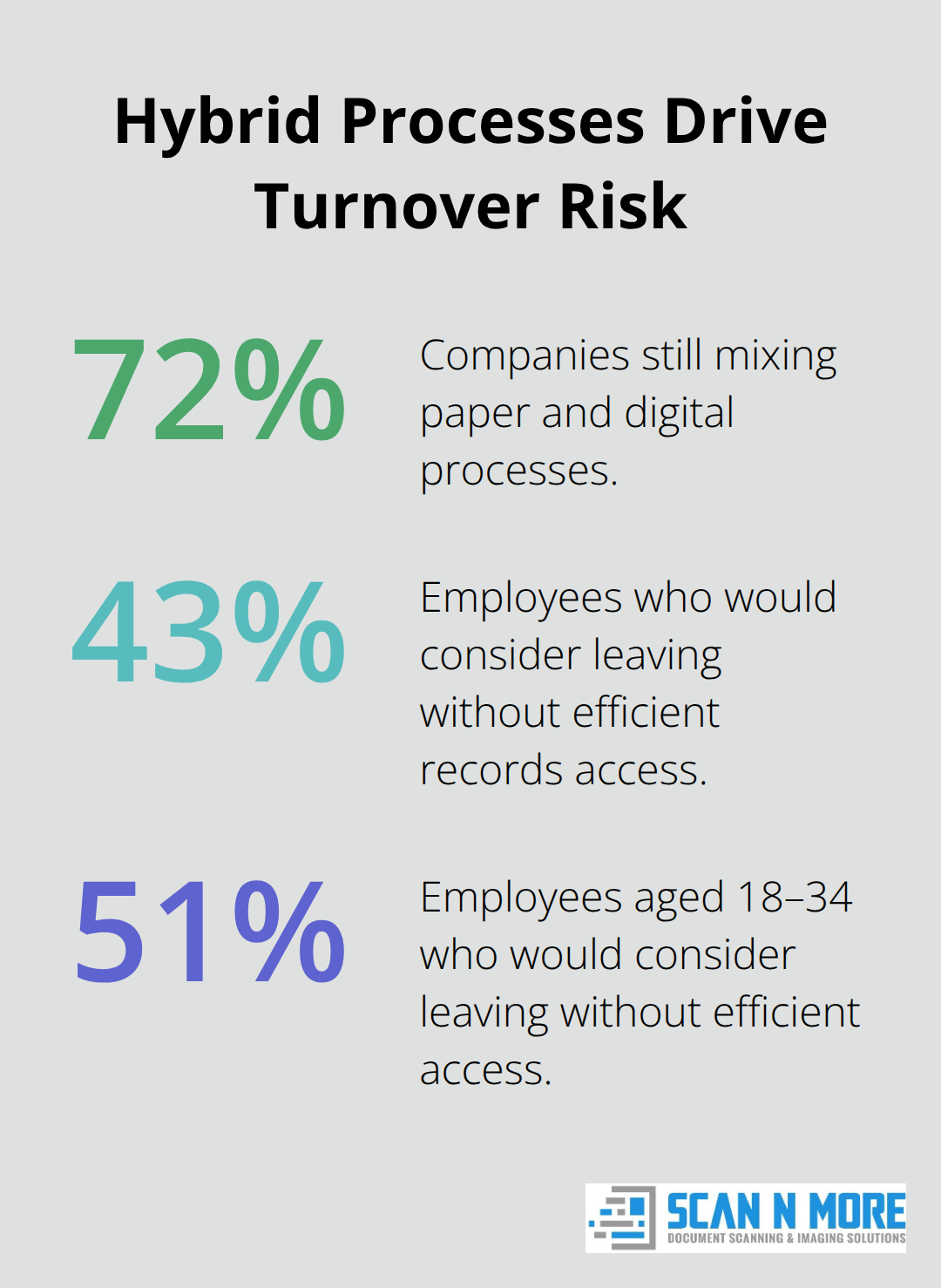
The cost of turnover far exceeds any investment in digitization. These operational breakdowns don’t just slow work down-they create the conditions where digital transformation becomes not optional but essential for competitive survival.
How Digital Document Solutions Deliver Real Results
Automated Workflows Eliminate Processing Bottlenecks
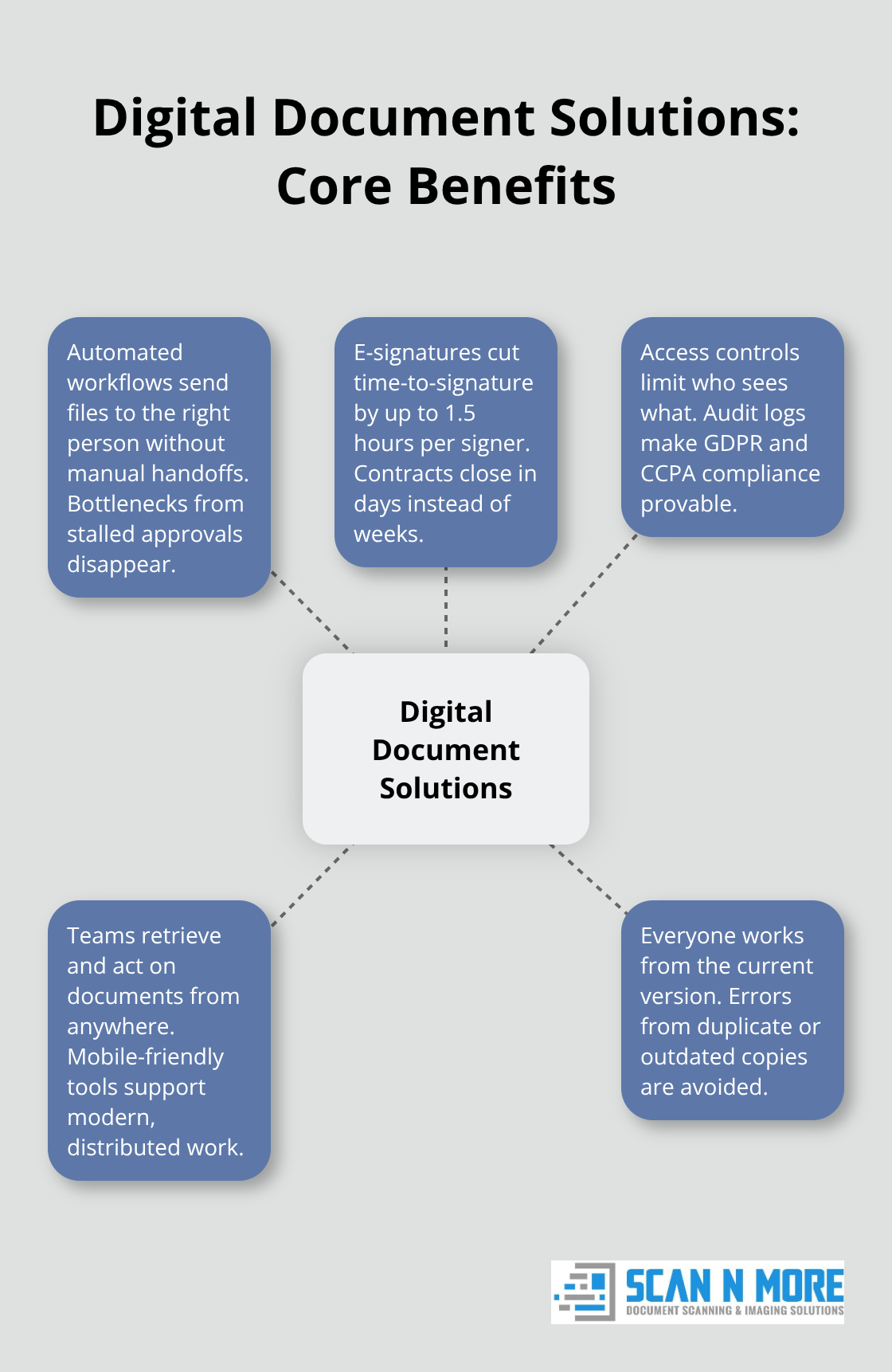
Digital systems restructure how work moves through an organization rather than simply replacing paper. Automated workflows route documents to the right person without manual intervention, eliminating the bottleneck where approvals sit in someone’s inbox waiting for action. Adobe Sign saves up to 1.5 hours per signature by enabling remote signing across devices, which means a contract that previously took three weeks to execute now closes in days. Processing time drops dramatically because documents no longer travel through physical mail or get lost between departments.
High-volume scanning with optical character recognition converts paper into searchable, editable text instantly, so employees find information in seconds instead of spending two hours daily hunting through filing systems.
Financial Impact Scales Across Operations
The financial gains appear within weeks of transition. Organizations processing thousands of documents annually save tens of thousands in direct costs from reduced printing, mailing, and storage expenses, plus massive productivity gains when staff focus on actual work instead of document logistics. Every hour employees reclaim from searching for files translates directly to revenue-generating activity or strategic work that moves the business forward. The per-document savings compound across high-volume operations, making the shift to digital a straightforward financial decision rather than a discretionary upgrade.
Security and Compliance Become Provable
Paper documents sitting in unlocked cabinets create exposure that no security protocol can fix, but digital systems enforce access controls automatically. Only authorized people see specific files, and every access gets logged for audit purposes. GDPR and CCPA compliance becomes provable rather than assumed-organizations demonstrate exactly who accessed what information and when, eliminating the regulatory nightmare that haunts paper-based operations. This audit trail protection transforms compliance from a guessing game into a documented, verifiable process.
Remote Access Enables Modern Workforce Flexibility
Remote access capabilities mean field teams retrieve documents from job sites, and distributed workforces collaborate without waiting for physical copies to arrive. Eighty percent of employees now access documents from mobile devices according to Archive Corporation research, making cloud-based digital solutions non-negotiable for hiring and retaining talent. Teams work from anywhere without sacrificing security or access to current information.
Unified Systems Replace Fragmented Chaos
The shift from hybrid paper-digital chaos to unified digital workflows creates a single source of truth across the entire organization, which accelerates decision-making and prevents the costly errors that plague fragmented systems. When every team member accesses the same current version of every document, confusion disappears and collaboration becomes seamless. This foundation of unified information prepares organizations to implement the advanced automation and intelligence features that separate industry leaders from laggards.
Selecting a Partner Who Handles Security and Speed Right
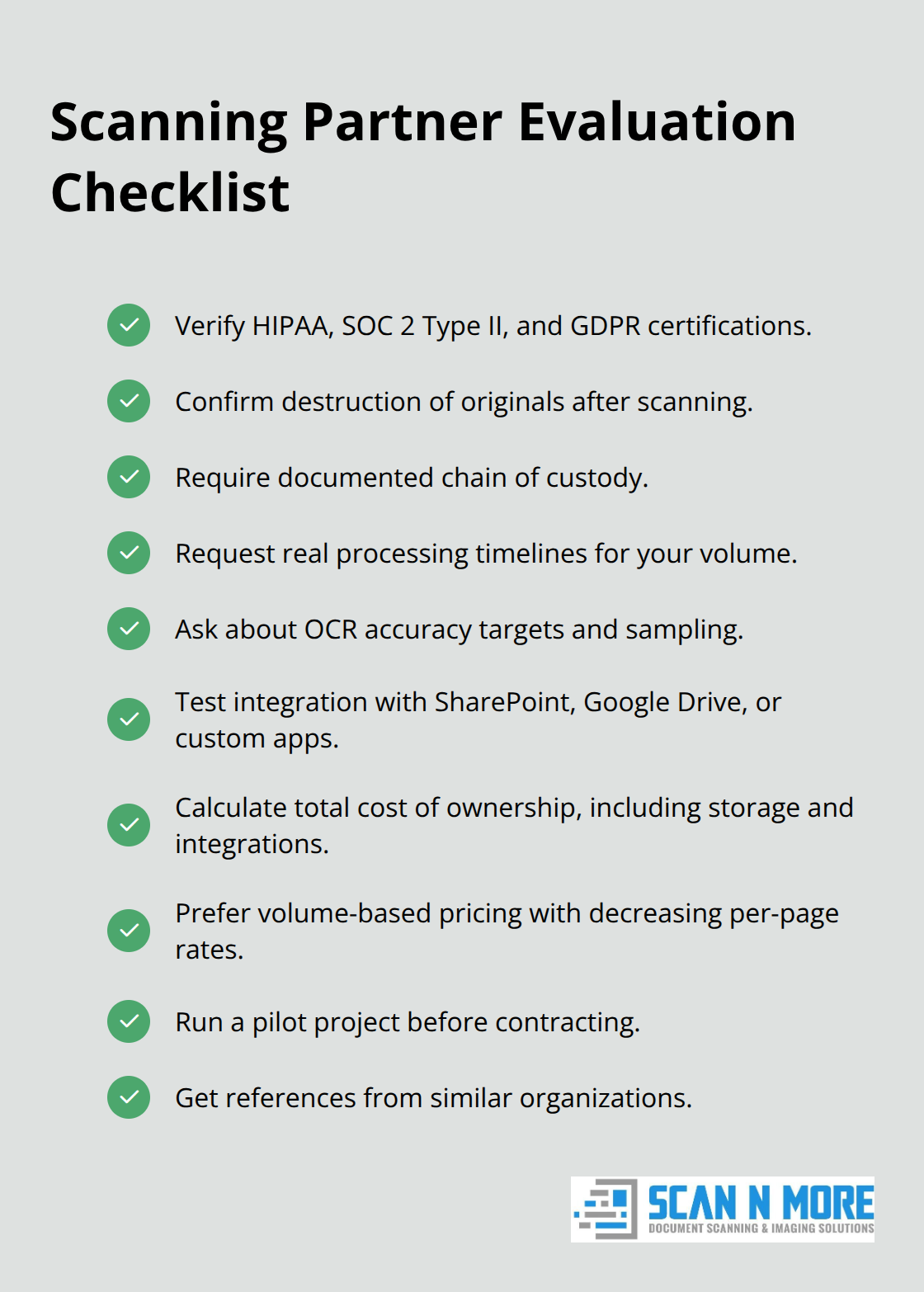
The difference between a mediocre scanning partner and an excellent one appears within the first month of operations. Security matters because once your documents leave your office, they exist in someone else’s infrastructure, and a breach exposes everything your organization tried to protect. When evaluating any partner, verify their certifications against your industry requirements-HIPAA compliance for healthcare organizations, SOC 2 Type II certification for financial services, and GDPR alignment for international operations. Ask directly whether they destroy original documents after scanning and whether they maintain chain-of-custody documentation that auditors can review.
Speed Determines Whether Digitization Pays Off
Speed matters equally because slow turnaround times defeat the purpose of digitization. If a partner takes six weeks to scan your documents, you’ve lost the productivity gains that make digital transformation worthwhile. Request their actual processing timelines for your document volume, not generic estimates.
High-volume scanning operations with optical character recognition can process up to 8000 pages per day, converting paper into searchable, editable files without delays that push your go-live date back months.
Pricing Structures Hide Real Costs
Pricing structures vary dramatically across vendors, and the cheapest option rarely delivers value. Some partners charge per-page rates that balloon with volume, others bundle scanning with storage and retrieval services, and others require minimum contract commitments that lock you in regardless of actual usage. Calculate your total cost of ownership by adding scanning fees, monthly storage costs, and any integration charges, then compare that against the internal costs you currently spend on filing cabinets, staff time searching for documents, and compliance risks. A partner offering volume-based pricing where the per-page rate decreases as the total number of pages increases eliminates surprise costs that inflate your budget mid-project.
Partnership Structure Determines Long-Term Success
The partnership structure matters as much as the pricing. Some scanning companies operate as pure service providers who hand off completed files and disappear, while others integrate with your workflow and provide ongoing support for retrieval, workflow automation, and compliance reporting. Scan N More focuses on smooth transitions to digital environments with customer satisfaction as a core commitment, meaning your success becomes our responsibility rather than a one-time transaction.
Pilot Projects Reveal Real-World Performance
Before signing any contract, request a pilot project with a subset of your documents to verify their quality standards in practice. Examine the OCR accuracy by searching for specific terms in their sample output and checking whether the results match your expectations. Test their integration with your existing systems (whether that’s SharePoint, Google Drive, or custom applications) to confirm they can deliver files in formats your team actually uses. Ask for references from organizations similar to your size and industry, then contact those references directly to learn about real-world performance, not marketing claims. The scanning partner you choose becomes part of your digital transformation success, so select based on proven capability, transparent pricing, documented security practices, and genuine commitment to your project outcomes rather than lowest cost or flashiest marketing.
Final Thoughts
The shift from paper to digital document solutions isn’t a technology upgrade-it’s a business necessity that pays for itself within weeks. Organizations that move forward eliminate the 2 hours per day employees waste searching for files, recover tens of thousands in annual costs buried in printing and storage, and establish audit trails that satisfy regulators without constant scrambling. The competitive advantage belongs to companies that act now, not those waiting for perfect conditions.
We at Scan N More handle professional document scanning for all formats, including legal and medical documents, with on-site and off-site options that fit your workflow. Our approach prioritizes data security and compliance from day one, meaning your documents transition to a digital environment without exposure or delays. We guarantee fast, cost-effective digitization with the quality standards that make your files immediately searchable and usable across your organization.
Digital systems create the foundation for automation, advanced analytics, and intelligent workflows that separate industry leaders from competitors still managing paper. Your team gains time to focus on strategic work instead of logistics, your compliance becomes provable rather than assumed, and your organization attracts talent that demands modern tools and remote flexibility. Transform your paper-based processes into digital solutions that position your business for growth, not just efficiency.