

Remote document scanning has become essential for businesses that operate across multiple locations or rely on distributed teams. At Scan N More, we’ve seen firsthand how organizations struggle when documents remain trapped in physical offices.
The ability to access files from anywhere transforms how companies operate, cutting costs while boosting productivity. This blog post explores why remote scanning matters and how to implement it effectively.
Why Remote Document Scanning Matters Today
The shift to remote work has accelerated dramatically. According to the U.S. Census Bureau, 16% of the workforce operates fully remote, while 28% work hybrid schedules. This distributed model creates an immediate problem: documents sitting in filing cabinets become bottlenecks. Employees lose productivity waiting for colleagues to retrieve physical files from office locations.

Remote scanning eliminates this friction entirely. Staff access documents within seconds from anywhere-whether working from home, client sites, or traveling. This capability directly impacts your bottom line. Organizations with strong remote document access benefit from McKinsey research on AI-driven productivity growth potential.
Financial Pressure Demands Action
The financial case for remote scanning is undeniable. Maintaining physical office space costs between $5,000 and $15,000 per employee annually when you factor in real estate, utilities, and storage infrastructure. Companies reducing their office footprint through digitization reallocate those funds to growth initiatives or employee benefits.
Paper documents create hidden expenses that compound quickly. Storing physical files requires dedicated space, climate control, and retrieval staff. A single filing cabinet occupies roughly 10 square feet and costs approximately $1,200 annually to maintain. When you multiply this across dozens or hundreds of cabinets, the expense becomes staggering.
The Hidden Cost of Manual Retrieval
Document retrieval consumes far more time than most organizations realize. According to McKinsey research, employees spend an average of 1.8 hours each day searching for information. Remote scanning eliminates this waste. Digitized documents become searchable in seconds through optical character recognition technology, meaning staff find what they need instantly rather than hunting through cabinets.
Compliance requirements add another layer of complexity. Healthcare providers, law firms, and financial institutions must maintain document access while meeting regulatory standards. Physical documents create security risks and audit headaches. Digital systems with encryption and access controls satisfy compliance requirements far more effectively than locked filing rooms.
Speed Transforms How Teams Collaborate
When documents live in the cloud, your team works faster. Law firms managing client matters across multiple offices share case files instantly with all relevant attorneys. Healthcare providers access patient records during consultations without delays. Financial services teams compile audit documentation in hours rather than days.
This speed advantage compounds over time. A legal team handling 50 cases monthly saves roughly 20-30 hours per month when they eliminate document retrieval delays. That’s equivalent to an additional full-time employee focused purely on productive work. Many organizations grant clients or partners secure access to their own documents through digital platforms, improving service delivery and client satisfaction. Remote scanning supports this modern business model where transparency and instant access become competitive advantages.
Understanding how remote scanning actually works reveals why these benefits materialize so consistently across industries.
How Remote Document Scanning Actually Works
From Paper to Digital Files
When you scan a document through a professional scanning service, the physical page transforms into a digital file through optical character recognition technology. That file uploads automatically to cloud storage, where it becomes searchable and retrievable from any device with internet access. Unlike email attachments or USB drives that create version control nightmares, cloud-based systems maintain a single source of truth. Your team accesses the current version every time, eliminating confusion about which document iteration is correct.
Instant Integration Into Your Workflow
This matters tremendously in regulated industries. A healthcare provider scanning patient intake forms sees those records populate their practice management system instantly, available during patient consultations without manual data entry. Financial services firms uploading tax documents find them automatically indexed by client name, date, and document type, cutting audit preparation time from weeks to days. Integration with existing software eliminates workflow friction. When your accounting system connects to cloud storage, invoices scan directly into accounts payable without manual filing. Your customer relationship management platform pulls contracts automatically, keeping client records current without duplicate data entry.

Security Built Into Every Layer
Security isn’t an afterthought in remote scanning systems-it’s foundational. Modern cloud platforms encrypt files both in transit and at rest, meaning data traveling from your office to storage servers and sitting in the cloud remains unreadable to unauthorized parties. Access controls let you restrict who views sensitive documents. A law firm can grant attorneys access to specific client matters while blocking paralegals from confidential settlement negotiations.
Meeting Compliance Requirements
Compliance requirements like HIPAA for healthcare or FINRA for financial services aren’t obstacles with proper digital systems; they’re advantages. Audit trails automatically log document access and when, providing the documentation regulators demand. This connectivity transforms remote scanning from a storage solution into an operational engine that accelerates business processes across departments, setting the stage for understanding how different industries apply these capabilities to solve real problems.
Where Remote Scanning Delivers Real Business Results
Law Firms Accelerate Case Management
Law firms handle thousands of client documents across multiple matters simultaneously, and physical files create operational gridlock. When a trial requires pulling documents from three different office locations, attorneys waste hours coordinating retrieval instead of preparing cases. Remote scanning eliminates this entirely. Digitally scanned files eliminate manual searching. Partners approve motions faster, associates reference precedents instantly, and clients receive deliverables ahead of schedule.
The financial impact compounds quickly. If each attorney recovers just 5 billable hours monthly through faster document access, a 50-person firm generates an additional $1.5 million in annual revenue at standard billing rates. Security matters equally in legal work. Remote scanning systems with role-based access prevent paralegals from viewing attorney-client privileged communications, while partners access all materials instantly. Audit trails document exactly who accessed which files and when, creating the documentation legal teams need during ethics reviews or malpractice audits.
Healthcare Providers Connect Patient Records Instantly
Patient records scattered across multiple clinics create safety risks and compliance violations. A radiology clinic with 15 locations struggles when specialists need patient history from another facility during consultations. Remote scanning connects all records instantly, meaning a cardiologist reviewing a patient’s previous imaging at another clinic accesses those files within seconds rather than requesting records through mail or fax.
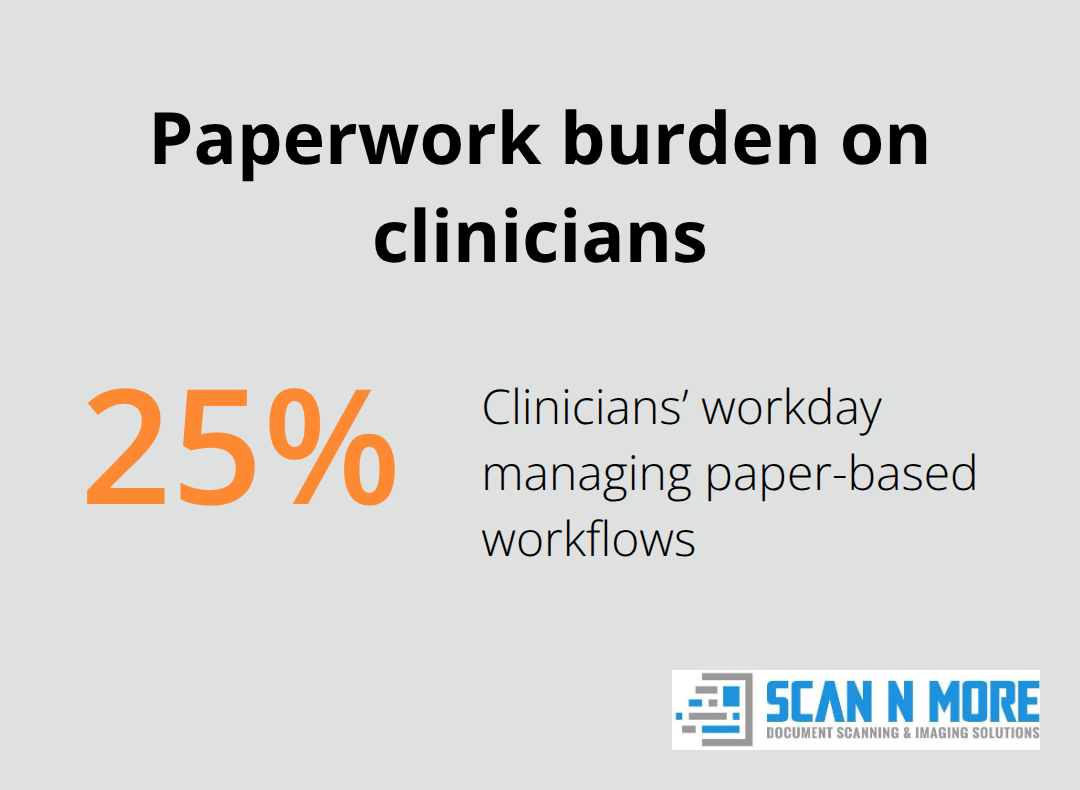
Clinicians spend approximately 25% of their workday managing paper-based workflows. Digitization cuts this dramatically. Emergency departments particularly benefit from instant record access; trauma surgeons need complete patient histories immediately, and remote scanning delivers this.
Compliance with HIPAA requirements becomes simpler with digital systems since encryption and access controls exceed what physical file rooms can provide.
Financial Services Firms Compress Audit Cycles
Tax preparation firms processing hundreds of client returns annually face enormous document volume during March and April. Instead of shipping boxes of receipts and statements between locations, remote scanning lets firms digitize documents as clients submit them, making records instantly available to tax preparers nationwide. This parallel processing capability compresses what traditionally took 8-10 weeks into 4-5 weeks, allowing firms to serve more clients annually.
Compliance documentation for FINRA audits or SEC reviews becomes retrievable in hours rather than days when files are searchable and indexed digitally. Financial services teams compile audit documentation faster, reducing the administrative burden that traditionally consumed weeks of staff time. Remote access means compliance officers at headquarters review documents submitted from branch offices without travel or shipping delays.
Final Thoughts
Remote document scanning transforms how organizations operate, and the evidence spans every industry we’ve discussed. Law firms recover billable hours, healthcare providers improve patient safety, and financial services firms compress audit cycles from weeks to days. These outcomes directly impact revenue and operational efficiency rather than remaining theoretical benefits.
The trajectory of digital document management points toward even greater integration as artificial intelligence categorizes documents automatically and workflow automation connects scanning directly to business processes. Organizations that adopt remote document scanning now position themselves ahead of competitors still managing paper-based workflows. We at Scan N More handle the complexity of transforming paper into searchable digital files while maintaining the security standards your business demands, working with your existing systems to eliminate the friction that slows your team down.