
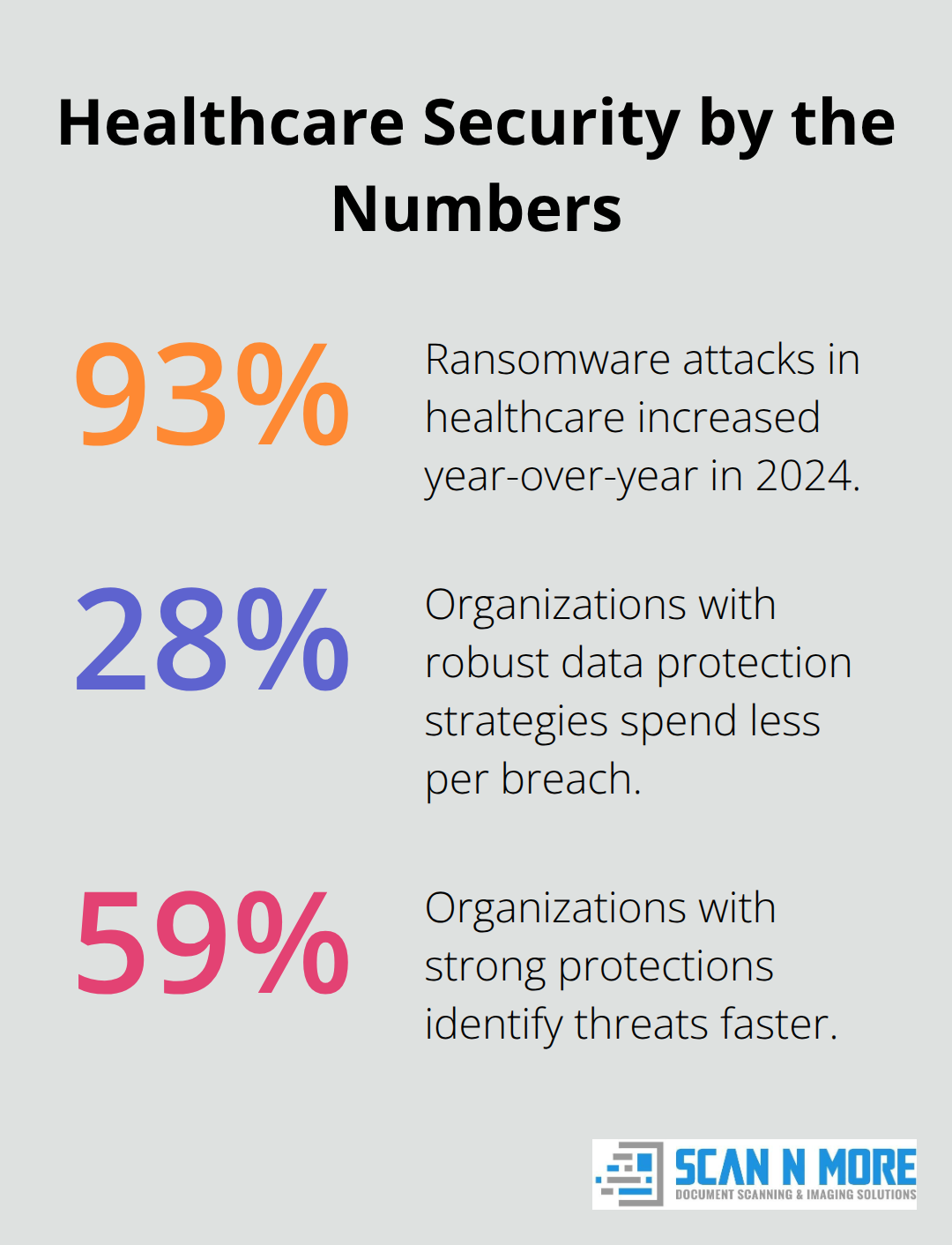
Healthcare organizations lose millions annually to data breaches. In 2024 alone, the healthcare sector experienced a 93% increase in ransomware attacks compared to the previous year, with the average breach costing $10.93 million.
At Scan N More, we understand that the importance of data security in healthcare extends far beyond compliance. Patient records contain sensitive information that criminals actively target, and a single breach can destroy trust, trigger lawsuits, and cripple operations.
This guide covers the real threats your organization faces and the practical steps to defend against them.
Why Data Security Matters in Healthcare
Legal Obligations and Regulatory Requirements
Compliance with HIPAA in the United States, GDPR in Europe, and POPIA in South Africa isn’t optional-it’s the foundation of your legal obligation to protect patient information. The HIPAA Security Rule requires you to safeguard electronic PHI at rest, in transit, and in use, while GDPR imposes fines up to 4% of annual global turnover for violations, according to the UK Information Commissioner’s Office. These aren’t theoretical penalties. The financial stakes are real and immediate.
The True Cost of Breaches
When a breach occurs, your organization faces notification costs, forensic investigations, legal fees, and potential settlements. The average healthcare data breach costs $10.93 million, according to IBM Security’s 2023 Cost of a Data Breach Report. Between 2013 and 2023, US healthcare data breaches climbed from 277 incidents to 725 annually, showing the problem accelerates rather than slows. Ransomware alone disrupts patient treatment in over 50% of healthcare breach cases, meaning your security failures directly harm the people you serve.
Patient data is inherently complex-it spans electronic health records, diagnostics, billing information, and inter-system data flows-making it a high-value target for criminals who sell stolen health information on the dark web for far more than credit card data.
Reputation and Patient Trust
Breaches destroy patient trust and your reputation permanently. The Anthem breach exposed 79 million health records, and the organization faced lawsuits for years afterward. The WannaCry ransomware attack on the UK’s NHS forced hospitals to turn away patients and cancel surgeries, demonstrating how poor security practices directly compromise patient care and organizational credibility. When patients lose confidence in your ability to protect their information, they switch providers, staff morale drops, and your competitive position weakens.
Security as a Cost-Reduction Strategy
Healthcare organizations that implement robust data protection strategies actually spend 28% less per breach and identify threats 59% faster than those with weaker protections, according to the Ponemon Institute in 2024. This means investing in security isn’t an expense-it’s a cost-reduction strategy. Strong encryption, access controls, and continuous monitoring protect your patients, satisfy regulators, and preserve the trust that keeps your organization functioning.
Understanding these risks sets the stage for identifying the specific threats that target healthcare systems today.
The Three Threats Destroying Healthcare Security Right Now
Ransomware Attacks Target High-Value Patient Data
Ransomware has become the dominant attack vector in healthcare. In 2024, the sector experienced a 93% increase in ransomware attacks compared to the previous year, and these attacks are not random. Attackers specifically target medical records because patient data sells for 10 times more on dark web markets than stolen credit card information. When ransomware hits a hospital, it stops surgeries, delays critical treatments, and forces administrators to choose between patient safety and paying criminals. The statistics show ransomware disrupts patient treatment in over 50% of healthcare breach cases.
But hospitals often miss the real entry point. Ransomware doesn’t arrive through sophisticated zero-day exploits. It arrives through phishing emails sent to exhausted staff, through unpatched servers running software from 2015, and through contractors who access systems with default passwords nobody bothered to change. Your biggest vulnerability isn’t technology-it’s the gap between knowing what should be protected and actually protecting it.
Insider Threats Exploit Human Vulnerability
Insider threats and outdated infrastructure create the conditions where breaches become inevitable. Organizations with robust data protection identify threats 59% faster than those with weaker protections, according to the Ponemon Institute. This speed difference means catching an insider accessing records they shouldn’t see versus discovering the breach months later.
Healthcare staff experience burnout at unprecedented levels, and burnt-out employees make mistakes. They share passwords, leave systems unlocked, and sometimes deliberately steal data for financial gain. The human element compounds the technical problems that plague healthcare security.
Legacy Systems Create Unmanageable Risk
Hospitals run medical devices and legacy systems that vendors stopped supporting years ago, making patching impossible. Patch management in healthcare presents genuine difficulty: hospitals operate an estimated 10 to 15 connected devices per bed, many running outdated software that cannot tolerate downtime. Wireless networks transmit unencrypted PHI across departments. Weak network segmentation means an attacker who compromises one system moves laterally through your entire infrastructure.
The combination of human factors, technical debt, and complexity creates environments where security fails not because organizations don’t care, but because they’re trying to defend systems that were never designed for modern threats. This reality shapes what effective defense actually looks like-and it requires moving beyond standard security checklists to address the specific vulnerabilities that plague healthcare operations today.
How to Stop Breaches Before They Start
Access Controls That Match Your Actual Risk
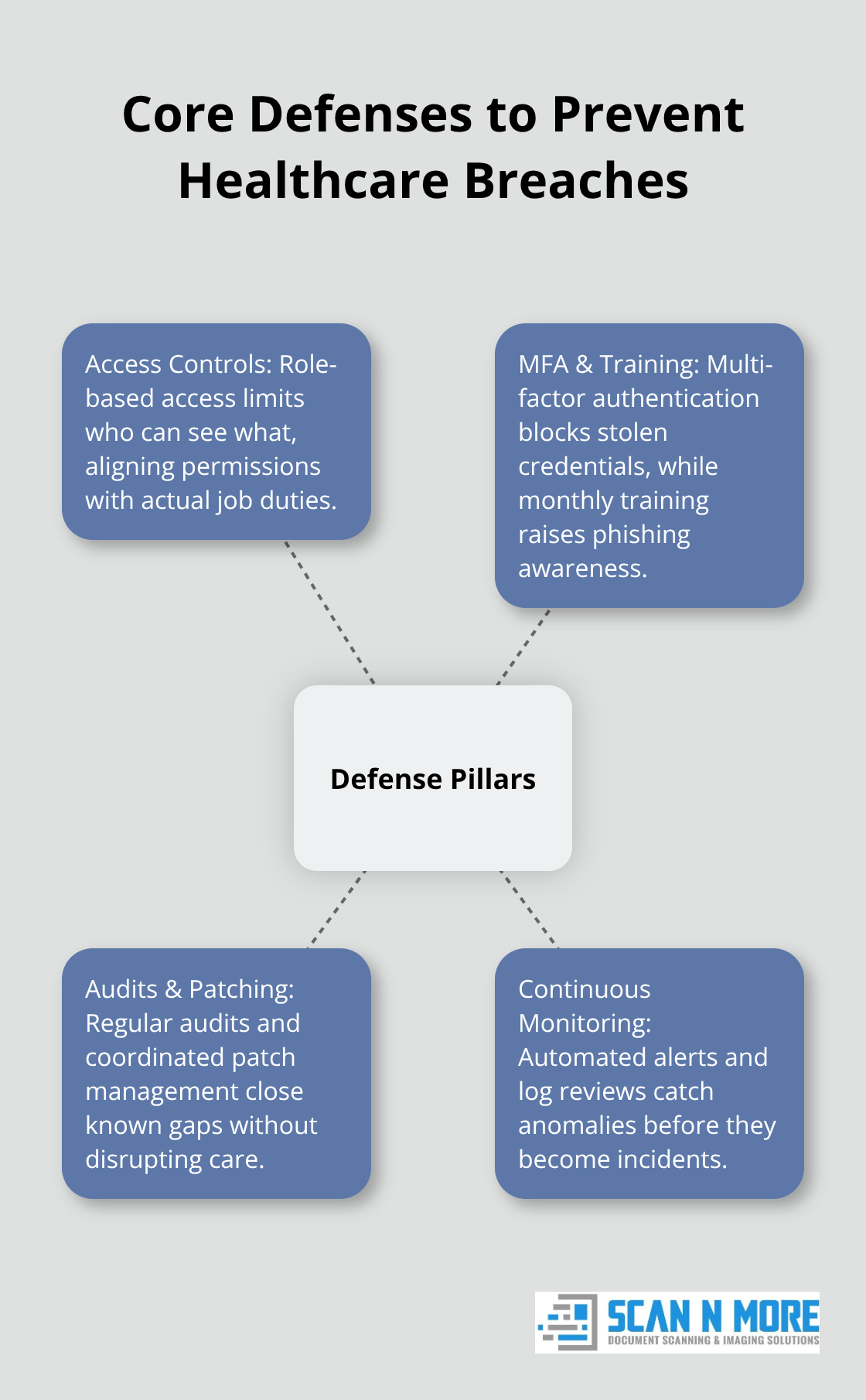
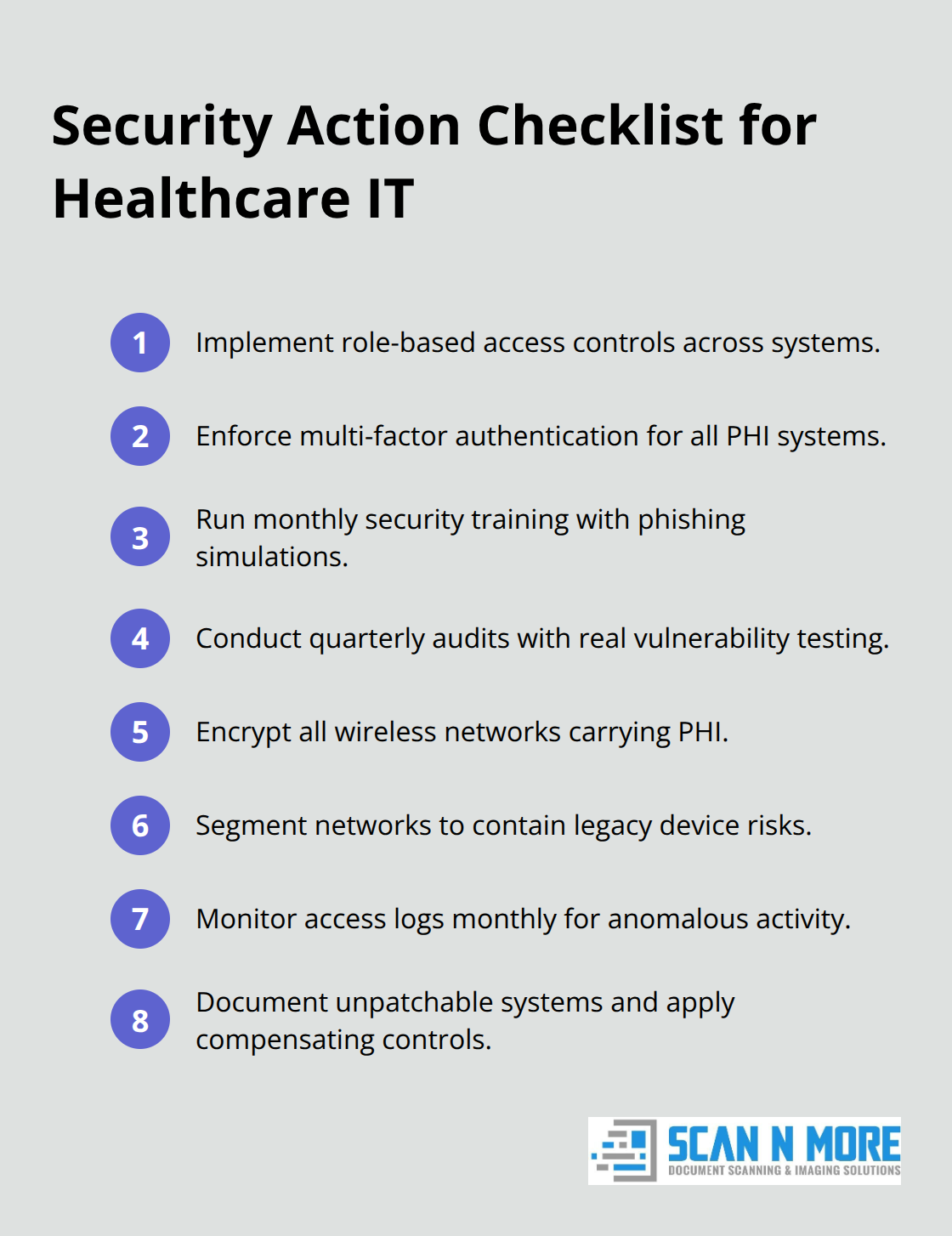
The gap between knowing what should be protected and actually protecting it is where healthcare organizations fail. Role-based access control means a billing clerk cannot view surgical records, a pharmacy technician cannot access psychiatric notes, and contractors cannot access systems beyond their contracted scope. Organizations with robust access controls identify threats faster than those with weaker protections. The speed matters because catching an insider accessing records they shouldn’t see in real time prevents the breach entirely, while discovering it three months later means thousands of patients already had their data stolen.
Start with access controls that reflect actual risk, not theoretical best practices. Your organization operates 10 to 15 connected devices per bed on average, many running outdated software that vendors stopped supporting years ago. This reality demands that you implement compensating controls like network segmentation or enhanced monitoring to reduce risk where patching is impossible.
Multi-Factor Authentication and Staff Training
Implement multi-factor authentication immediately on all systems handling PHI, not just administrative accounts. Attackers compromise staff credentials constantly through phishing and credential reuse, but MFA stops them cold even when passwords are stolen. Monthly security training increases awareness through frequent simulated phishing tests as part of security awareness programs to get the best impact.
The training must be specific to your environment though-generic HIPAA modules accomplish nothing. Healthcare staff need to understand why they cannot photograph patient monitors, why they cannot email PHI to personal accounts, and why they cannot leave unlocked computers unattended. Make the consequences tangible rather than abstract.
Security Audits and Vulnerability Testing
Conduct security audits at least annually, but quarterly audits reveal problems that annual reviews miss entirely. These audits must test actual systems, not just review policies. Vulnerability scanning identifies unpatched software automatically, but you need human review to determine which patches can be applied without disrupting patient care and which require scheduled downtime.
Patch management becomes a coordination problem across departments, not a technical one. Document which systems cannot be patched and why, then implement compensating controls to reduce risk where patching is impossible. Wireless networks must be encrypted-unencrypted PHI transmission across hospital departments remains a widespread vulnerability that costs nothing to fix.
Continuous Monitoring and Threat Detection
Test access logs monthly to catch unusual patterns before they become data security threats. If a staff member accesses 10,000 records in an hour when their normal pattern is 50 records per shift, that anomaly should trigger immediate investigation. Automated monitoring catches these patterns faster than manual review, but someone must investigate when alerts fire.
Healthcare organizations that implement robust data protection strategies reduce both the frequency and severity of incidents that occur. This cost reduction reflects the reality that strong security protects you even when prevention fails.
Final Thoughts
Healthcare organizations face a straightforward choice: invest in security now or pay millions when breaches occur. The importance of data security in healthcare isn’t debatable anymore-ransomware attacks increased 93% year-over-year, insider threats exploit burnt-out staff, and legacy systems resist patching. Your organization operates in an environment where breaches become inevitable outcomes without proper defenses. Organizations with robust data protection strategies spend 28% less per breach and identify threats 59% faster than those with weaker protections, according to Ponemon Institute data.
Your path forward requires three concrete actions. Implement role-based access controls immediately so staff access only the information their role requires, deploy multi-factor authentication across all systems handling patient data, and conduct monthly security training that addresses your specific environment rather than generic compliance modules. Establish quarterly security audits with actual vulnerability testing, not just policy reviews, and create a patch management process that coordinates across departments to address the 10 to 15 connected devices per hospital bed. These steps transform security from a compliance burden into a cost-reduction strategy that protects patients and preserves organizational trust.
For organizations managing paper-based records alongside digital systems, professional document scanning services eliminate the security risks associated with physical documents while maintaining compliance with HIPAA and GDPR requirements. Start with a risk assessment to identify your specific vulnerabilities, then build defenses that match your actual environment rather than theoretical best practices.