
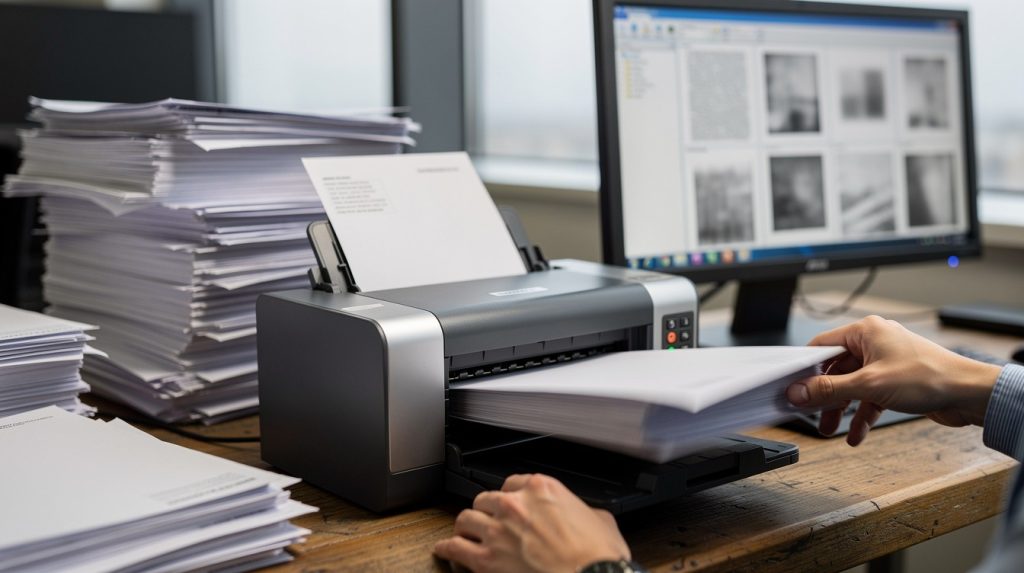
Most businesses are drowning in paper mail. Thousands of pieces arrive monthly, and manual sorting eats up hours that employees could spend on higher-value work.
At Scan N More, we’ve seen firsthand how incoming mail digitization transforms this chaos into organized, accessible digital files. The shift from paper to digital isn’t just about convenience-it’s about reclaiming time, reducing risk, and scaling operations without the overhead.
Why Your Team Wastes Hours on Mail That Doesn’t Matter
Paper mail creates a bottleneck that most businesses underestimate. Employees spend 1.8 hours every day searching and gathering information, according to industry data on workplace productivity. When mail arrives in high volumes, that percentage skyrockets. A mid-sized company receives 5,000 pieces of mail monthly and faces a real problem: sorting, logging, and filing each piece manually consumes 20 to 40 hours per week across staff. That’s time your team cannot spend on client work, strategic projects, or revenue-generating activities. The cost compounds quickly. If an employee earning $50,000 annually spends just five hours weekly on mail handling, that’s roughly $12,000 per year in lost productivity for a single person.
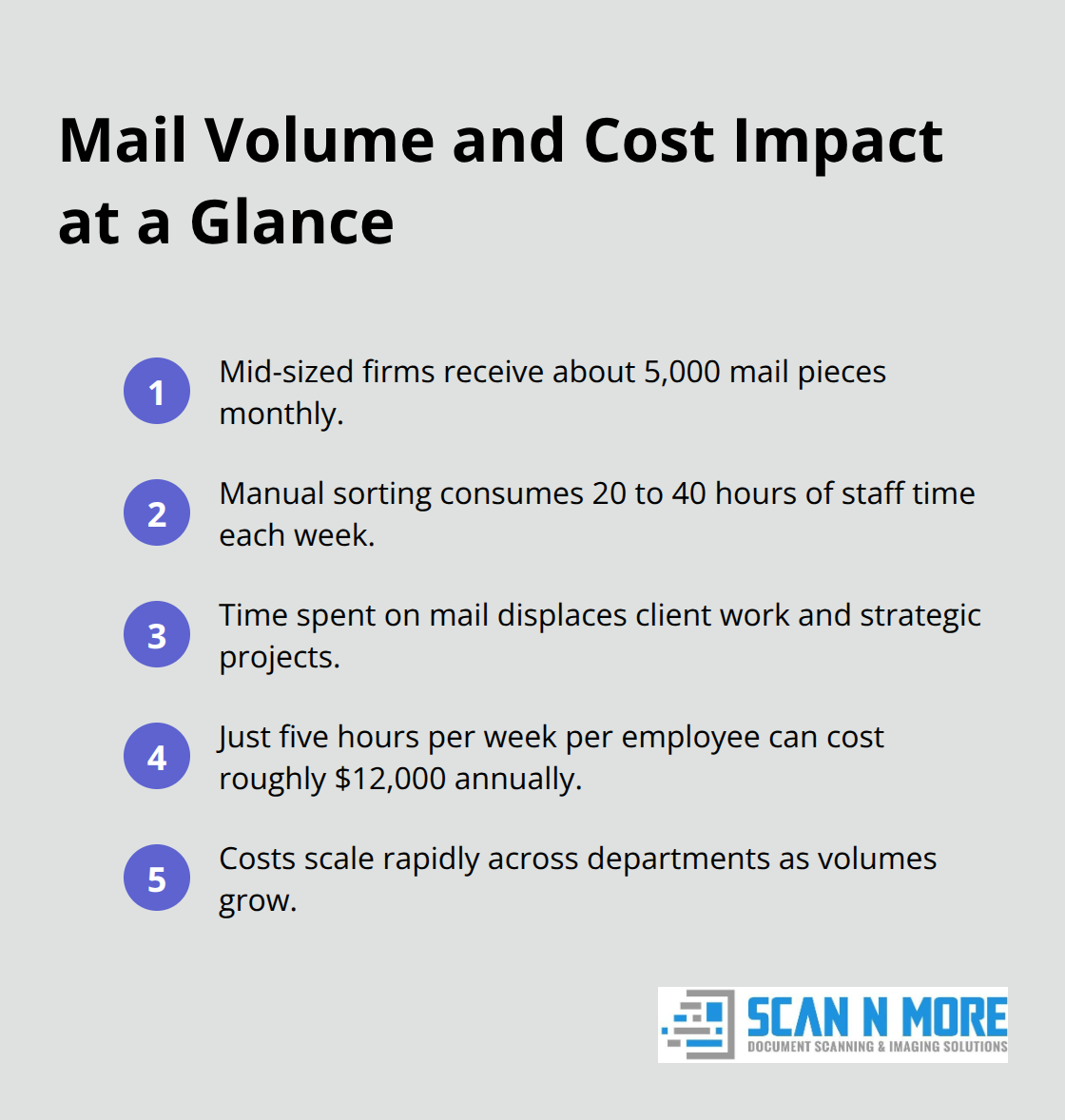
Scale that across a department, and the expense becomes impossible to ignore.
Misfiled Documents Expose Your Organization to Risk
Misfiled or lost documents create operational and legal exposure that extends far beyond inconvenience. In regulated industries like healthcare, finance, and law, document mishandling triggers compliance violations with serious consequences. A single misfiled patient record in a medical office can delay treatment and expose the organization to liability. Financial institutions face audit failures when critical correspondence goes missing. The IRS historically struggled with paper-based tax processing, experiencing months-long backlogs. While your organization may not operate at that scale, the principle remains the same: paper systems create friction, delays, and risk. Your compliance officer spends time investigating missing documents instead of strengthening controls. Your accounts payable team searches for invoices instead of processing payments. Your legal team cannot locate correspondence when disputes arise.
Manual Routing Fragments Your Data and Slows Decisions
Physical mail arrives in one location but needs to reach multiple departments, teams, and individuals. Without digitization, this routing happens manually. A piece of mail lands on someone’s desk, gets opened, gets read, and gets handed to another person, finally reaching its intended recipient days later. Each handoff introduces the possibility of loss or delay. Remote employees cannot access incoming mail at all, creating a fundamental disadvantage in hybrid work environments. Customers waiting for responses experience slower turnaround times because their documents sit in a physical queue. The data trapped in your paper mail never feeds into your systems automatically. Someone must manually enter invoice numbers, sender information, dates, and account details into your accounting software or CRM. This manual data entry introduces errors, duplicates, and inconsistencies that downstream systems cannot catch until problems escalate. These operational friction points explain why organizations turn to mail digitization-not as a luxury, but as a necessity to reclaim control over their incoming documents.
How Mail Digitization Transforms Paper Into Actionable Data
The digitization process starts the moment mail arrives at a scanning facility. Mail gets collected from your location and transported to a facility where it enters a controlled workflow designed to maximize accuracy and speed. Physical mail gets sorted by document type, sender, and destination department before scanning begins. This initial triage matters because it reduces errors downstream and ensures documents reach the right teams without confusion.
Professional Scanning Preserves Quality and Compliance
Professional scanning equipment captures each page at high resolution, preserving legibility and detail that matters for compliance, especially in healthcare and legal contexts where document quality directly impacts your ability to meet regulatory requirements. The scanning process handles all formats-letterhead, invoices, contracts, medical records, legal correspondence-without damaging originals. Once scanned, each document becomes a digital file that can be copied, shared, and accessed instantly across your organization.
This transformation unlocks immediate benefits. Your remote employees gain access to incoming mail without waiting for physical delivery. Your accounts payable team can view invoices within minutes instead of days. Your compliance team can search for specific documents in seconds rather than hours spent digging through filing cabinets.
Optical Character Recognition Extracts Hidden Data
The scanning step alone solves half the problem, but indexing solves the other half. After documents are converted to digital files, they need metadata that makes them findable.
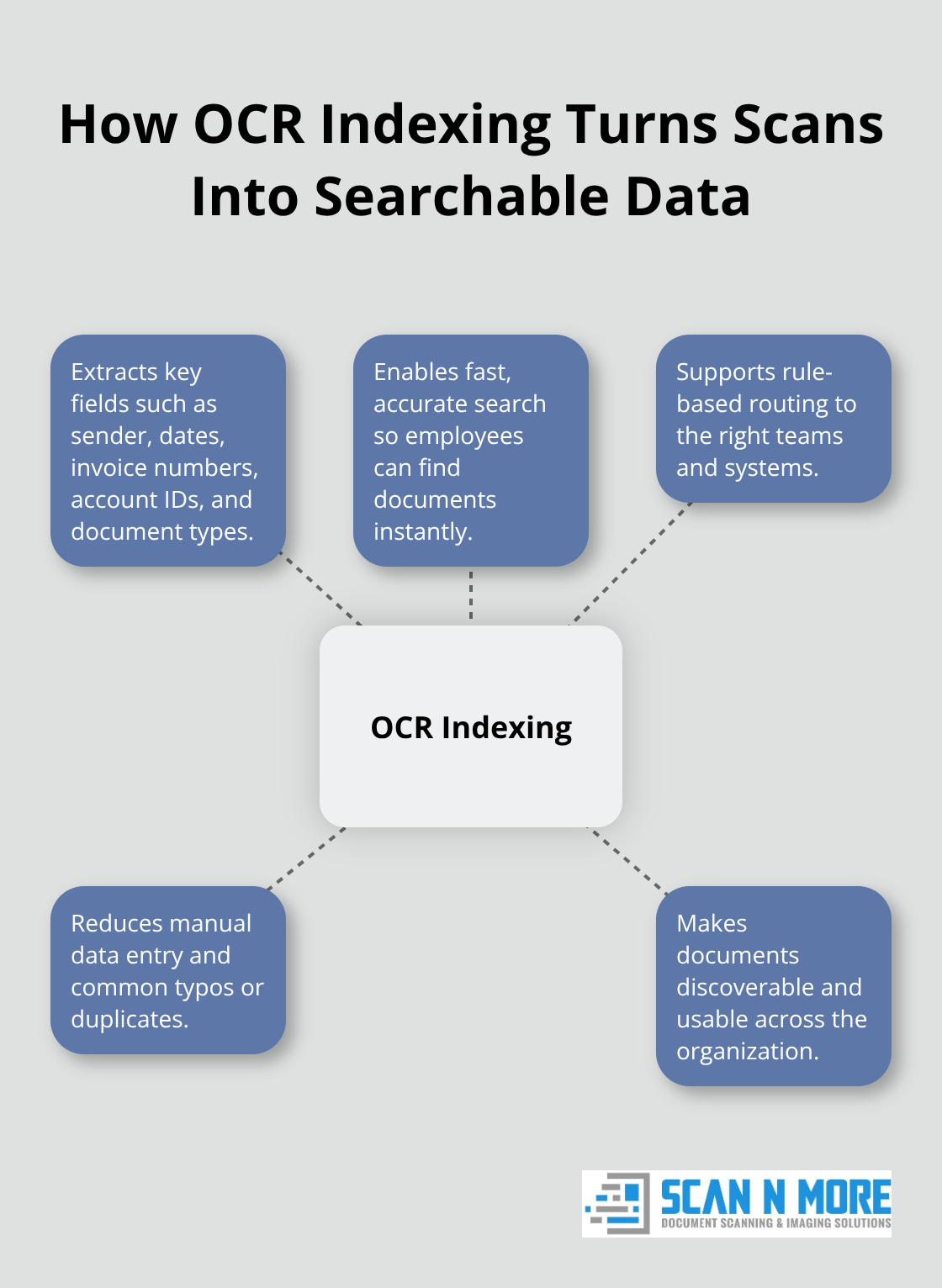
Optical character recognition technology reads the text within scanned documents and extracts key information-sender name, date, invoice number, account ID, document type-without human intervention. This extracted data becomes the index that powers your search capabilities.
An employee looking for all invoices from a specific vendor in the past six months types a query and gets results instantly instead of manually reviewing hundreds of files. The indexing layer also enables automated routing based on content, sender information, and predefined business rules.
Automated Routing Eliminates Manual Sorting Delays
Documents route directly to the correct department or individual without manual intervention. Automated routing uses software rules and logic to direct documents to the correct people, teams, or systems for review, approval, or action. A customer complaint routes to your support team. A contract routes to legal. This automation eliminates manual sorting and the delays that come with it.
Your organization processes mail faster because documents reach their destinations without sitting in queues waiting for someone to open them and decide where they belong. The combination of professional scanning and intelligent indexing removes the friction that makes paper mail such a drain on productivity. Documents become part of your digital workflow from the moment they arrive, not days later after they’ve been physically handled multiple times.
With your mail now digitized and routed automatically, the next challenge emerges: how do you integrate these documents into your existing business systems so they drive real operational improvements?
What You Actually Gain From Going Digital
Processing Time Collapses When Documents Go Digital
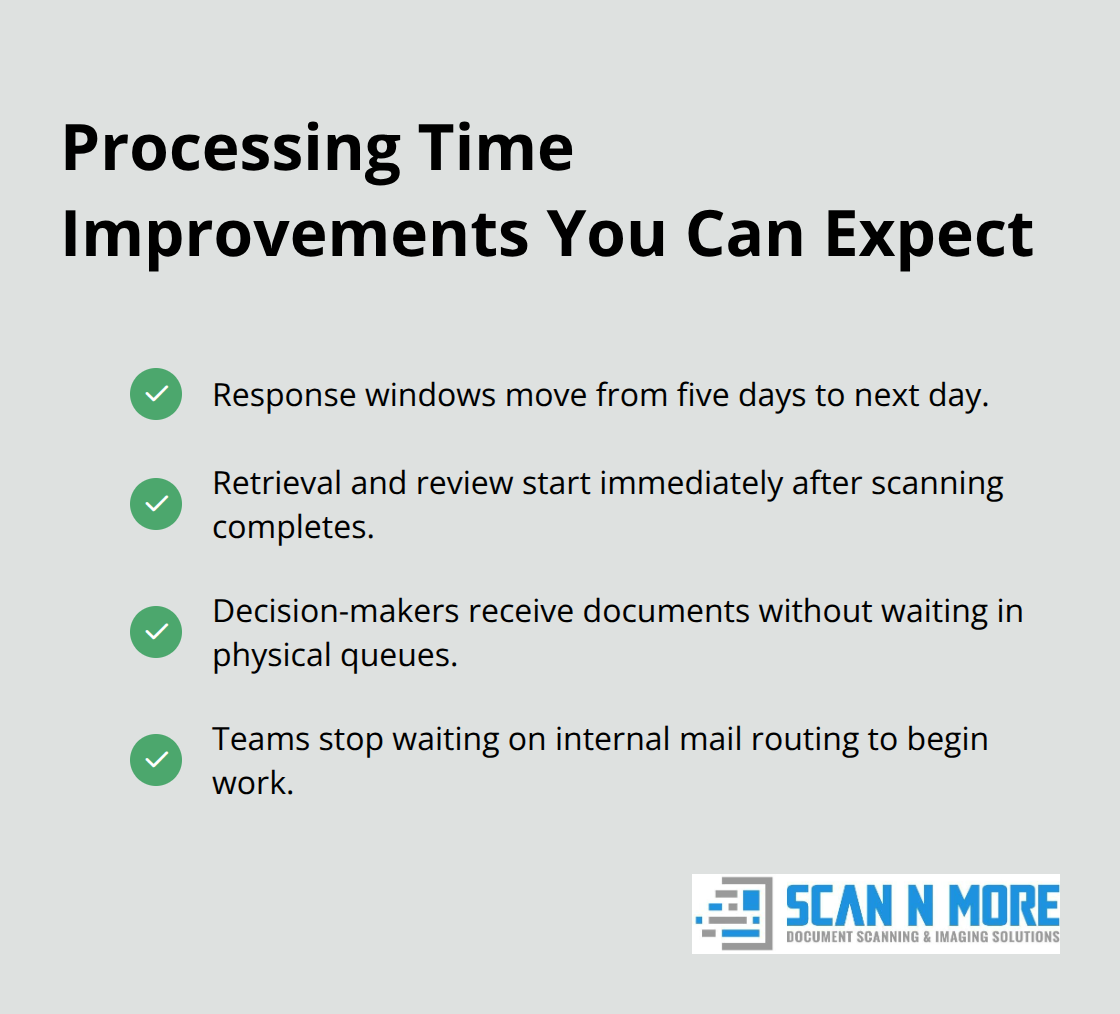
Digitizing your mail eliminates the delays that paper systems create. Organizations reduce document retrieval time from hours to minutes once digitization takes effect. An accounts payable team that previously spent two days locating and processing invoices now completes the same work in four hours. That acceleration compounds across departments. A financial services firm processing customer correspondence moves from a five-day response window to next-day turnaround because documents reach decision-makers instantly instead of sitting in physical queues. Your team stops waiting for mail to arrive, get opened, and travel through internal routing. Documents become available the moment scanning completes.
Operational Costs Drop Significantly
The labor savings from mail digitization are substantial and measurable. The General Services Administration estimates that eliminating just 20 hours of workload per employee yields approximately three billion dollars in net capacity across organizations. Your team stops spending time on mail handling and filing, freeing capacity for client-facing work and revenue-generating projects. Storage costs decline when you eliminate filing cabinets and archive boxes. Mailing room staff hours shift toward higher-value activities or reduce headcount entirely. A mid-sized organization typically recovers digitization investment within 18 to 24 months through labor savings alone. The financial impact extends beyond direct labor-reduced physical space requirements, lower utility costs for mail rooms, and eliminated courier services all contribute to the bottom-line improvement.
Compliance and Security Strengthen Dramatically
Digitized documents live in controlled environments where access is tracked, logged, and auditable. Your compliance team gains complete visibility into who accessed which documents and when, eliminating the opacity that paper systems create. Healthcare organizations achieve HIPAA compliance more reliably because sensitive patient records no longer sit on desks or travel through internal mail systems. Financial institutions meet audit requirements faster because digitized documents are searchable and retrievable on demand rather than buried in storage. Remote workers gain secure access to incoming mail without compromising data protection. The combination of faster processing, lower costs, and stronger compliance transforms mail digitization from a nice-to-have into a business necessity that affects profitability and risk exposure directly.
Final Thoughts
Paper mail management drains resources, slows decisions, and creates compliance exposure that most organizations underestimate. Incoming mail digitization eliminates these friction points by converting physical documents into searchable, accessible digital files that feed directly into your workflows. Your team stops wasting hours on sorting and filing, remote employees gain instant access to documents without waiting for physical delivery, and compliance becomes measurable and auditable because every document access gets logged and tracked.
The financial case is straightforward. Labor savings alone recover digitization costs within 18 to 24 months for most organizations, storage expenses drop when filing cabinets disappear, and processing times collapse from days to hours. A mid-sized company handling 5,000 pieces of mail monthly reclaims 20 to 40 hours weekly that employees can redirect toward client work and revenue-generating projects. Scaling operations no longer requires proportional growth in mail handling staff or physical infrastructure because digitized workflows handle increased mail volume without the operational drag that paper systems create.
We at Scan N More understand this transformation firsthand and convert your paper-based processes into digital solutions that strengthen efficiency and reduce risk. Contact Scan N More to explore how professional document scanning transforms your incoming mail into organized, accessible digital files that your team can access instantly.